Korva is a scroll of the internet’s best ideas.
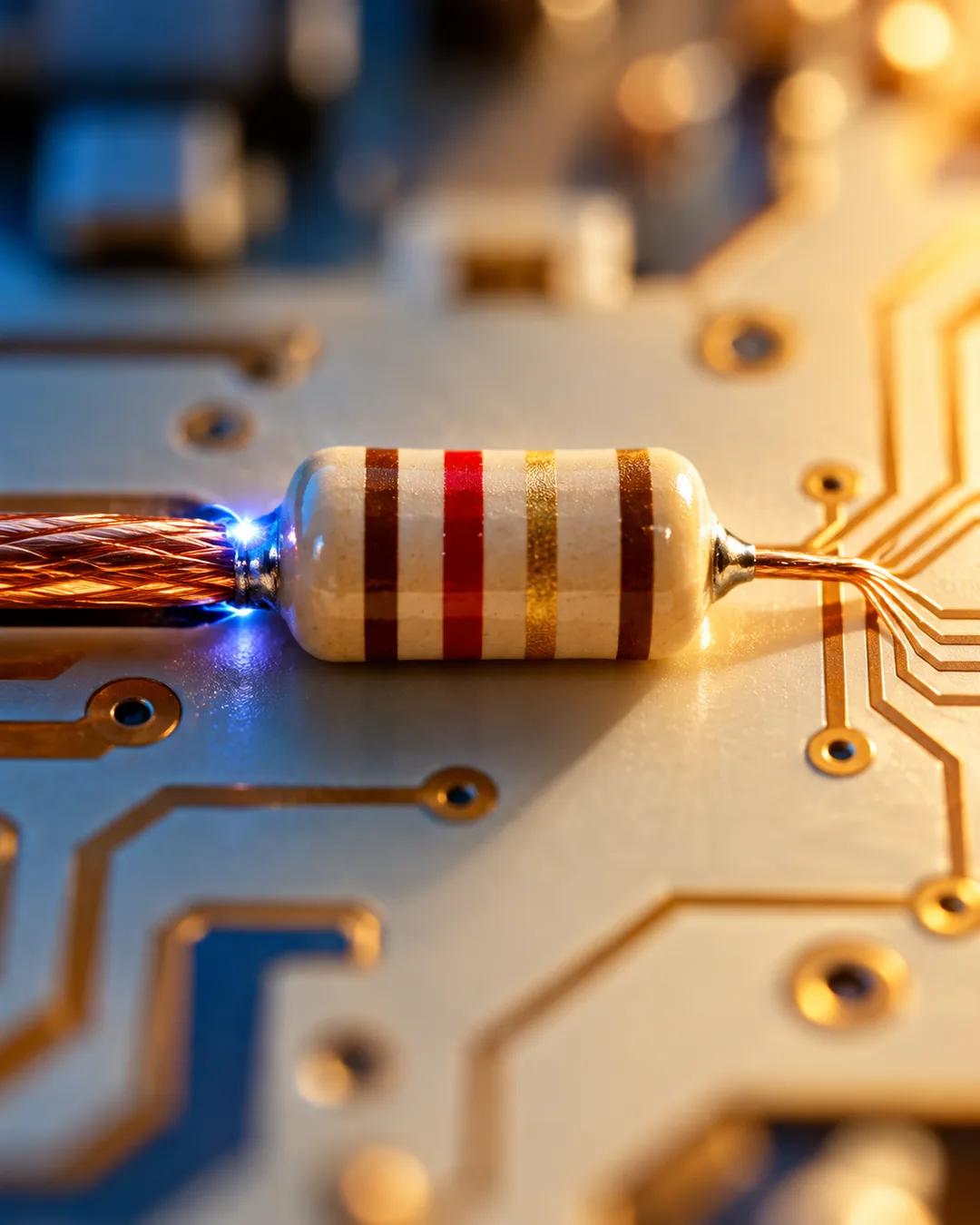
Mitochondria are the circuit's resistors

Resistance in circuits
In a circuit, resistance keeps current from running unchecked and turns it into something usable. Mitochondria likewise hold the body's energy flow within a narrow band of resistance, not too little and not too much, that is compatible with a healthy state.
That makes the organelles more than passive channels. They are pattern-generating units in the circuit, converting raw current into meaningful signals.
The hypothesis
The hypothesis is that differences in those patterns may help explain why some people are prone to certain mental states and conditions, or to chronic disease. It challenges the long-held assumption in medicine and biology that genes and proteins are the main drivers of health and disease, and asks whether the amount and nature of energy transformed by mitochondria sits at the center of the human experience.
Why do mitochondria hold a voltage?
The electron transport chain in the inner mitochondrial membrane pumps protons from one side to the other, building up an electrical and chemical gradient. The voltage across that membrane is commonly cited at around 150 to 180 millivolts. Protons flow back through an enzyme called ATP synthase, which uses the flow to assemble ATP. The British biochemist Peter Mitchell proposed this mechanism in 1961 and won the 1978 Nobel Prize in Chemistry for it.
Why has medicine focused so heavily on genes?
The 1953 description of DNA's structure by James Watson and Francis Crick made inheritance look like a readable code. Single-gene diseases then gave striking early successes, such as the 1989 discovery of the gene behind cystic fibrosis. The Human Genome Project raised expectations further, and its completed sequence was announced in 2003. Each success reinforced the idea that finding the responsible gene was the way to find a cause.