Korva is a scroll of the internet’s best ideas.
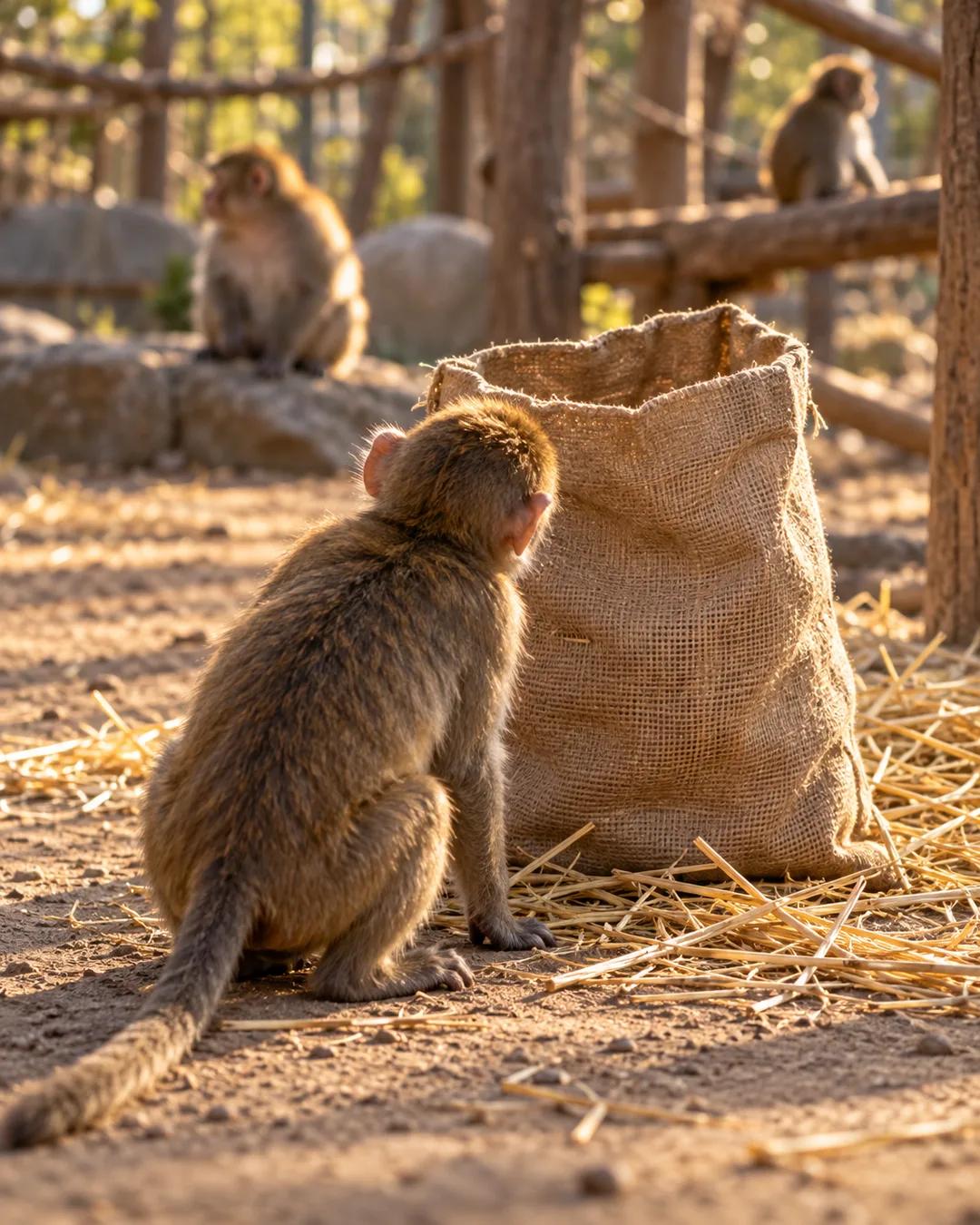
Monkeys couldn't resist the snake bag
Darwin had heard that monkeys seem fascinated by the thing they should fear most, a snake, and he ran an experiment to see for himself. At the London Zoological Gardens, he set a bag with a snake in it in the monkeys' exhibit. The bravest monkey walked slowly up to the bag, peeked inside, shrieked, and ran off.
That shriek told the others something bad was in there. They went to look anyway. Monkey after monkey crept up to the bag, saw the snake, shrieked, and fled.
Darwin wrote it up in The Descent of Man in 1871, describing each monkey with its head raised and turned to one side, drawn to the dreadful object lying quietly at the bottom of the upright bag. He read it as something close to human curiosity.
Why are primates so wary of snakes?
Anthropologist Lynne Isbell proposed in 2006 that snakes were a major threat shaping primate vision. Her snake detection theory holds that primates evolved sharp eyesight in part to spot them. In 2013, a team led by Quan Van Le in Japan recorded neurons in the pulvinar, a visual brain region, that fired faster to snake images than to other images in macaques. Those macaques had been raised in a laboratory with no contact with snakes.
Do monkeys learn to fear snakes by watching?
Psychologist Susan Mineka and colleagues studied this in rhesus monkeys in the 1980s. Lab-raised monkeys showed no fear of snakes until they watched wild-raised monkeys react fearfully to one. After that, they feared snakes themselves. When the researchers edited the video to show a monkey apparently afraid of flowers, the watchers did not develop a fear of flowers.
How did Darwin study emotion in animals?
In 1872, a year after The Descent of Man, Darwin published The Expression of the Emotions in Man and Animals. He sent questionnaires to missionaries and colonial officials around the world asking how people in different places showed feelings such as shame and surprise. He also used photographs, which was unusual for a scientific book at the time. Many of the photographs were taken by Oscar Rejlander.
More from Hidden Brain