Korva is a scroll of the internet’s best ideas.
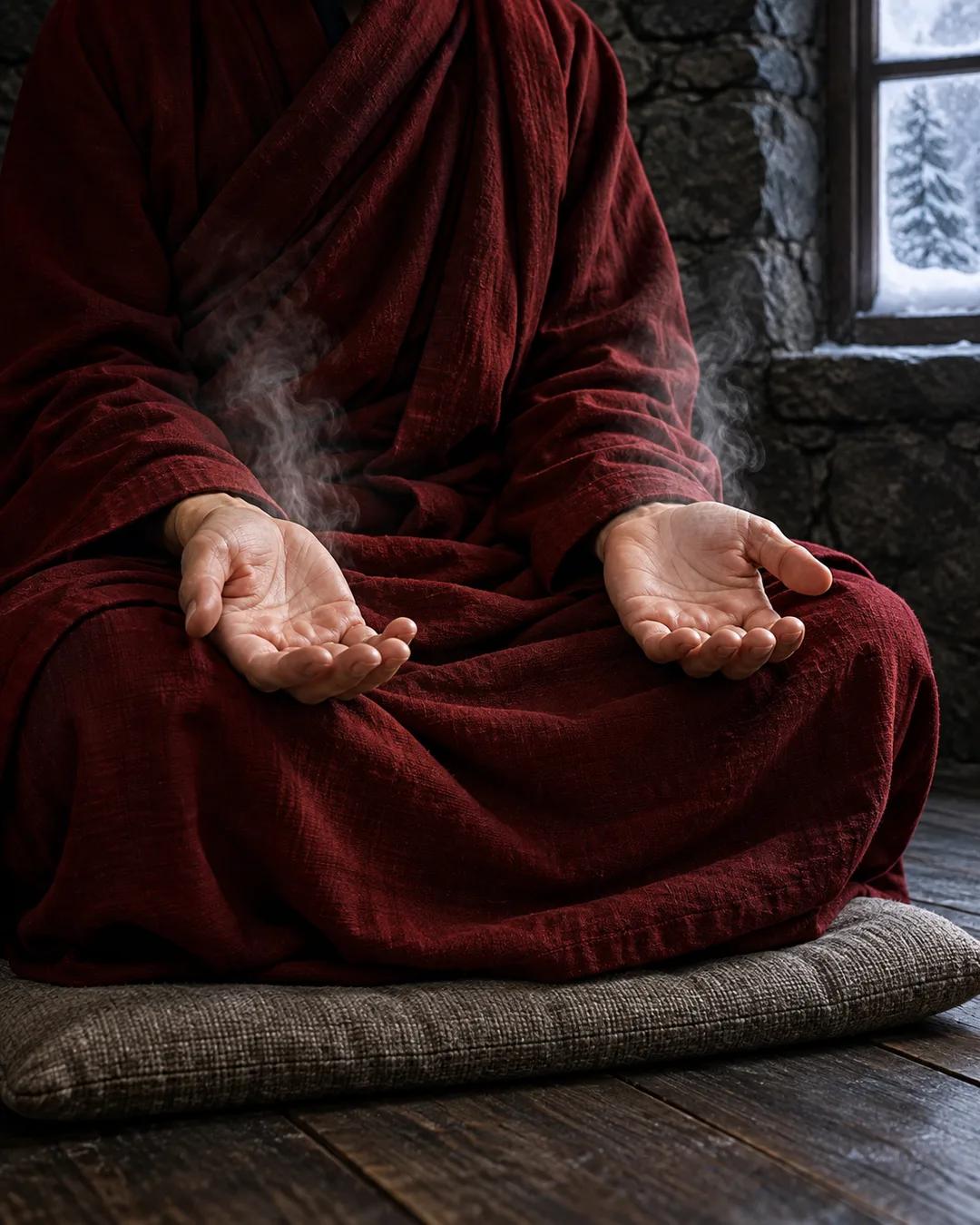
Monks cut metabolism below a coma

The monks did it consciously. By what is understood about the human body, medicine, and biology, it shouldn't be possible, and yet the data and the videotape exist. The Benson study appeared in Nature, one of the most esteemed scientific journals there is, so it is no hearsay.
Stories of meditators who survive in caves for years without eating are another matter. Nobody has put one of them in a lab and watched him go a month without food or drink, so those stay good dinner party stories with no recording or measurement behind them.
What did Benson's team record in the monks?
In the early 1980s, Herbert Benson and colleagues traveled to northern India and measured monks practicing g-tummo, a Tibetan heat meditation. They recorded sharp rises in finger and toe temperature along with a drop in metabolic rate. The results appeared in Nature in 1982 under the title 'Body temperature changes during the practice of g Tum-mo yoga.' The monks dried cold, wet sheets draped over their shoulders in a chilly room during the practice.
How do tummo practitioners warm themselves?
A 2013 study in PLoS ONE led by Maria Kozhevnikov examined practitioners of g-tummo. It found that practitioners who combined forceful 'vase breathing' with visualization raised their core temperature to about 38.3 degrees Celsius, in the range of a mild fever. The researchers proposed that muscular activity from the breath holds and contractions was one source of the heat.
Why are fingers and toes usually the coldest?
When the body cools, sympathetic nerves narrow the blood vessels in the skin of the hands and feet to protect the core. Fingers and toes have many small vessel connections called arteriovenous shunts, which open and close to control heat loss. This is why a fingertip's temperature can range from near room temperature to near core temperature, depending on how tightly its vessels are clamped.
More from The Rich Roll Podcast