Korva is a scroll of the internet’s best ideas.
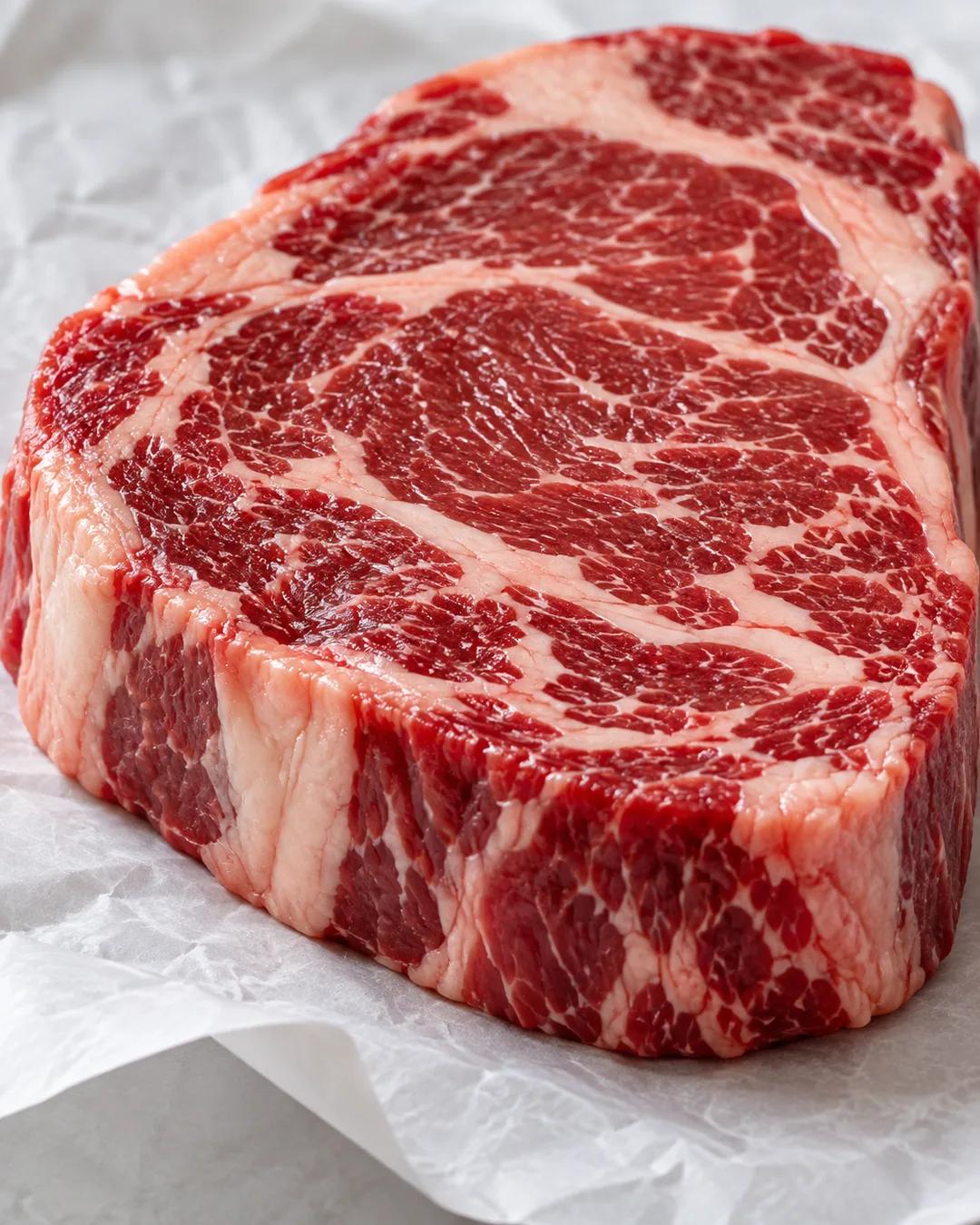
Muscle can look like marbled steak

Fat Inside Muscle
Fat sits in two places around muscle: underneath the fascia between muscle groups, and inside the muscle tissue itself. Muscle has to contract to burn those fats and fuels, so sedentary muscle is never healthy muscle. Over long stretches of sitting, the infiltrated fat changes metabolic outcomes and brings insulin resistance, even in college students who look perfectly healthy.
What It Drives
The percentage of fat in skeletal muscle is what drives insulin resistance, Alzheimer's, cardiovascular disease, and the other outcomes long tied to obesity. The same logic applies to what was formerly called PCOS, which is a muscle problem first. The quality and amount of skeletal muscle predict mortality and health outcomes far better than body fat percentage does.
What Scans Show
Studies that found people with obesity carry more muscle mass say nothing about its quality. The familiar figure of muscle as 40 percent of body weight comes from young men and runs lower for women. A DEXA scan shows nothing about muscle quality, and only CT or MRI can, which most people cannot get. Whatever the scan shows, any resistance or cardiovascular activity improves muscle quality even when muscle mass and fat mass stay exactly the same.
Why do athletes carry fat inside muscle too?
A 2001 study led by Bret Goodpaster at the University of Pittsburgh found that endurance-trained athletes hold as many fat droplets inside muscle cells as people with type 2 diabetes, yet they remain insulin sensitive. The difference is turnover: trained muscle has more mitochondria and burns those droplets as fuel. Researchers named the finding the athlete's paradox. In sedentary muscle, fat byproducts such as diacylglycerols and ceramides interfere with insulin signaling.
Why can't a DEXA scan see muscle quality?
DEXA uses X-rays at two energy levels to split the body into bone, fat, and lean soft tissue. The lean category lumps together muscle, water, and organs, so it reports an amount without resolving fat tucked inside the muscle. CT and MRI produce cross-sectional images where that fat shows up directly. On CT, lower muscle density in Hounsfield units signals more fat within the tissue.
More from unPAUSED with Dr. Mary Claire Haver