Korva is a scroll of the internet’s best ideas.

Matching model to job
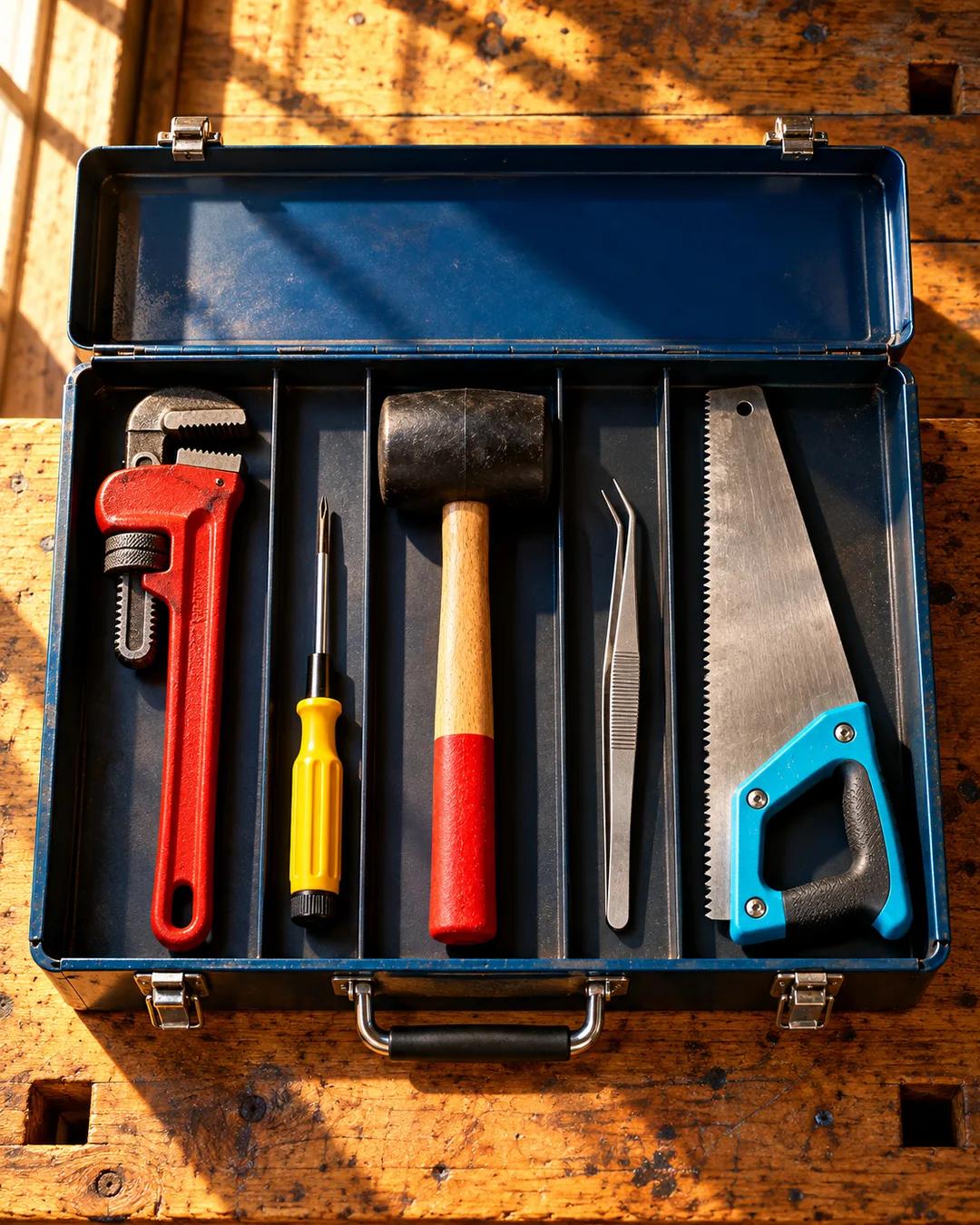
Open-weight models handle the vast majority of simple workflow applications, such as an individual employee spinning up an app. More complex models handle the key workflow tasks. Specialized work like genomics modeling in life sciences goes to the premium model with the best proficiency, and AI video rendering at a media company goes to Gemini's video model, Sora, or whichever is best for that application.
How consumers choose
Consumers choose differently. They can pay $20 to $40 a month for ChatGPT, Gemini, or Claude and be happy, so they have little reason to run an open-weight model.
Google's edge
Google has an edge in specialized models. It holds the best video data and the best life sciences data, and it has worked on life sciences far longer than Anthropic or OpenAI. Demis Hassabis is still running Isomorphic Labs. A cloud provider that offers the full mixture of models, which Google Cloud now can, is a more attractive partner than a single model lab.
Why do smaller models handle simple tasks well?
Running a model costs more as it gets larger, because every answer requires computation across all its parameters. For narrow jobs like sorting messages or extracting fields from a form, a small model can do well, especially when fine-tuned on examples of the task. Smaller models answer faster and can run on a single machine. Mistral 7B, an open-weight model released in 2023, matched or beat some larger models on benchmarks, according to its developers.
How did AlphaFold put Google ahead in biology?
AlphaFold, built by Google's DeepMind, predicts the three-dimensional shape of a protein from its amino acid sequence. At the CASP14 competition in 2020, it reached accuracy comparable to lab experiments for many targets. DeepMind and the European Bioinformatics Institute released predicted structures for over 200 million proteins in 2022. Demis Hassabis and John Jumper shared the 2024 Nobel Prize in Chemistry for the work, alongside David Baker, who was honored for protein design.
Why does video data matter for video models?
Video models learn how objects move, how light changes, and how scenes continue from one frame to the next. They train on large numbers of clips paired with descriptions, so variety and volume of footage matter. Google bought YouTube in 2006 for 1.65 billion dollars, which gave it one of the largest video libraries in the world.
More from All-In with Chamath, Jason, Sacks & Friedberg