Korva is a scroll of the internet’s best ideas.
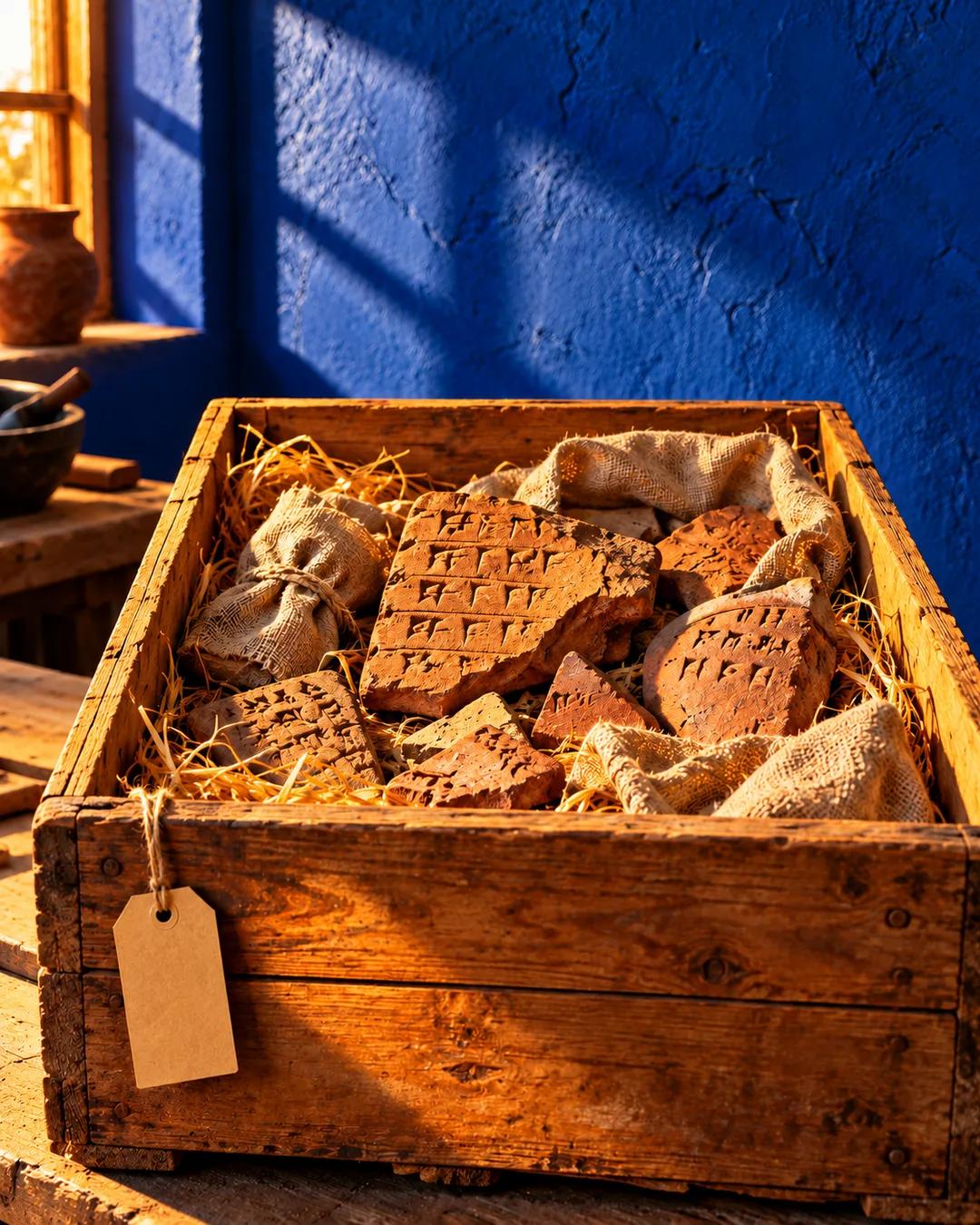
Nobody recorded where tablets lay

Layard and Rassam
English archeologist Austen Henry Layard and Hormuzd Rassam, who had been Layard's assistant before training at Oxford and becoming an assyriologist himself, began excavating Nineveh in 1849 and found numerous clay tablets and fragments. Rassam kept digging after Layard moved on, starting in 1852, and found another huge collection. The site was known as Kuyunjik, and the area was under Ottoman control.
Lost context
Much of what they and other archeologists dug up went to the British Museum, and some French projects sent material to the Louvre. The fire had hardened the tablets, but many were broken, and workers did not fully document where each piece was found. The focus was on sending the treasures to England rather than thoroughly recording the context of each one.
Piecing it together
Many of the tablets are marked as belonging to the Palace of Ashurbanipal, King of the World, King of Assyria, so it is clear they are one collection. Without knowing where in Nineveh a piece was found, it is extremely difficult to work out which other pieces it goes with. Only a fraction of the tablets have been reassembled, and many of those still have missing pieces. An average of 35 texts have been reconstructed and transcribed every year since the mid-19th century.
Why did early excavators skip recording find locations?
Nineteenth-century digs were driven by museum collecting, and the goal was to send impressive objects home. Stratigraphy, the method of reading layers of earth in order, was not yet standard practice in the Near East. Flinders Petrie's 1890 excavation at Tell el-Hesi is often cited as one of the first in the region to use layered stratigraphy to date a site's occupation.
How do scholars rejoin broken tablet fragments?
Scholars match the broken edges, the handwriting, the spacing of lines, the color of the clay, and the content of the text. A rejoined piece is called a join. Joins have made major finds: in 1872, George Smith, working with tablet fragments from Nineveh at the British Museum, recognized the Mesopotamian flood story.
Why was the Nineveh site called Kuyunjik?
Ancient Nineveh lies under two mounds on the east bank of the Tigris, across from the modern city of Mosul. The larger mound, Kuyunjik, held the palaces of Sennacherib and Ashurbanipal. Its Turkish name is usually translated as little lamb. The smaller mound is called Nebi Yunus, after a shrine said to mark the tomb of the prophet Jonah.
More from Stuff You Missed in History Class