Korva is a scroll of the internet’s best ideas.
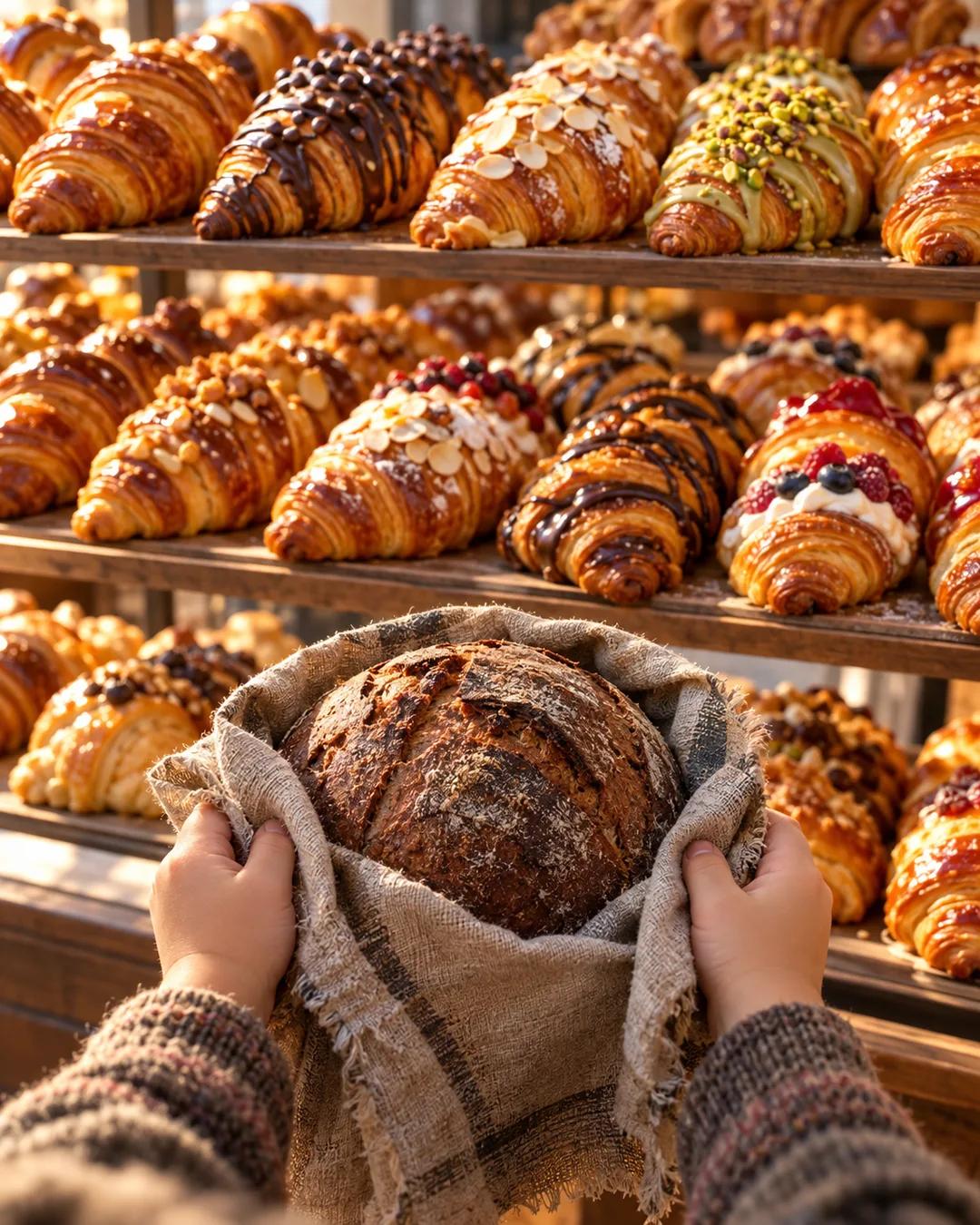
One bread, versus a thousand croissants

He was born in Moldova, then a republic of the Soviet Union, and his family left for the United States in 1990. Before that, bread was a simple errand. His mom would send him to the bread store, he would wait in the line, and he would come home with a loaf. He never went hungry. The view was simple: bread is bread, so why would anyone need more of it? You get your loaf and you have your calories.
The United States took the opposite view. A croissant exists in a thousand different ways right around Union Square, and anyone who can reinvent it and make it special to their customer will find a market for it.
That is human creativity: people iterating, perfecting, and applying themselves to something that doesn't need a different way of consuming calories, because it is beautiful. Those little tweaks that make things better are what drive people in the United States, and everyone benefits from them.
Why did Soviet stores stock so little variety?
The Soviet economy ran on central plans that set production targets for factories in advance. Plants were judged mostly on whether they met quantity quotas, so there was little reward for making a product different or better. The state also fixed prices, which removed the signal that tells producers what customers want more of. Shortages and queues were a common part of daily life across the Soviet Union as a result.
Where did the croissant come from?
The croissant descends from the Austrian kipferl, a crescent-shaped pastry. An Austrian officer named August Zang is commonly credited with opening a Viennese bakery in Paris in 1839 that helped popularize it there. The flaky version made with layers of yeast dough and butter, called laminated dough, took shape in French bakeries in the early twentieth century. The name means crescent in French.
Why does competition produce so many variations?
Economist Edward Chamberlin described this in 1933 under the name monopolistic competition. When many sellers offer similar goods, each one can win customers by making a version that is slightly different, whether in recipe, shape, or setting. Each small difference gives a seller a loyal group of buyers who prefer it. Cities with dense customer bases can support far more of these specialized versions than small towns.
More from Invest Like the Best with Patrick O'Shaughnessy