Korva is a scroll of the internet’s best ideas.
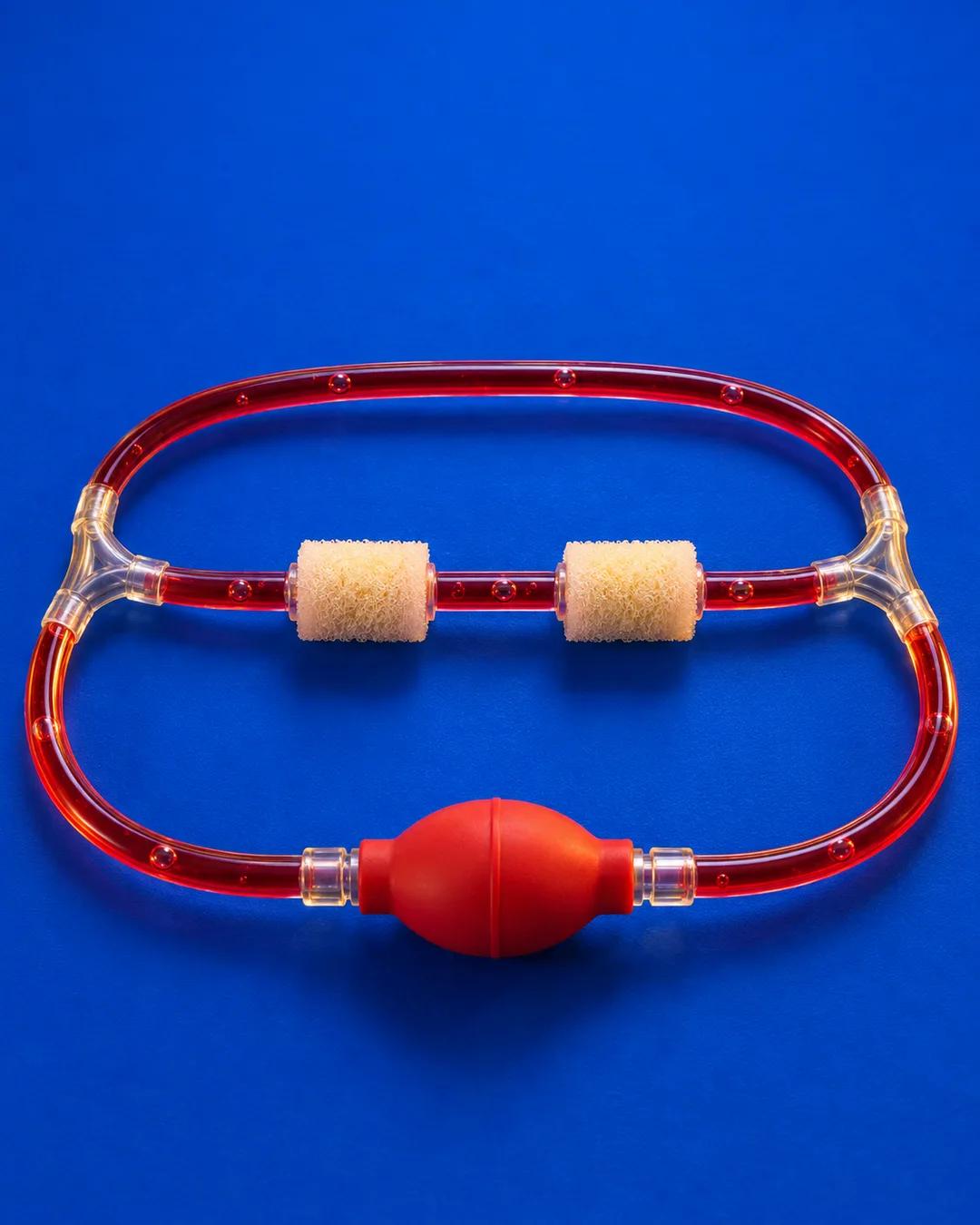
One ventricle can run a body

A heart missing a chamber
In a typical heart, the left ventricle is the big pump that sends oxygenated blood to the body, and the right ventricle pumps blood to the lungs. In hypoplastic left heart syndrome, the left ventricle is missing or too small to function. The baby is fine in the womb, but at birth needs immediate intervention or will die.
Rerouting the blood
The fix works by sending blood to the lungs without a pump. The first surgery, at three days old, is a bridge to the second. In the second, at three months, the superior vena cava is disconnected from the heart and joined directly to the pulmonary artery, so blood from the top half of the body goes straight to the lungs. Then surgeons wait for the child to grow, because the size of everything matters.
The third surgery, at three years old in Anthony's case, disconnects the inferior vena cava, the vein from the bottom half of the body, and joins it to the lungs as well. The body lacks enough piping to reach, so surgeons add an extension called the Fontan. Blood then flows through the lungs using gravity, returns to the heart, and the right ventricle pumps it out to the body.
The approach has a track record: when Anthony's condition was found, people in their forties were living well with it.
Why can blood reach lungs without a pump?
The lungs are a low-resistance circuit, so it takes far less pressure to move blood through them than through the rest of the body. In a typical heart, the pressure in the pulmonary artery averages only about 15 millimeters of mercury, compared with around 90 in the aorta. Blood returning from the body can therefore flow through the lungs on the small pressure it already carries. Each breath also helps, because the chest expands on inhaling and draws blood toward the heart.
Why must the first surgery happen so early?
Before birth, the placenta supplies oxygen and the lungs are mostly bypassed. A fetal vessel called the ductus arteriosus connects the pulmonary artery to the aorta, so the right ventricle can supply the whole body. After birth the duct normally closes within days, and for a baby with this condition that closing cuts off the body's blood supply. The operation that rebuilds the circulation from the right ventricle is called the Norwood procedure, after the American surgeon William Norwood, who developed it in the early 1980s.
Why do surgeons wait between the operations?
A newborn's lungs resist blood flow strongly, and that resistance falls over the first weeks and months of life. Passive flow to the lungs only works once it has dropped, which is why the second operation is done at a few months old. It is named the Glenn procedure after William Glenn, who described the technique in the 1950s. The final stage is named for the French surgeon Francis Fontan, who first performed it in 1968 on a patient with a different heart defect.