Korva is a scroll of the internet’s best ideas.
Only 14 beaches can be invaded

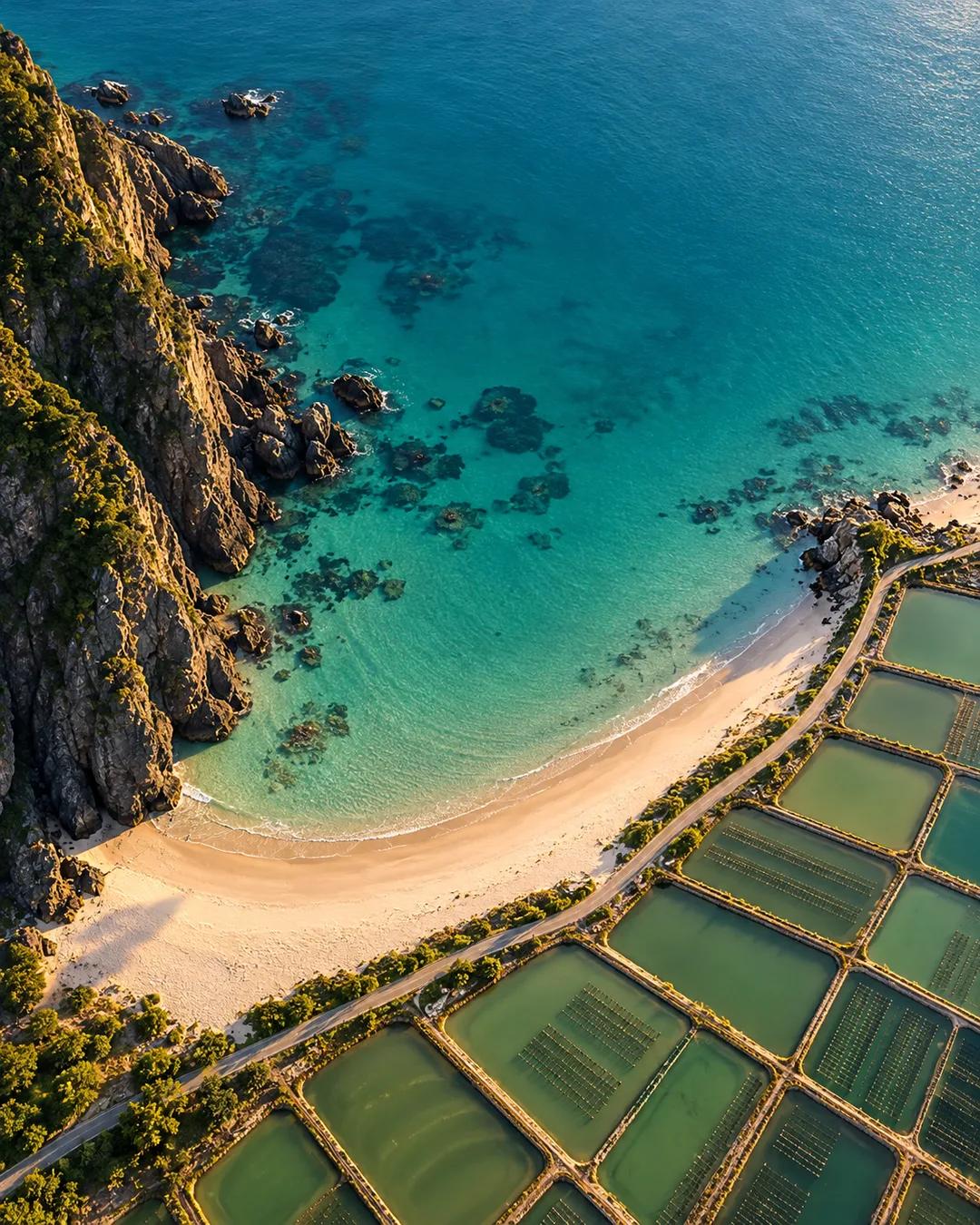
The east coast is mostly massive cliffs that make movement inland nearly impossible. Much of the west coast is muddy wetlands that would quickly trap landing vehicles. Large stretches of what remains have been turned into aquaculture farms for oysters, shrimp, and fish, so the shoreline is dotted with hundreds of small pools that squeeze vehicles onto a few limited roads that are easy to defend.
A usable landing beach has to meet three conditions at once. The ground under the water has to slope enough for landing craft to get close to shore, the beach itself has to rise gently so vehicles can drive up it, and it has to be wide enough for a sizable force. Goldilocks beaches like that, in the style of Normandy, are rare, and the count comes down to just 14.
How tightly that list binds the Chinese military is debated, given advances in technology. Either way, so few options let Taiwan's military concentrate its resources in limited areas.
Why does the seabed slope matter for landings?
Landing craft are flat-bottomed boats that run toward shore and drop a bow ramp. If the seabed slopes too gently, the craft grounds far from the beach and vehicles have to cross deep water to reach it. Water deeper than a vehicle's rated fording depth can flood its engine and stall it. Planners at Normandy timed the landings for the hours around low tide, when German beach obstacles stood exposed above the waterline.
How does mud trap armored vehicles?
Wet silt and clay have very little strength, so a heavy vehicle's weight pushes it down faster than the ground can hold it up. As the vehicle sinks, suction around the tracks or wheels makes it harder to pull free. The US Army Corps of Engineers rates soil strength with a measurement called the cone index, which records how much force it takes to push a probe into the ground. Saturated fine-grained soils score among the lowest values.
Why do fish ponds stop an army?
Each pool is a water-filled basin walled by narrow earthen dikes. A heavy vehicle can't cross open water, and the dikes are narrower and softer than a paved road, so traffic has to use the few hard-surfaced roads. Military engineers handle gaps like this with portable bridges, which take time to set up and leave the crews exposed while they work.
More from Wendover Productions