Korva is a scroll of the internet’s best ideas.
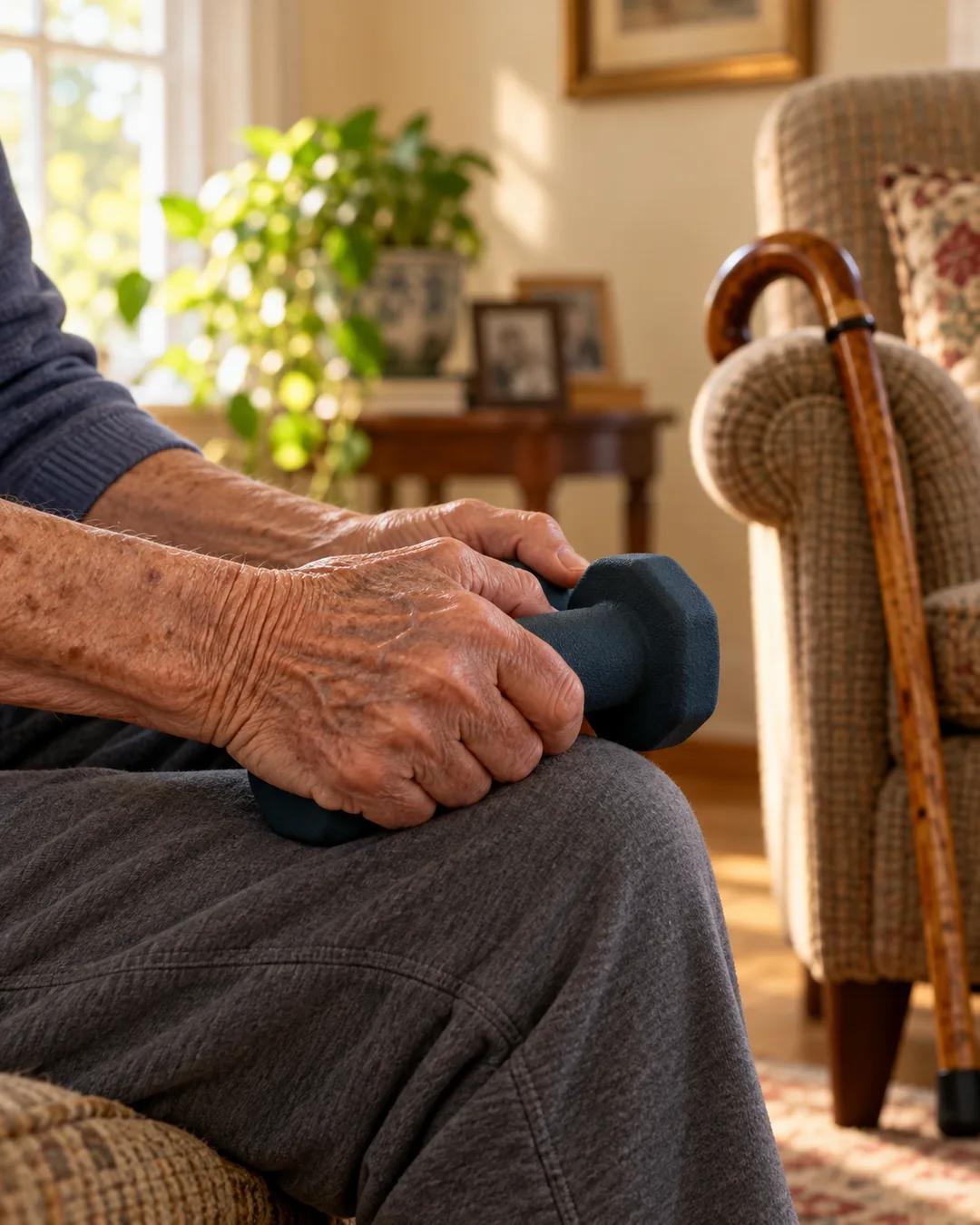
Only lifters avoided disability

Three Trajectories
The first trajectory is the status quo, and it ends in a prolonged stretch of being unable to care for yourself. The second belongs to people who walk, do some yoga, and garden. They fare better, but they tend to end up in the same place. Muscle explains why movement of any kind still helps: a 30-minute walk a day cuts a sedentary person's risk of type 2 diabetes by 50 percent while burning few calories.
Walking is probably not enough for staying out of a nursing home, and the American College of Sports Medicine's new guidelines center on resistance training.
Protein And Frailty
Observational data from the NHANES and WHI cohorts, which followed women for decades, adds a second piece. The lower a woman's protein intake, the more likely she was to be frail. Piling on extra protein did not reverse frailty without resistance training, so muscle needs both the stimulus and the substrate.
How does resistance training help the very old?
In a 1990 study in JAMA led by Maria Fiatarone, nursing home residents averaging about 90 years of age trained their legs three times a week for eight weeks. Their strength rose by roughly 170 percent on average, and their thigh muscle grew in size. Their walking speed improved as well.
How does a daily walk cut diabetes risk?
In the US Diabetes Prevention Program, published in 2002, adults at high risk who lost weight through diet and moderate activity such as walking cut their rate of developing type 2 diabetes by 58 percent over roughly three years. Contracting muscle takes up glucose without needing much insulin. That route is one reason regular activity improves glucose control.
Why does muscle need both exercise and protein?
After resistance exercise, muscle protein synthesis rises, but breakdown rises too. Studies by Robert Wolfe and colleagues in the 1990s found that without amino acids available, the net balance stays negative after a workout. With amino acids supplied, the balance turns positive and muscle gains protein. Synthesis stays elevated for about 24 to 48 hours after a session.
More from unPAUSED with Dr. Mary Claire Haver