Korva is a scroll of the internet’s best ideas.
OpenAI built a specialist science brain

Anthropic's bet is the first. It gives the same Opus 4.8 that everyone has access to better tools and connects them, so its science product is available to everyone.
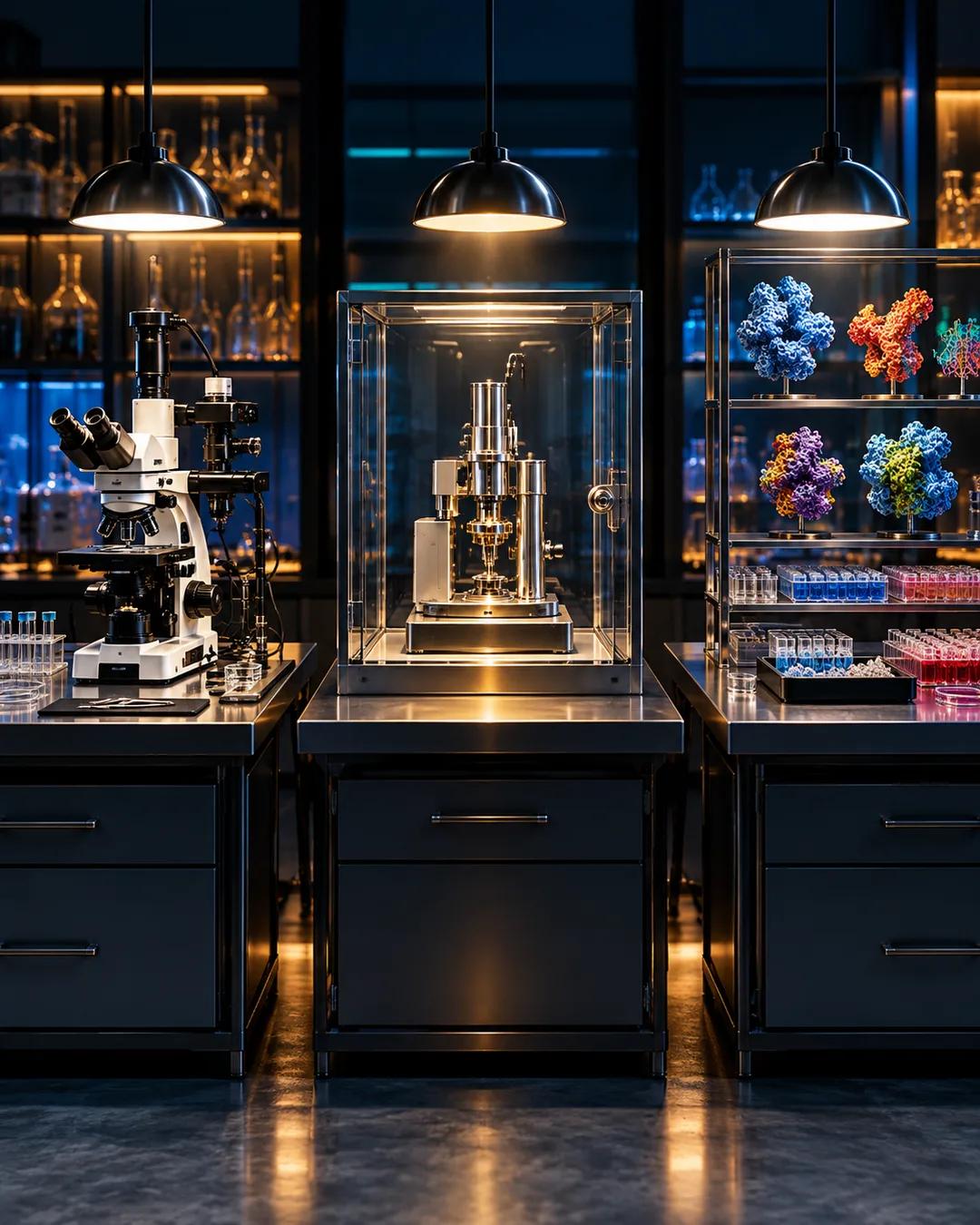
OpenAI's bet is the second. GPT Rosalind, launched in April 2026 and named after Rosalind Franklin, is its first purpose-built science model, optimized for chemistry, protein engineering, and genomics. It is deliberately hard to access: a model that reasons well about biology is great for drug discovery, and it could also be misused.
Google's bet is the third, because it owns the foundational science models. AlphaFold, for protein structures, has helped over 3 million researchers. AlphaMissense and AlphaGenome cover the genetic mutations behind disease, and AlphaGenome is currently used by roughly 3,000 scientists. AlphaProteo designs novel protein binders.
Why might a biology model be risky to release?
Knowledge that helps design medicines can in principle also help design harmful agents, a problem researchers call dual-use. Biosecurity experts have debated for years how much detail from life-science research should be public. After a 2011 controversy over publishing experiments on a modified bird flu virus, journals and funders set up special review of such papers. Some AI labs now restrict their most capable biology models to vetted users for the same reason.
Why does Google own so many science models?
Its AI lab DeepMind spent years on specific scientific problems before chatbots took off. AlphaFold won the CASP protein structure prediction competition in 2020 by a wide margin. DeepMind later released predicted structures for hundreds of millions of proteins in a free public database run with the European Bioinformatics Institute. Each follow-up model used the same approach of training on well-curated biological data.
Who was Rosalind Franklin to biology?
Rosalind Franklin was a British chemist who used X-ray diffraction to image DNA at King's College London. Her Photograph 51, taken in 1952, showed the helical pattern that helped James Watson and Francis Crick build their model of the DNA double helix. She died in 1958, and the 1962 Nobel Prize for the structure of DNA went to Watson, Crick, and Maurice Wilkins. Her work later became widely recognized as central to the discovery.
More from Lightspeed Venture Partners