Korva is a scroll of the internet’s best ideas.
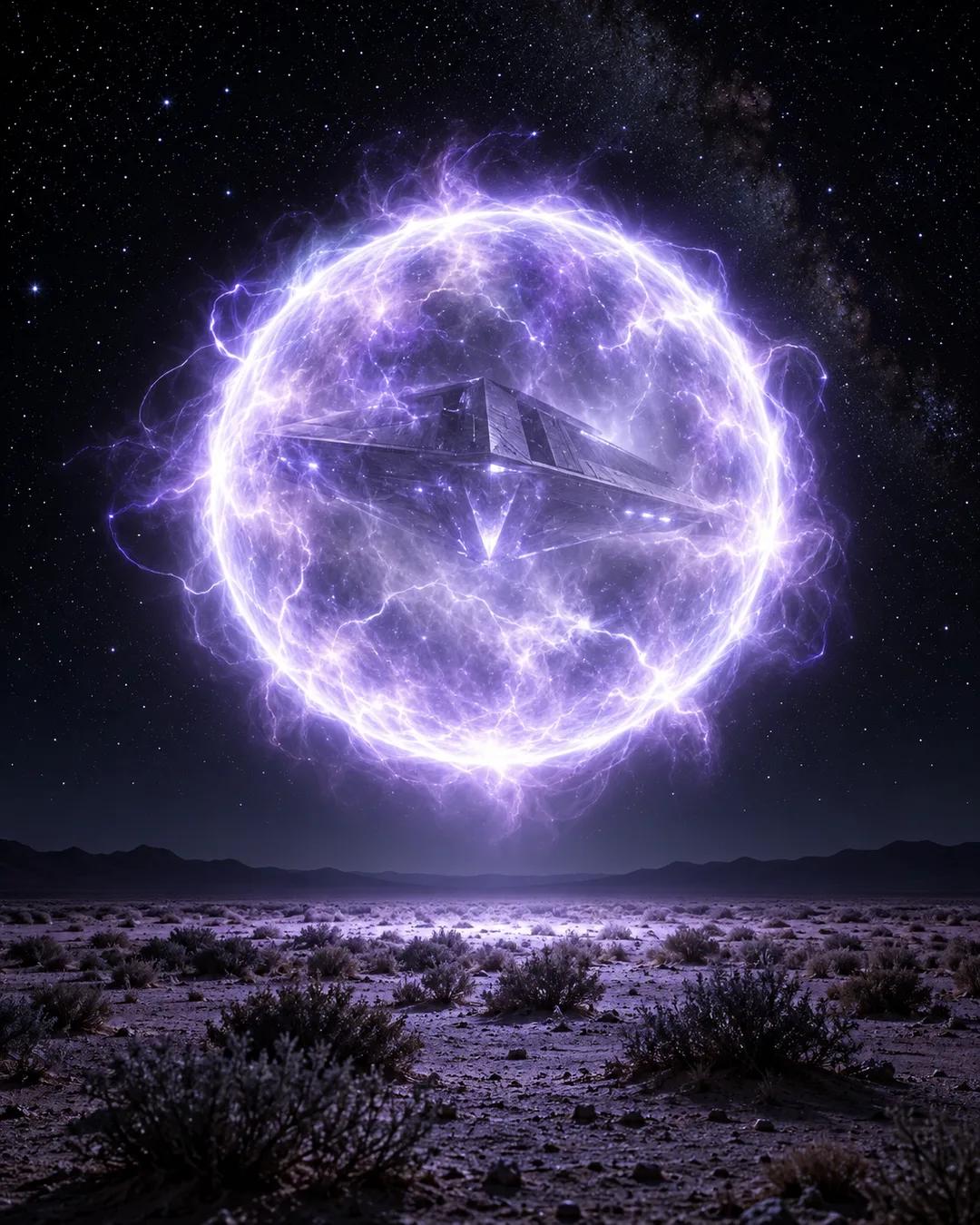
Orbs could be plasma-wrapped craft

Magnetohydrodynamic propulsion, the caterpillar drive from The Hunt for Red October, pushes a vehicle through a conductive fluid. In seawater the fluid is salt water. In air, a plasma has to be created. A perpendicular magnetic field and a large amount of electricity steer it through the Lorentz force, a kind of ionic propulsion, and papers on it appear in IEEE and elsewhere.
A byproduct of an air-breathing MHD system is plasma around the vehicle. Depending on the size of the orb, a physical craft inside it is conceivable as an artifact of the propulsion. A defense intelligence reference document commissioned under the AAWSAP program covered this kind of propulsion.
A second theory treats the orbs as sentient plasmoids: plasma with consciousness, perhaps the other side of a wormhole, an intelligence shooting a plasmoidic probe into our existence. Academic papers on the open internet already assess the possibility of plasma-based life.
Has magnetohydrodynamic propulsion actually worked?
In 1992 the Japanese experimental ship Yamato 1 used superconducting magnets to push seawater through channels along its hull, reaching about 15 kilometers per hour. It was a working demonstration of the principle, but the speed was low and the system was inefficient. The Hunt for Red October popularized the idea as a silent caterpillar drive. Seawater conducts electricity well, which is why the experiments used it.
How does plasma form around fast vehicles?
When a vehicle moves at hypersonic speed, air in front of it is compressed and heated until its molecules ionize into plasma. During reentry, Apollo capsules were wrapped in this plasma sheath, which blocked radio signals for several minutes. The effect begins at speeds above about Mach 10 and is a major engineering problem for hypersonic vehicles. Engineers have studied ways to open communication windows through the sheath.
Could plasma ever act like life?
In 2007, V. N. Tsytovich and colleagues reported in the New Journal of Physics that charged dust particles in a plasma can form helical structures that self-organize, split, and appear to evolve. The authors said these structures show behavior resembling living matter, though they did not claim they are alive. The simulations were run under laboratory conditions with a particular type of dusty plasma.
More from The Joe Rogan Experience