Korva is a scroll of the internet’s best ideas.
Pens and inks are designed together

Balancing the ink
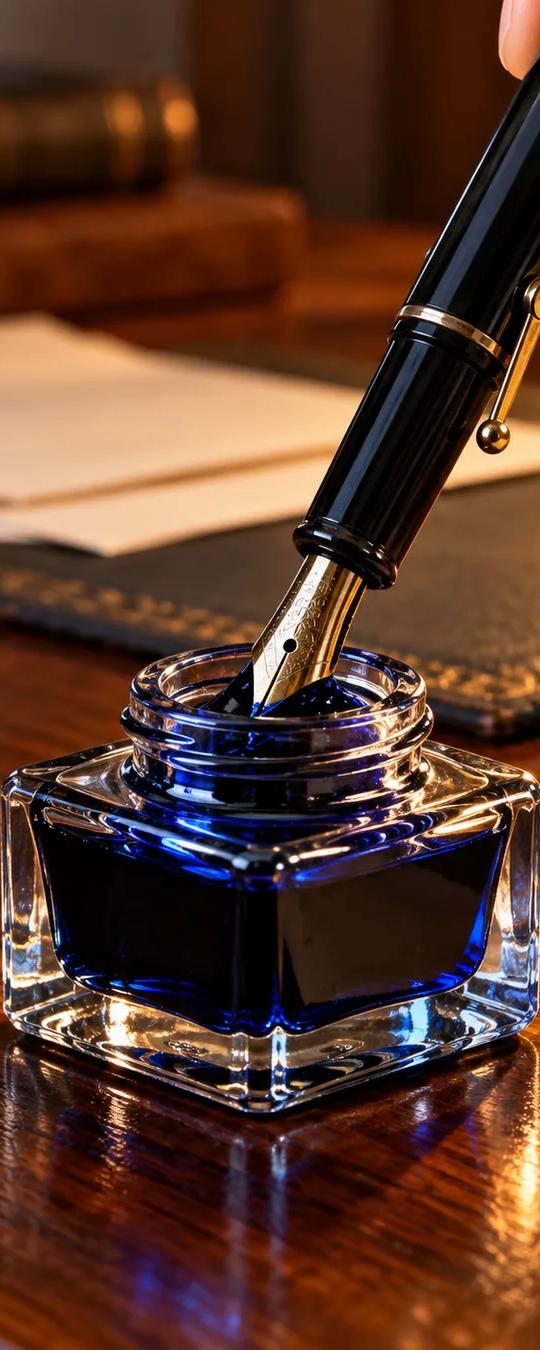
Ink that dries too quickly dries on the nib itself, and ink that comes down too fast floods the feed and leaves a blobby pen. A pen can also choke up, with too little fluid coming out. Pen designers balance the ink against the nib to avoid all of it.
Matched to the pen
A Montblanc wants Montblanc ink, and a Waterman wants Waterman ink. The effect is strongest on some Japanese pens, such as Pilot and Sailor, where the whole design is very specific to the chemistry of the ink going through it.
Pressure and line width
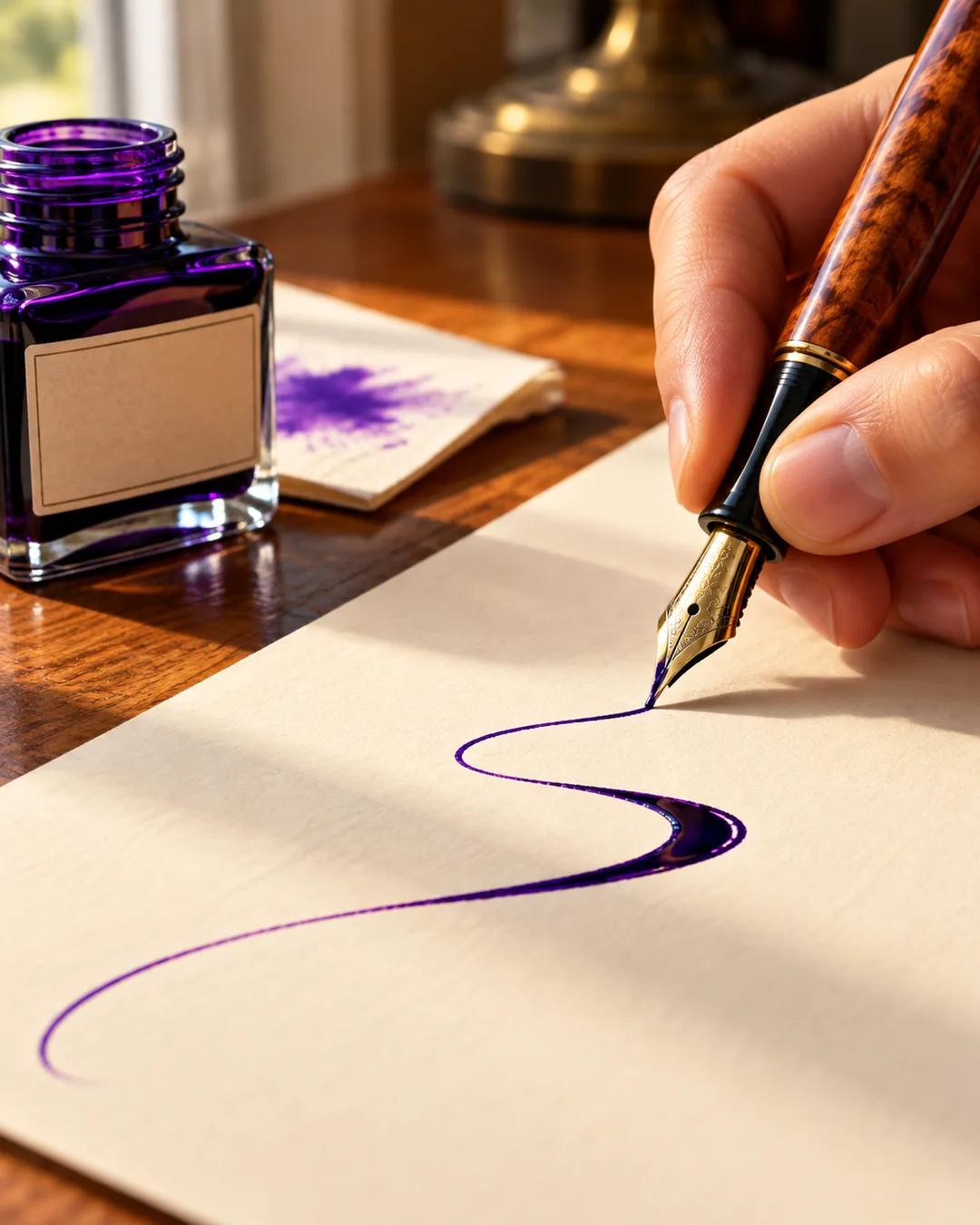
The nib matters just as much. A flexible 14 karat gold nib from the 1920s changes the width of the line with pressure: light pressure gives fine lines and harder pressure gives thicker, wetter ones. With a purple ink, the fine lines look purple and the thick ones look nearly black. The line can get wide enough that it's almost painting.
Why do inks look darker where lines are thick?
Ink colors come from dyes dissolved in water, and the color you see depends on how much dye sits on the paper. A thin line leaves a light layer that absorbs little light and looks pale. A thick, wet line pools more dye in the same spot, which absorbs more light and looks darker. Many ink colors blend several dyes, so the shade can also shift as the layer thickens.
Why are flexible nibs made of gold?
Pure gold is very soft, so pen makers alloy it with metals such as copper and silver. Fourteen karat gold is a little over 58 percent gold, and the alloy gives a spring that flexes under pressure and returns to shape. Gold also resists corrosion from the water-based inks that eat at many other metals.
Why does ink dry on the nib?
Fountain pen ink is mostly water, which evaporates quickly where a thin film of ink is exposed to air at the nib tip. As the water leaves, the dyes and additives left behind form a crust. Inks usually include humectants such as glycols, which slow drying by holding onto water. Makers tune that balance against how fast the pen feeds ink.
More from The Rest Is Science