Korva is a scroll of the internet’s best ideas.
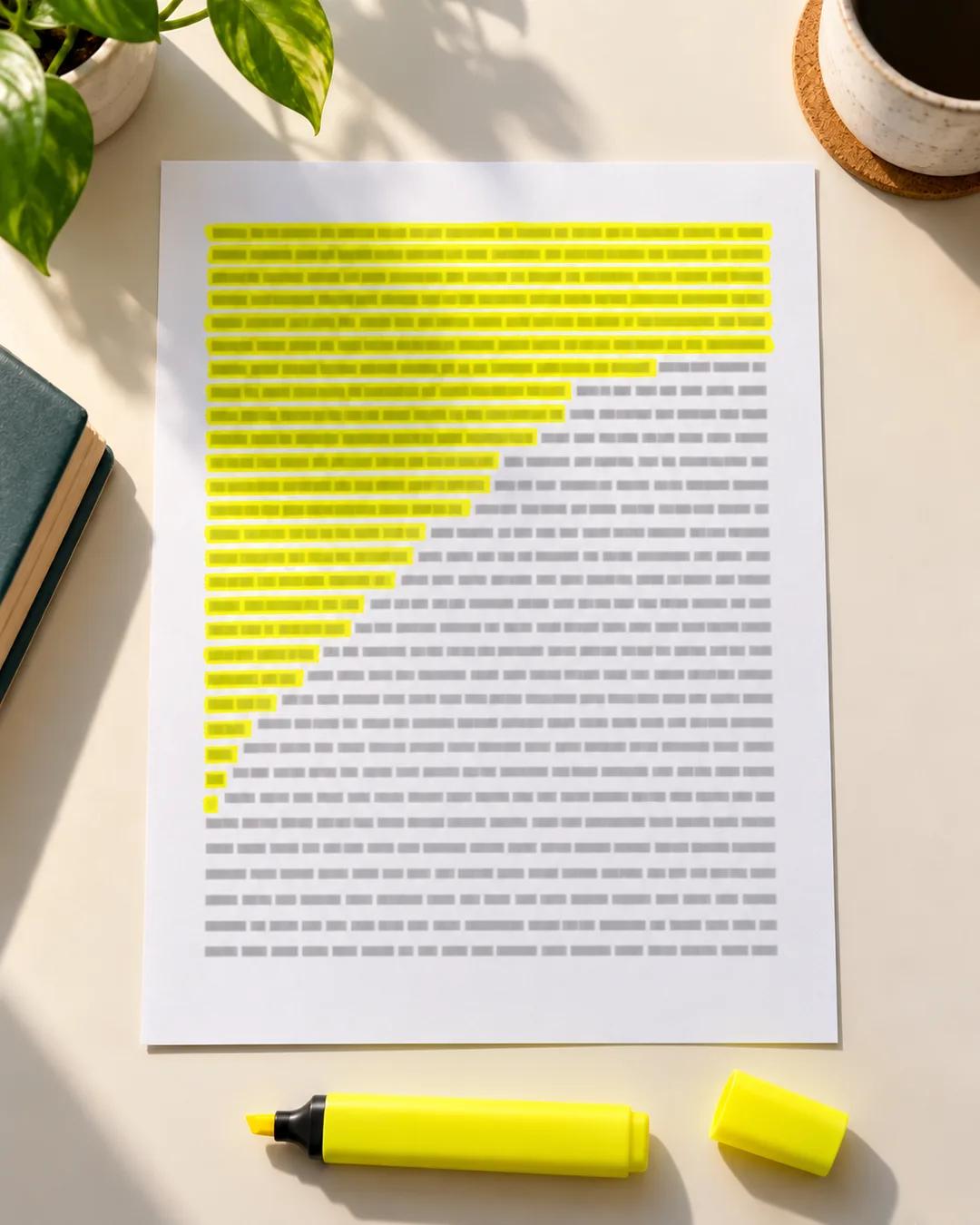
Instinct's makers use that pattern to shape every message the assistant sends. Readers spend most of their time on the first two lines and the beginnings of each line, so the assistant puts the information that matters up front. A big block of text that forces scrolling to find the next message costs the reader effort.
The goal is the lowest fatigue and the least cognitive load. A message is judged on its shape as well as its words, since even a text message carries meaning through how it looks when it arrives. Front-loading the first 30 percent lets the reader get the point and read the rest only if they want it.
The assistant also adapts. If a person's response rate drops when messages run long, it notices and shortens them for that person.
What did eye tracking find about screen reading?
The Nielsen Norman Group published eye-tracking research in 2006 showing that people often read web pages in an F-shaped pattern. They read across the top, then a shorter line below it, and then scan down the left edge. The finding led designers to put the most important words at the start of headings, lines, and paragraphs. The group tracked more than 200 users in the study.
Why do reporters put key facts first?
Newspapers developed the inverted pyramid style, which puts the most important facts in the first sentences and the details after. Its origin is often linked to telegraph reporting during the American Civil War, when lines could fail before a story was finished. Editors also found that stories written this way could be cut from the bottom without losing the point. The style took hold in American newspapers in the late 1800s.
Why does reading tire the brain?
The educational psychologist John Sweller introduced cognitive load theory in 1988. It holds that working memory can handle only a few pieces of information at once, and that every unnecessary step uses up part of that space. Nelson Cowan's 2001 review put the capacity of working memory at about four chunks. Layout that spreads attention across a block of text spends that limited space on finding the point.
More from Invest Like the Best with Patrick O'Shaughnessy