Korva is a scroll of the internet’s best ideas.
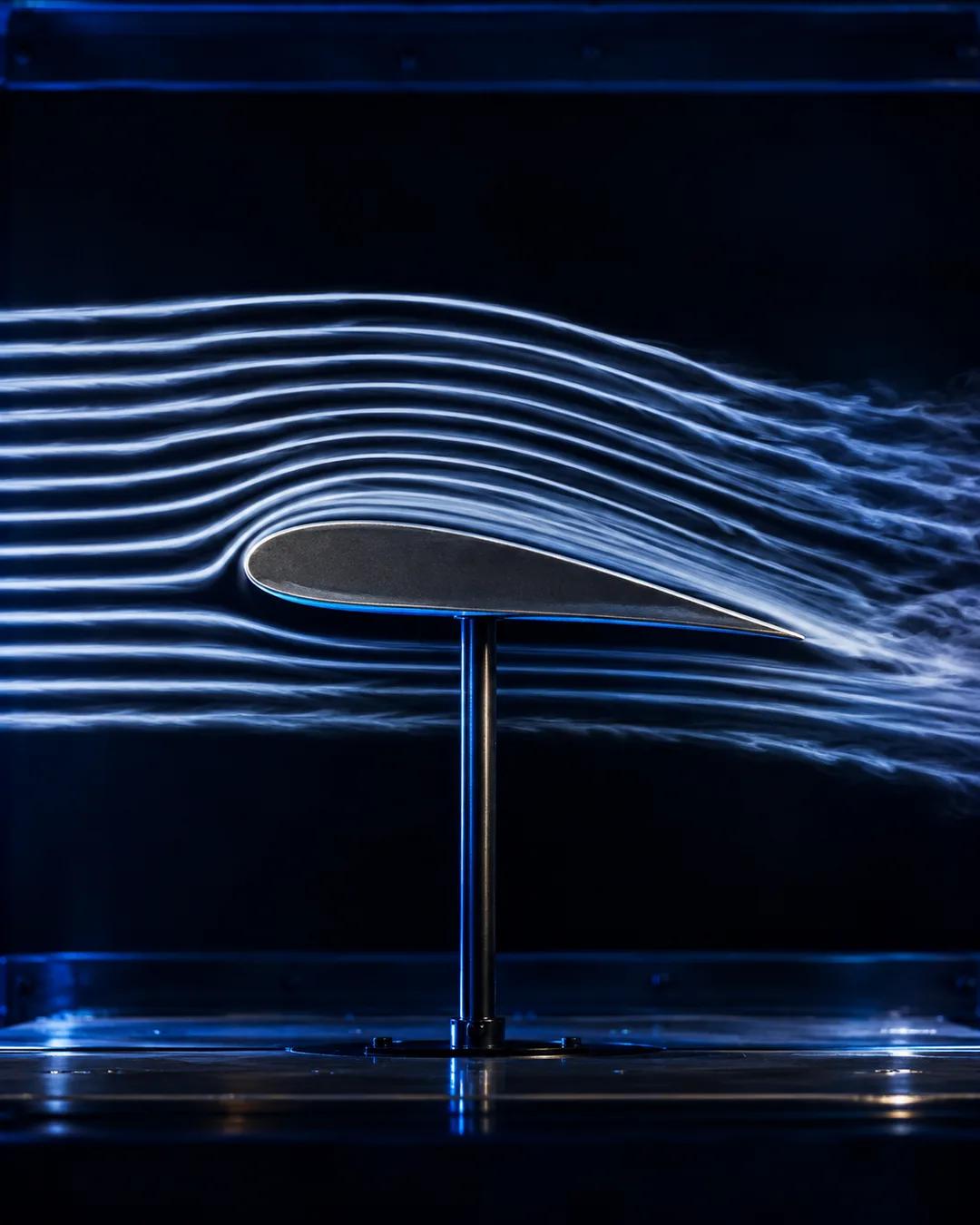
Planes fly on Bernoulli and Newton

The textbook story
The textbook story says a wing is curved on top and flat underneath. Two bits of air meet the wing at the front, one goes over the top and one goes straight to the back, and the one on top travels farther, so it must move faster. Faster air has lower pressure, so the wing rises. The trouble is that no rule says the two bits of air have to meet again at the back, so nothing makes the air on top hurry.
Newton and upside-down flight
A curved top alone also can't explain how planes fly upside down. The Newton explanation covers that: a wing angled slightly upward deflects the air downward, and the equal and opposite reaction pushes the wing up. What matters is the angle of attack, the angle at which the wings are set, so a plane flying inverted at the same angle of attack can still fly.
Why both hold
Newton alone falls short too. Smoke released well ahead of a wing starts moving upwards way before it reaches the wing. After a lot of debate, the conclusion is that it's sort of both: fast air does have lower pressure, and neither explanation holds up while ignoring the other. Designers of an aerofoil don't pick one, because the two work as shorthand for something far more complicated.
Why does a wing stall?
A wing makes more lift as its angle of attack rises, but only up to a point. Past a critical angle, often around fifteen degrees for common wing shapes, the smooth airflow over the top separates from the surface and turns turbulent. Lift drops sharply while drag climbs. Pilots call that loss of lift a stall, and it has nothing to do with the engine stopping.
How do engineers calculate airflow over wings?
The governing math is the Navier-Stokes equations, which describe how fluids move, and they have no general closed-form solution for something as complicated as a full wing. Both Bernoulli's pressure relation and Newton's laws of motion fall out of those equations as special views of the same flow. Engineers solve them numerically with computer simulations, known as computational fluid dynamics, and check the results in wind tunnels. The Wright brothers built a small wind tunnel in 1901 to compare wing shapes.
More from The Rest Is Science