Korva is a scroll of the internet’s best ideas.
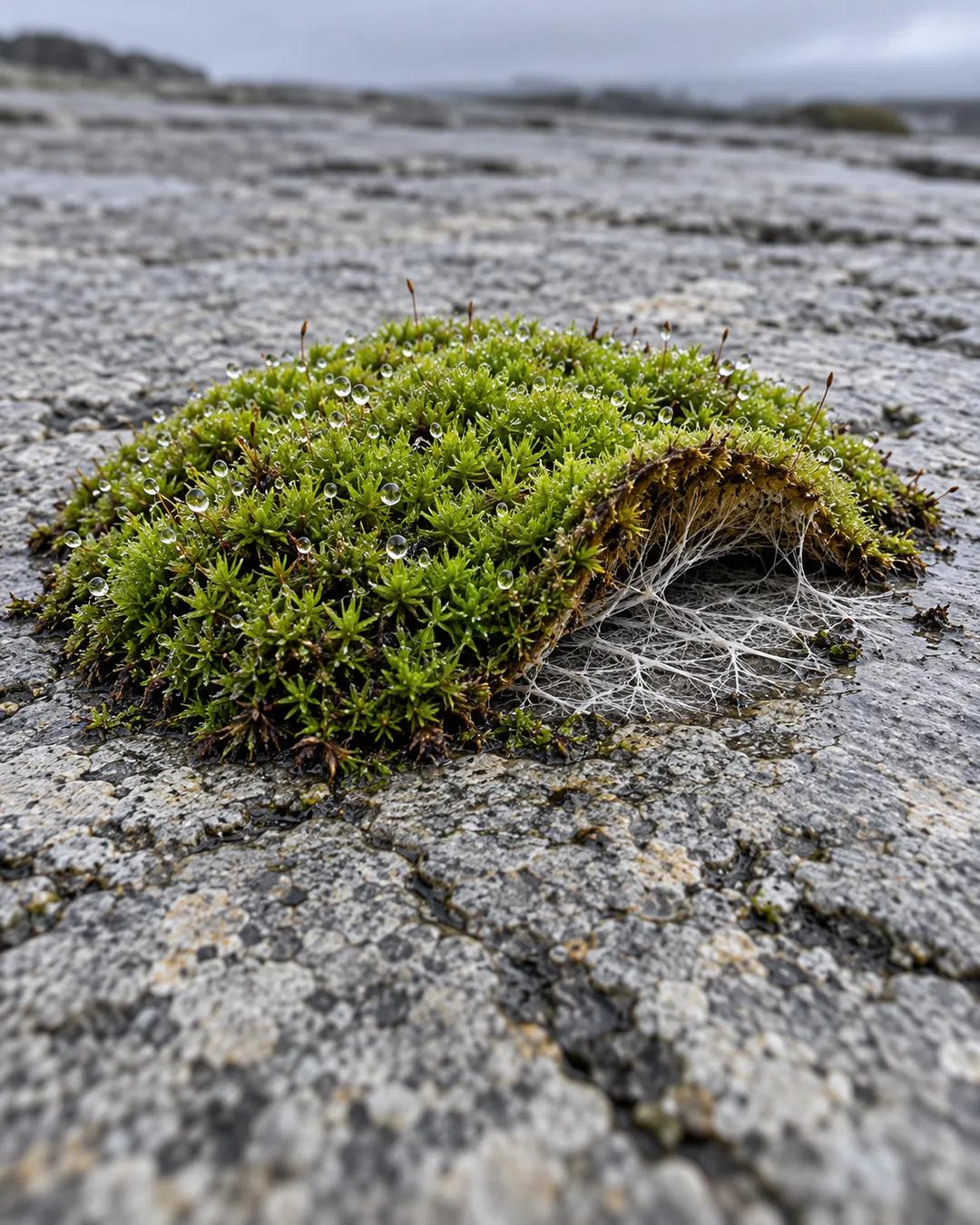
Plants reached land with fungi

A bare-rock world
Until then, all life was marine, and the land was bare rock. Fungi obtain food by breaking down minerals in their immediate environment. Paired with fungi in the ground, plants could photosynthesize above it, and together they survived on land. The first pioneers were partnerships of plant and fungus.
The land turns green
As plants spread over the land, the bare rock turned green and the amount of solar energy the biosphere could capture grew enormously. That gave a great boost to evolution and diversification, a bit like having solar panels everywhere.
Walking on land
Everything that walks around on land belongs to December on the Earth calendar, after those partnerships had arrived in late November. Vertebrates with blood and bones were already in the oceans by then.
How do fungi help plants today?
Most land plants still partner with fungi in structures called mycorrhizas around their roots. The fungal threads reach far more soil than roots can and bring back water and minerals such as phosphorus. In return, the plant hands over a share of the sugars it makes. Fossils from the Rhynie chert in Scotland, about 407 million years old, show fungi living inside early land plants.
How did land plants change the atmosphere?
Plants pulled carbon dioxide out of the air and locked it into their tissues. Their roots also broke down rock faster, a process that draws down more carbon dioxide over time. The geochemist Robert Berner estimated that atmospheric carbon dioxide fell steeply during the Devonian as forests spread. Later, the coal forests of the Carboniferous period buried enormous amounts of plant material.
Why did roots matter so much?
Roots anchor plants and pull water up from the ground, which let plants grow tall. They also turn rock into soil by prying it apart and releasing acids. Before roots, land held little soil that could hold water or support big plants. The first true forests appeared in the Devonian, about 385 million years ago.
More from On Humans