Korva is a scroll of the internet’s best ideas.
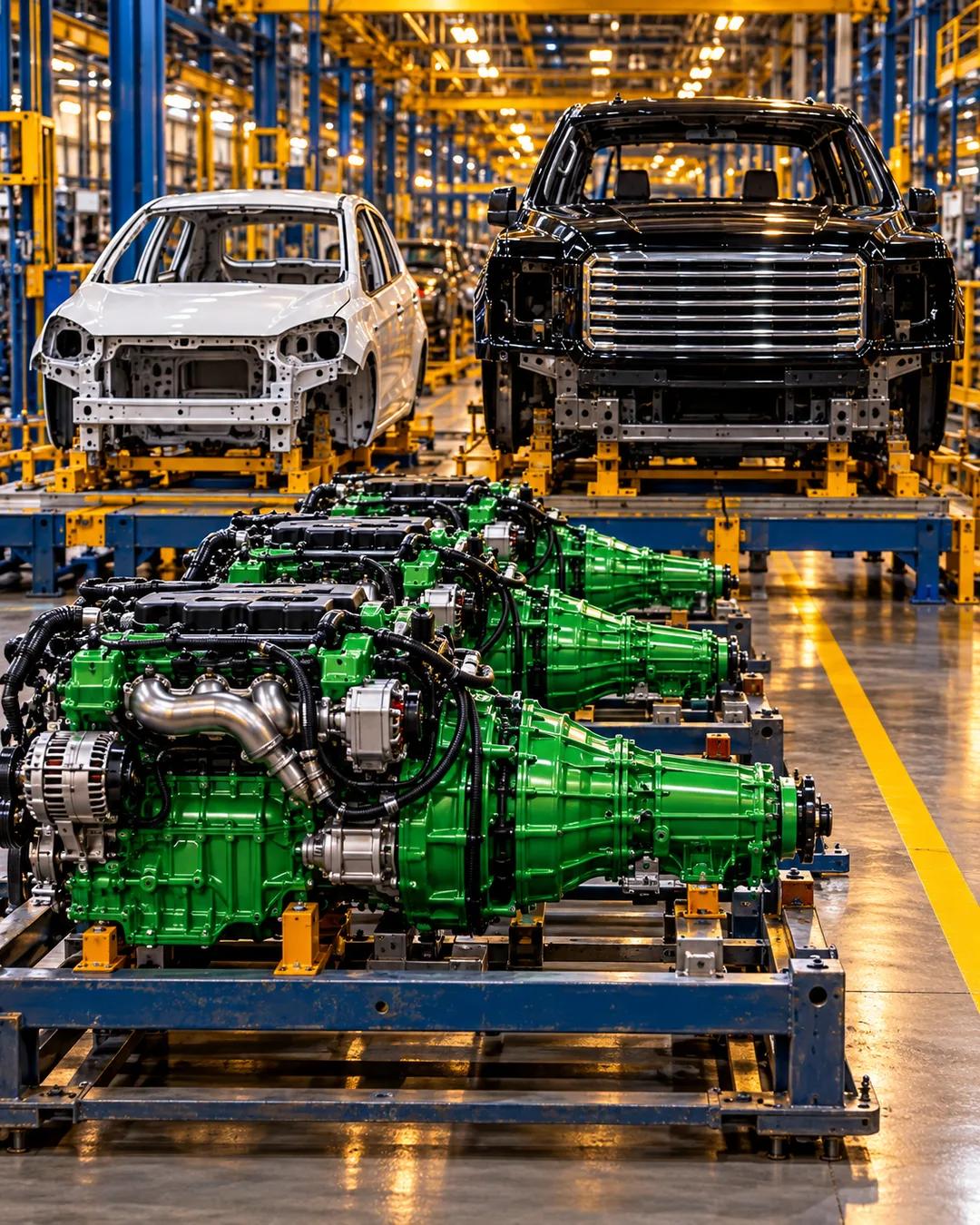
Premium trucks barely cost more to build

The most expensive components are also, generally, the ones you can't choose to leave out: the engine, the transmission, the airbags, and the brakes. A bigger, more premium model adds relatively little on top of those.
Buyers react to price jumps differently at the top of the range. Customers don't balk at an extra five grand on a $70,000 Super Duty the way they would on a $20,000 Corolla. The Super Duty may be two, three, even four times as profitable as the Corolla.
That gap is one of several incentives that pushed carmakers toward trucks.
Why do buyers shrug off big upgrade prices?
Psychologists call this relative thinking: people judge a price difference against the base price instead of in absolute dollars. In a 1981 experiment by Amos Tversky and Daniel Kahneman, 68 percent of people said they would drive twenty minutes to save $5 on a $15 calculator, while only 29 percent would for the same $5 on a $125 jacket. The savings were identical in dollars. The extra cost of a car option looks the same way small beside a very large sticker price.
Why does size add so little cost?
Materials such as steel, glass, and tires grow with a vehicle's size, but they make up a modest share of the total cost. Engineering, tooling, crash testing, and factory equipment are fixed costs spread across every unit sold. A premium truck can also share an engine, electronics, and safety systems with its cheaper versions. Those shared parts are paid for once, however many trim levels a model is sold in.
Why do option packages earn such margins?
Automakers use versioning, a form of price discrimination, to sell the same underlying vehicle at different prices to buyers who value features differently. Items such as leather seats, larger screens, and premium audio cost the maker far less than the premium a buyer pays for them. Because buyers choose their own version, the maker can collect more from those willing to pay more without losing the budget buyer. Economists have long studied the same technique in markets from airline seats to software.