Korva is a scroll of the internet’s best ideas.
Prizes show what America dreams of
Depression and postwar
In the Great Depression, people were willing to look foolish on the radio for one dollar. After World War II, factories wanted Americans to know goods were being produced again, so radio shows gave away refrigerators and furniture. Keeping up with the Joneses became a big deal, and the dream shifted from providing for your family to having nice things for them. The quiz shows handed out stuff in massive quantities just as the country at large was chasing it.
The quiz show boom
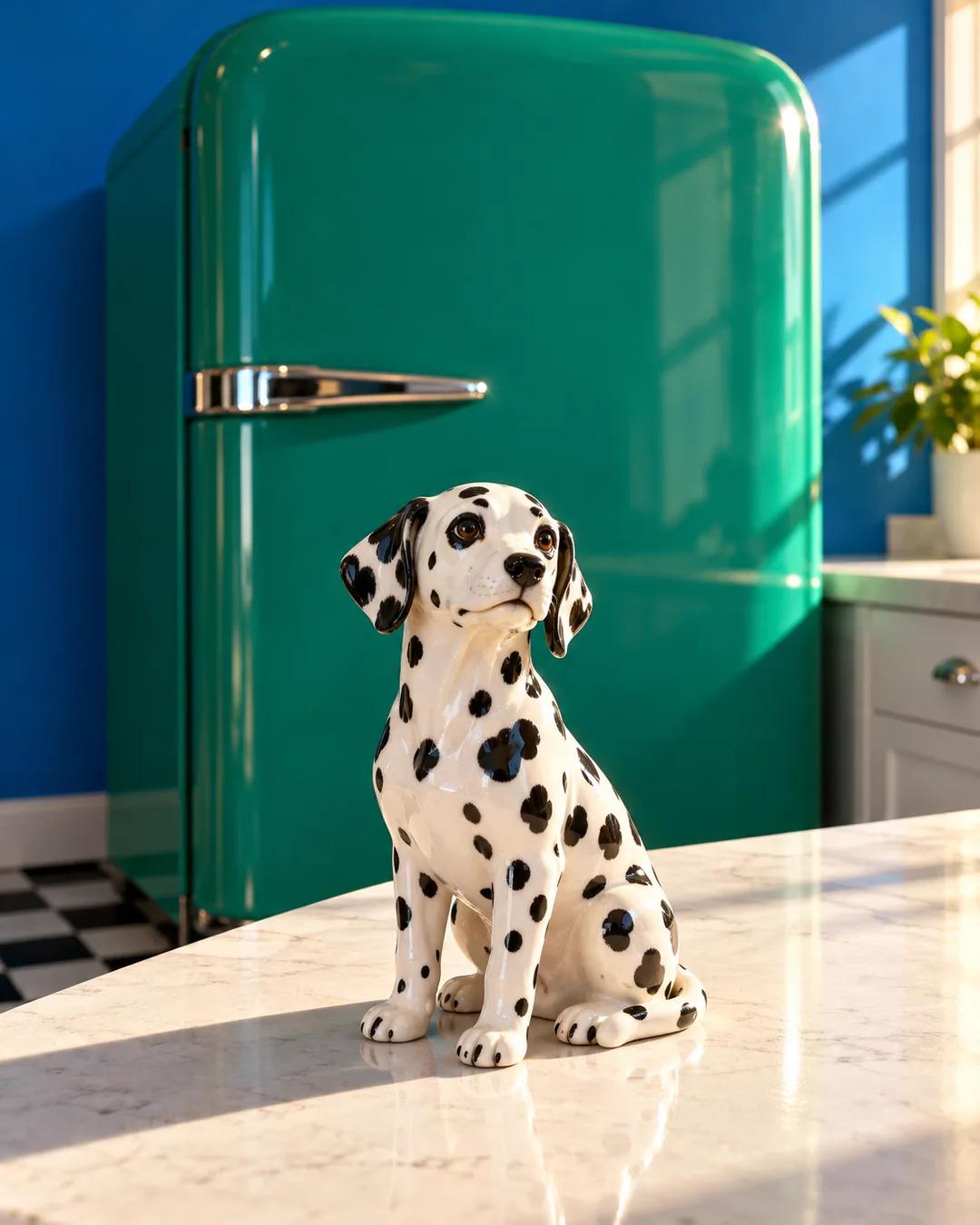
In the 1950s, prizes grew a thousand times bigger. Name That Tune went from a $1,600 grand prize to $25,000, and The $64,000 Question became the hit of 1955. The promise behind them was that smarts and hard work could win you the life you wanted. When the rigging scandals broke that promise, game shows turned to luck and prizes that improved life slightly: a car, a holiday, a ceramic Dalmatian. A $154 Dalmatian points to the freedom of having your essentials covered so you can buy something just for the sake of having it.
Television and big money
Then television showed Americans Dallas, Knots Landing, and Lifestyles of the Rich and Famous, and the dream grew into a taste for really big money. Game shows got bigger again, from Beast Games to Deal or No Deal Island, with a $5 million prize that offers an entirely new life. Against that, a ceramic Dalmatian as a prize looks like an insult.
Why did postwar radio hand out appliances?
After World War II, factories that had built military goods switched back to refrigerators, washing machines, and furniture. Manufacturers wanted shoppers to see those products, and a prize on a broadcast was a form of advertising. By 1950, about eight in ten American homes had a mechanical refrigerator, according to US Census data.
How does television shape what people want?
George Gerbner, at the University of Pennsylvania's Annenberg School, developed cultivation theory in the late 1960s and 1970s. It holds that people who watch a lot of television come to see the world as television shows it. Research in that tradition has linked heavy viewing to overestimating how common wealth and crime are.
How did the $64,000 Question get its name?
It began with Take It or Leave It, a radio show that debuted in 1940, where question values doubled up to a top prize of $64. The phrase the $64 question entered everyday speech for a hard problem. When CBS brought a quiz to television in 1955, it multiplied that figure by a thousand.