Korva is a scroll of the internet’s best ideas.

Psychology's scandal is chapter 12
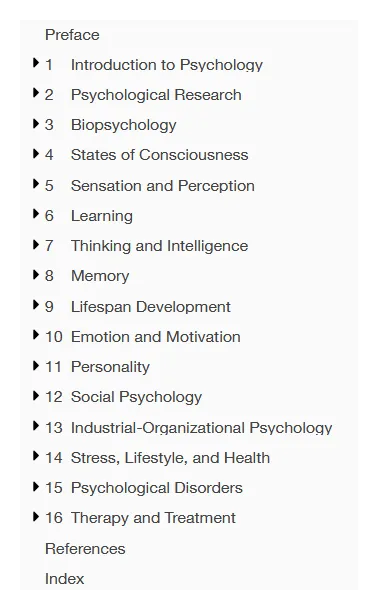
Where the scandal sits
Social priming is the study of how seemingly trivial interventions can have outsized effects on behavior. It sits inside social psychology, which also holds power poses, nudges, stereotype threat, the Stanford Prison experiment, and the Wansink portion size study. In the OpenStax Psychology textbook, all of that lives in chapter 12, and the other fifteen chapters are comparatively innocuous.
What chapter 12 covers
Chapter 12 itself covers social roles, cultural norms, persuasion, conformity, groupthink, political polarization, ingroups and outgroups, and the psychology of love and relationships. It mentions the Kitty Genovese story and the Stanford Prison Experiment as historically important teaching examples that probably didn't happen the way they were classically described. Stereotype threat appears without any caveats, and social priming doesn't appear at all. That could be a post-replication cleanup, since the book is from 2026, or it could be that none of the shaky material mattered enough to make it into a 101-level overview.
How few researchers it involves
Social priming researchers make up somewhere between 0.05 and 0.2 percent of the people doing psychology. Add a few more from the 10 to 20 percent who work in social psychology, and that is the group the field's bad reputation rests on.
How did the replication crisis begin?
In 2011, psychologist Daryl Bem published a paper in the Journal of Personality and Social Psychology reporting evidence that people can sense future events. Other researchers found the paper's methods were standard for the field, which made the result hard to dismiss and raised doubts about the methods themselves. In 2015, the Open Science Collaboration tried to repeat 100 published psychology studies. Roughly 97 of the originals had reported statistically significant results, and only about 36 of the repeats did.
Why do small studies produce flashy results?
A study with few participants gives noisy estimates, so the effect it measures can swing far above or below the true value by chance. Journals have historically favored significant results, so the large chance swings are the ones that get published. This pattern is sometimes called the winner's curse, because the studies that cross the threshold are often the ones that overestimated the effect. Repeating them with larger samples tends to shrink the effect toward zero.
Why is the Kitty Genovese story still taught?
Kitty Genovese was killed in Queens, New York, in 1964, and a New York Times article reported that 38 witnesses watched without helping. Later reporting found that the number of people who saw the attack was much smaller and that at least one neighbor did call the police. The original account still prompted John Darley and Bibb Latané to run experiments in 1968 on how groups respond to emergencies. Those experiments produced the bystander effect, which textbooks continue to cover.
More from Scott Alexander