Korva is a scroll of the internet’s best ideas.
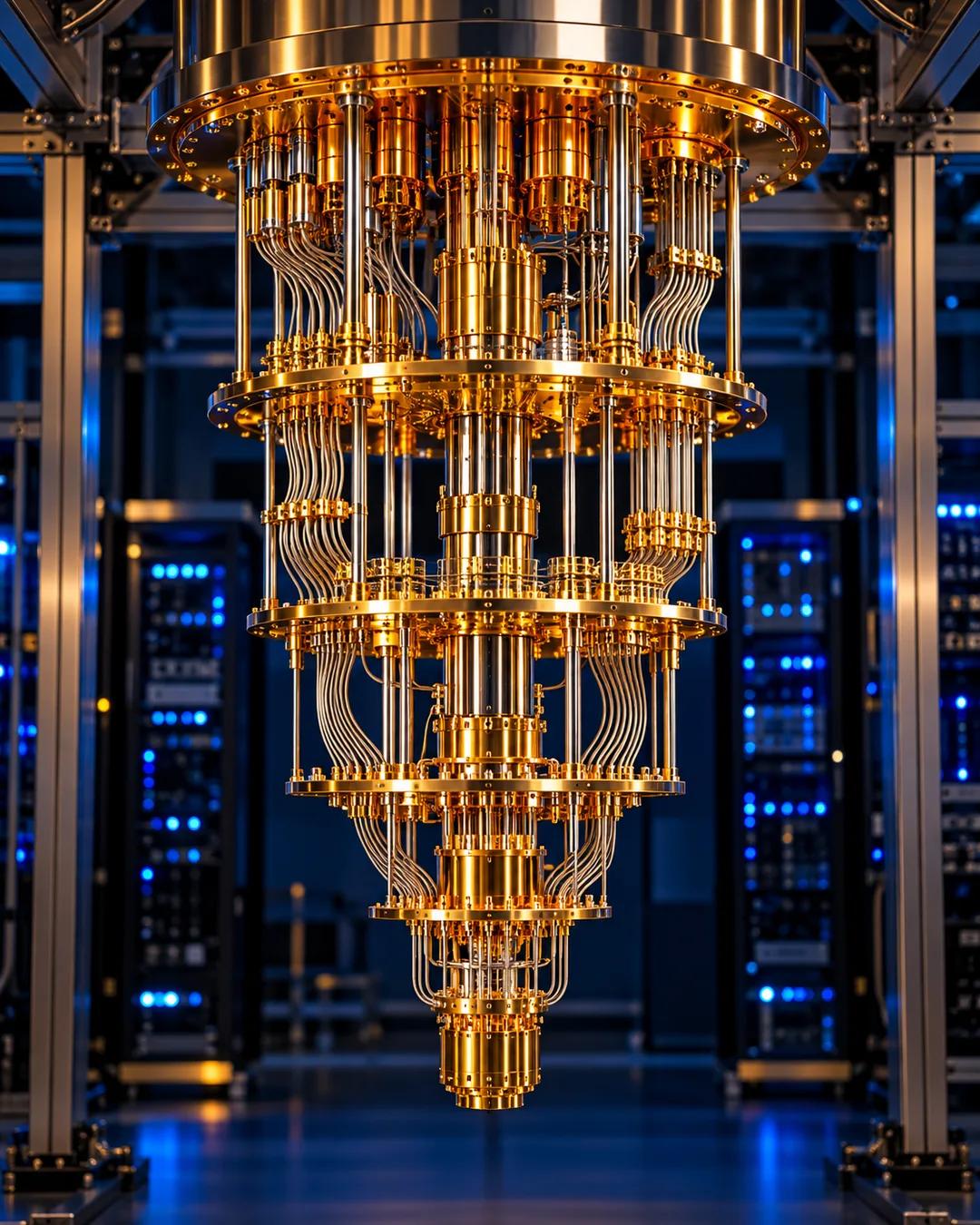

Quantum results are predicted across multiple industries this decade. The first will be things that cannot be computed today, in chemistry and biology, along with easier ones like logistics, where the best answer for getting a thing to someone is computed. When classical computing, AI computing, and quantum computing come together is when things get really exciting.
Four, five, or six approaches to quantum, including trapped ions, photonics, and spin, are demonstrating pretty good results, so the choice of approach is not an issue. Error correction has been proven across them. Builders know how to make qubits, know how to error-correct them, and now have algorithms, so it is about engineering scale.
Solving encryption comes later, probably around 2032 or 2033, with the so-called Q-Day implications.
Why is error correction so hard for qubits?
A qubit loses its quantum state when it interacts with its surroundings, a process called decoherence. Copying a quantum state to check it is forbidden by the no-cloning theorem, so the classical approach of keeping spare copies does not work. Peter Shor published the first quantum error-correcting code in 1995, spreading one qubit's information across several. The threshold theorem later showed that if hardware errors fall below a certain rate, errors can be corrected faster than they accumulate.
Why does quantum threaten today's encryption?
Much of today's public-key encryption, including RSA, relies on the difficulty of factoring very large numbers. Peter Shor described a quantum algorithm in 1994 that factors integers in far fewer steps than any known classical method. A quantum computer large enough to run it would break such keys. The US National Institute of Standards and Technology published its first post-quantum encryption standards in 2024 to prepare for that day.
Has anyone shown error correction improving with scale?
Google Quantum AI reported in December 2024 that its Willow chip reduced errors as more qubits were added to an error-correcting code. Earlier devices had gotten worse as they grew, because each added qubit added more noise. Willow used 105 physical qubits. The result was described as crossing the below-threshold milestone.