Korva is a scroll of the internet’s best ideas.

Record 2,000 installs in July
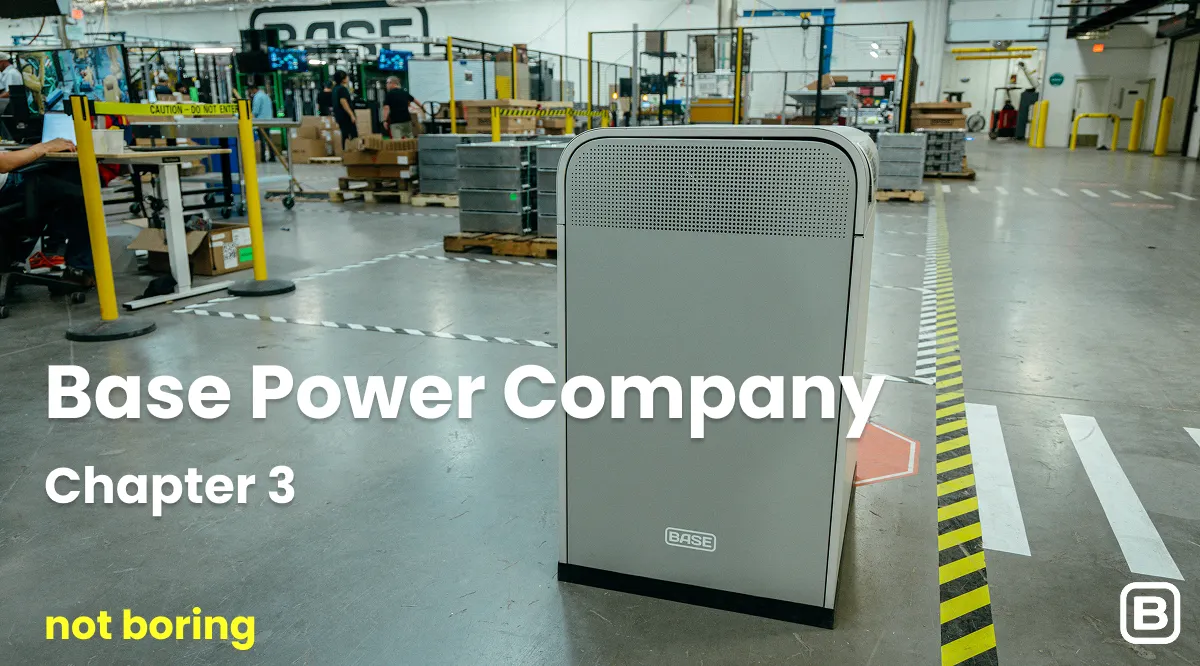
For every battery installed in July, more than three new battery members signed up. A full 58% of July installs were in regulated utilities' territories. The single-day installation record is now 113, up from 22 at the time of Base's last update in April 2025.
Base has deployed 585 MWh of storage and aims to pass 1 GWh by the end of the year. In July it installed twice as many batteries as it had installed in total in April 2025.
Last month the factory made 295 10-kWh modules in a single day. Base is still supply constrained. Base Energy, the retail electricity plan launched in April, reached more than 14,000 members three months in, bringing total membership above 30,000.
Why do manufacturers stay supply constrained?
A factory can't make more than its slowest step allows, and every new line takes months to build, debug, and speed up. Parts that come from sole-source suppliers cap output until those suppliers grow too. Demand can outrun capacity for a long time when the product is new and sign-ups are strong. Tesla set a goal of 5,000 Model 3 cars a week in 2017 and reached it only in the last week of June 2018.
How do home batteries add up to grid power?
A fleet of home batteries can be coordinated by software to discharge at the same moment, acting like a single large power plant. The grid operator sees one resource, even though it is made of thousands of small devices. ERCOT, the Texas grid operator, began an aggregated distributed energy resource pilot in 2022 that lets fleets of small devices such as home batteries supply the grid together. Megawatt-hours measure how much energy such a fleet can store.
More from Packy McCormick