Korva is a scroll of the internet’s best ideas.
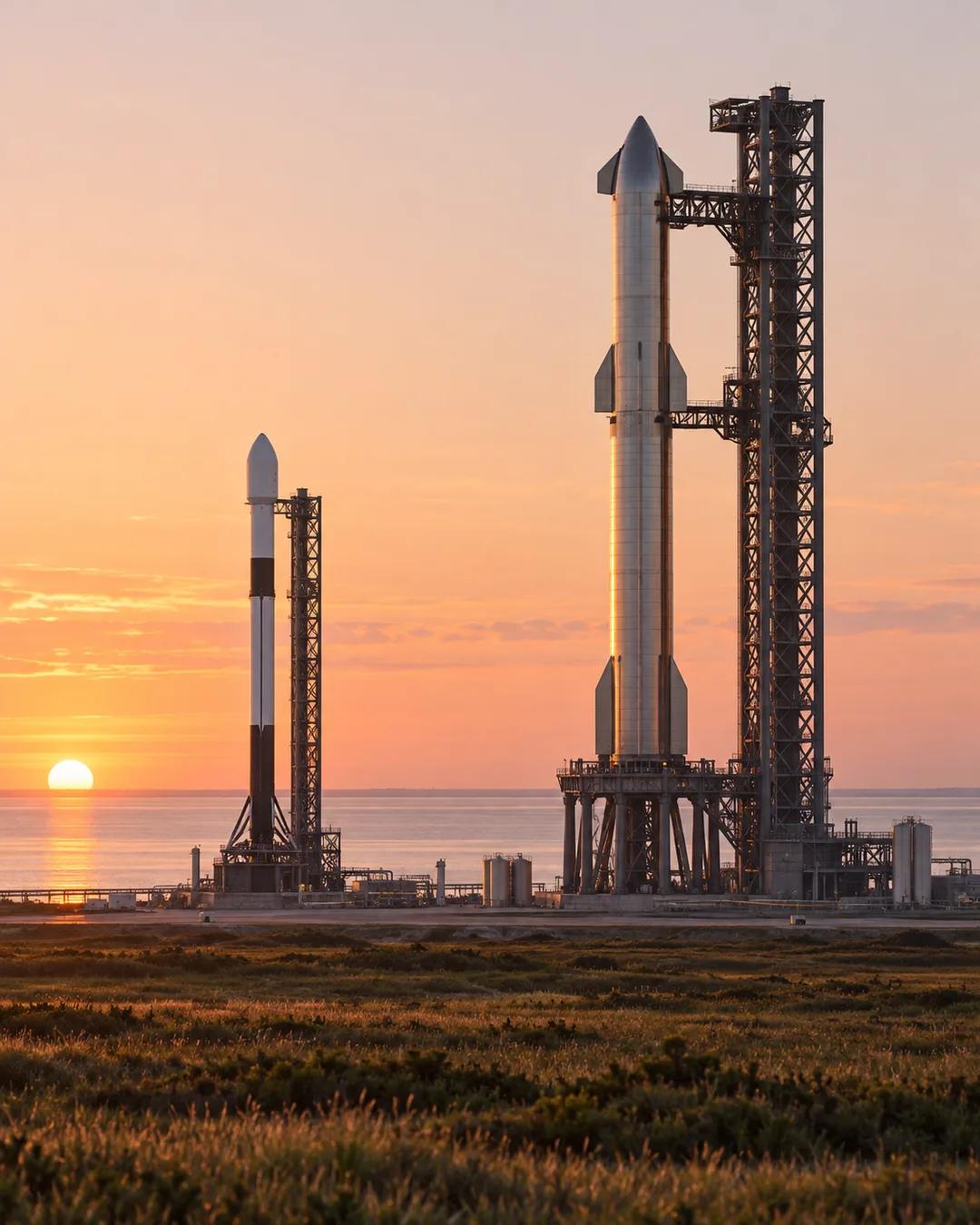

Retiring the Falcon 9
Reaching the company's vision takes a heavier lift launch vehicle, and that is Starship. In a few years, once existing customers are served, rides on the Falcon 9 stop being for sale, though the plan may not cover every mission. It is a burn-the-ships move, made on a rocket every other nation-state would treat as the future.
Sidestepping the dilemma
The company is building the machine that makes its own best product irrelevant, which sidesteps the innovator's dilemma that Clayton Christensen described. Everyone inside the organization talks about it as something that will be awesome, even though on paper, and now as a public company, it looks insane.
Publishing the plan
SpaceX and Tesla also publish their plans. Nothing SpaceX is doing is something it did not talk about 10 years ago, and Tesla laid out how the first Roadster would fund the S, which would fund the 3. The roadmap is public, along with, in Tesla's case, the patents, which amounts to an invitation to copy.
Why do successful companies avoid replacing their best product?
Clayton Christensen's 1997 book The Innovator's Dilemma studied the disk drive industry. He found that leading firms listened to their best customers, who wanted improvements to the current product, and so passed over cheaper technologies that began as inferior. The old product kept earning higher margins than the new one in its early years, which pushed money away from the newcomer. Entrants then improved the new technology until it overtook the incumbents.
How does Starship differ from Falcon 9?
Falcon 9 reuses its first stage booster, which lands after launch, and its second stage is discarded. Starship is designed so that both the booster and the upper stage return and can be reused. SpaceX lists Falcon 9 at about 22 tonnes to low Earth orbit when the booster is not recovered. SpaceX's stated goal for Starship is 100 tonnes or more to low Earth orbit.
Why did Tesla publish its patents?
In June 2014 Elon Musk posted a blog entry titled All Our Patent Are Belong To You. In it Tesla pledged not to start patent lawsuits against anyone using its technology in good faith. The stated aim was to speed up the arrival of electric vehicles across the industry. Tesla later made a similar pledge covering its patents more broadly.
Why is it called burning the ships?
The phrase goes back to the Spanish conquistador Hernan Cortes, who landed in Mexico in 1519. According to the traditional account, he destroyed his ships so his men could not retreat. Historians debate whether he burned them or scuttled them. The phrase now describes any commitment that removes the option of going back.
More from Lenny's Podcast: Product | Growth | Career