Korva is a scroll of the internet’s best ideas.

Why TSMC holds back
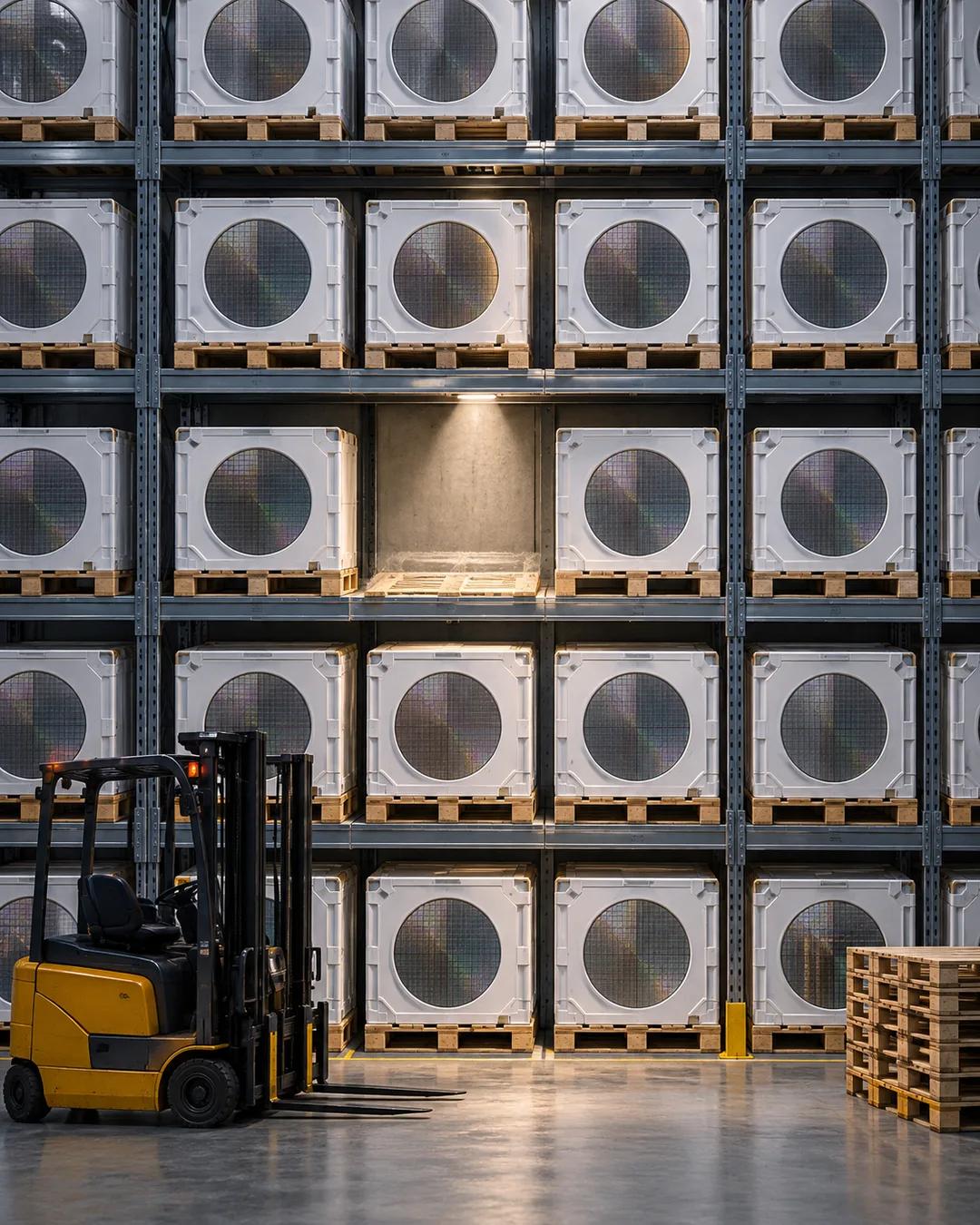
A fab is expected to run for 30 years, so building too much bakes excess capacity into the system for decades. TSMC's fear is overcapacity, which makes it very biased toward caution. It expanded in a big wave around 2020, 2021, and 2022, and then its growth rate fell in 2024 and again in 2025.
Where the risk lands
Every big tech company now sees that more compute would bring in more money, and the foregone revenue and profit is how the risk TSMC handed off has landed. Risk can take the form of money not made instead of money lost.
Lead times
Money going into compute today doesn't turn into chips today. A fab has even longer lead times than a data center, and the investment pouring in now becomes compute in 2028 and 2029. TSMC's CEO, C.C. Wei, spent a recent earnings call talking about AI use cases in a way he never had before.
Why are fabs built to last 30 years?
Most of a fab's structure is cleanrooms, power systems, and plumbing for ultra-pure water, which stay useful for decades. The manufacturing tools inside are replaced as each new process generation arrives. The building is therefore the long-lived part of the investment, and its capacity stays on the books long after the first tools are gone.
How long does it take to build a fab?
A new leading-edge fab typically takes two to three years from groundbreaking to production. TSMC broke ground on its first Arizona fab in 2021 and began producing chips there in 2024. The tool orders go in early, so the plan has to be set well before demand is known.
Why do supply chains swing so wildly?
Small changes in what shoppers buy become larger swings at each step back toward the factory, because every company orders extra to protect itself. Engineers call this the bullwhip effect. MIT's Jay Forrester described the pattern in his 1961 book Industrial Dynamics.
More from Invest Like the Best with Patrick O'Shaughnessy