Korva is a scroll of the internet’s best ideas.
Robots lack internet-scale data

No internet for robots
Classic robotics already works for repetitive tasks in controlled environments, like assembly lines. Varied tasks in real-world environments need AI plus robots, and the first problem is that no internet-scale data exists to bootstrap the model. People are trying videos, simulations, and teleoperation.
High-value data first
The internet itself is full of junk, and model companies prioritized the valuable parts: some things on Reddit over others, Wikipedia over other forums, GitHub over most things. Robotics companies do the same and go after the high-value data first. Once there is a strong pre-trained base, a few small examples added in post-training can teach it something that was never in the pre-training set.
Gloves and laundry
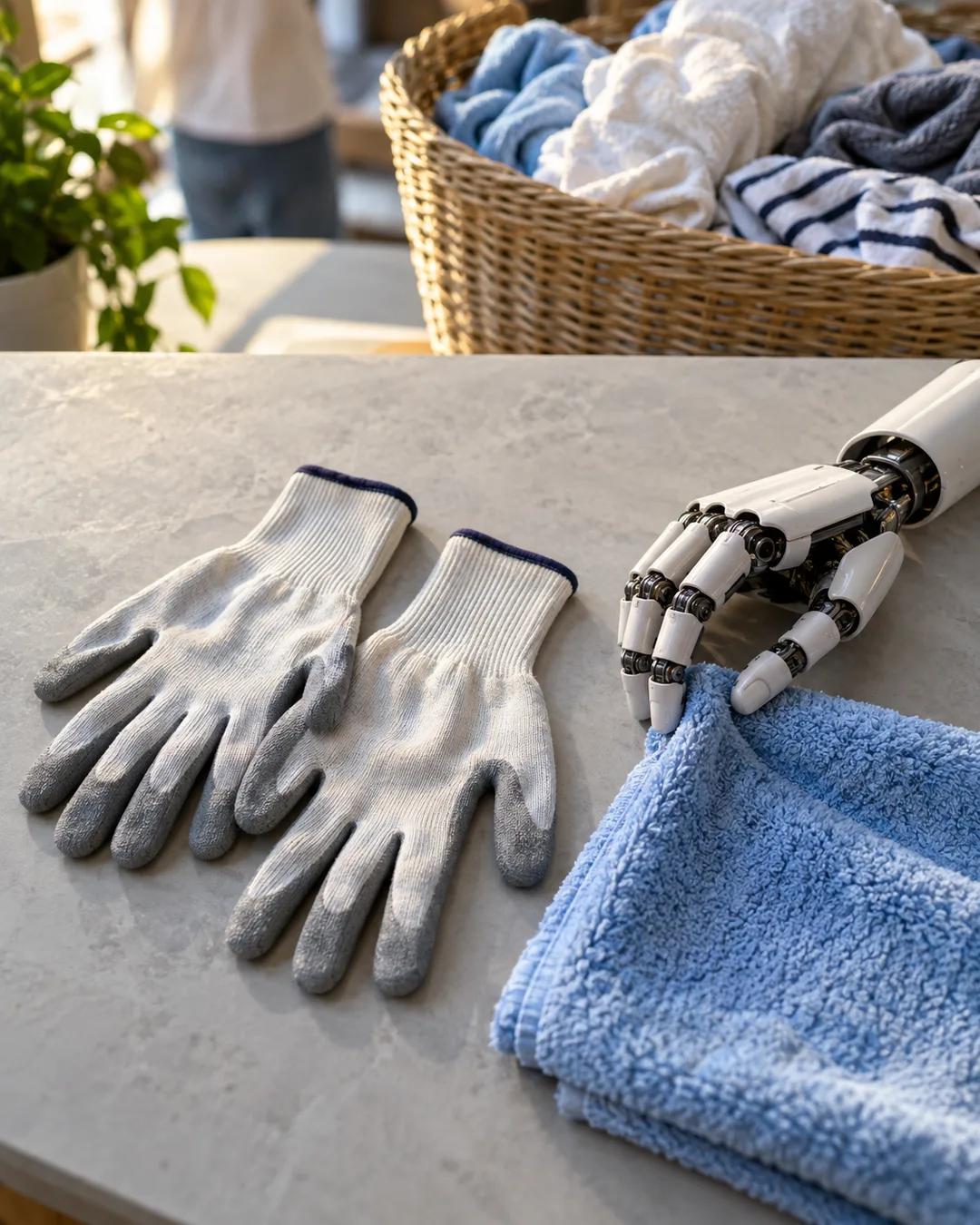
Autonomous vehicles followed that pattern. Waymo and Tesla each integrated vertically, and each gathered very high-quality data to pre-train on. Sunday Robotics does it with gloves designed to match the robot's hands, so data moves cleanly from person to robot. Laundry works as a first task because it is arbitrary, complex, dexterous, and not time-sensitive. The flywheel of pre-training and post-training matters more than the task.
Why does teleoperation produce good robot data?
In teleoperation, a human controls the robot while its cameras and joint sensors record every movement. The recordings pair what the robot saw with the action that worked. Stanford's ALOHA system in 2023 used low-cost teleoperated arms to teach tasks such as cooking a shrimp and opening a cabinet. A model can learn directly from those paired examples.
Why is dexterous hand work so hard?
The human hand has about 27 degrees of freedom, and the fingertips carry dense touch sensing. The roboticist Hans Moravec noted in the 1980s that perception and movement are far harder for machines than reasoning, a pattern known as Moravec's paradox. A computer won at chess long before any robot could fold laundry. Fine control of soft, shifting objects like cloth remains harder than rigid parts on an assembly line.
How did web data feed language models?
Common Crawl, a nonprofit that began archiving web pages in 2008, supplied a large share of the text behind early large models. OpenAI's 2020 GPT-3 paper described filtering Common Crawl down to about 410 billion tokens. Quality filters and added sources such as books and Wikipedia shaped the final mix. Robots have no archive of comparable size to draw from.
Why did simulation not solve robot training?
Simulated physics differs from the real world in friction, lighting, and the way materials bend. Models trained in simulation can fail when moved to a real machine, a problem called the sim-to-real gap. OpenAI's 2019 Rubik's Cube work narrowed it by randomizing simulated conditions during training. A robot hand then solved the cube in the real world.
More from Invest Like the Best with Patrick O'Shaughnessy