Korva is a scroll of the internet’s best ideas.
Why Rocking Works
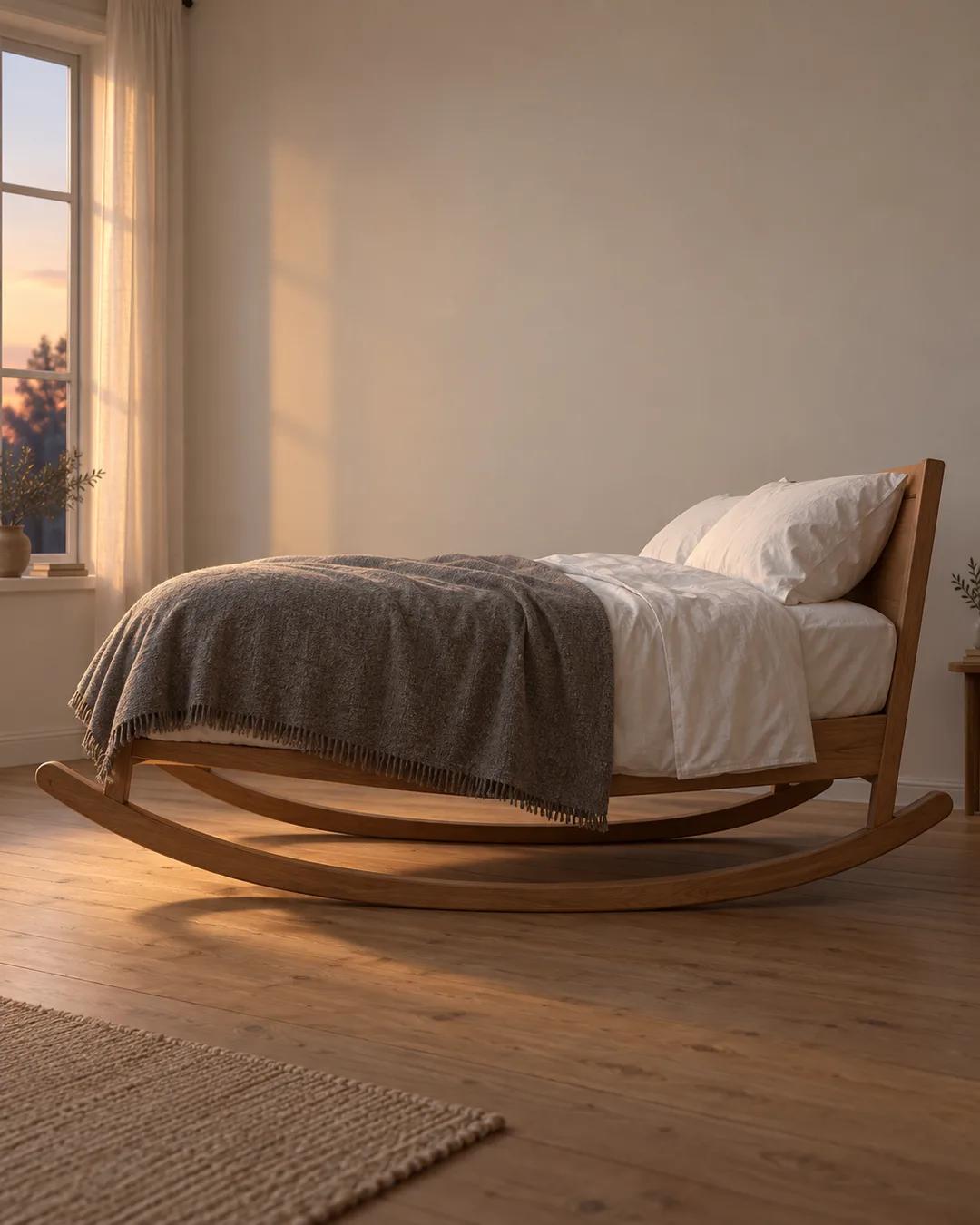
Studies of what puts babies and adults to sleep without drugs found that the rocking pace parents settle on by instinct works. Researchers have built a bed that rocks at a particular frequency, and adults fall asleep on it very quickly. When the body moves side to side, the eyes generate compensatory movements under closed eyelids, and eye movements constantly feed through the brain stem to the cerebellum to control balance and the sense of where the limbs are.
The Eye Movement Link
That points to a way to get the effect without a bed. Moving the eyes under closed lids to one side and then the other, up and then down, or around in circles, slowly or fast, confuses the circuit running from direction-selective cells in the retina through the accessory optic nuclei of the brain stem to the cerebellum, and the sense of body position fades.
The Sleep Mask
A group out of MIT built an eye mask around the same effect. It measures rapid eye movement directly, which wearables like Whoop, Oura, and Eight Sleep do not, and it produces slow back and forth, up and down eye movements through a small amount of stimulation behind the ears, where the muscles that move the eyes can be reached. Once REM sleep starts, the mask amplifies the REM stage. These devices are about seven to 12 months from release.
Why does rocking help sleep?
In a 2011 study from the University of Geneva, published in Current Biology, volunteers napped on a gently swaying bed. They fell asleep faster than on a still bed. Their brain recordings also showed more slow oscillations and sleep spindles, two rhythms linked to deeper sleep. Researchers think the rocking motion entrains those rhythms through the balance system.
How do the eyes help with balance?
The vestibulo-ocular reflex links the inner ear to the muscles that move the eyes. When the head turns, the inner ear senses it and drives the eyes in the opposite direction within about ten milliseconds. That keeps the image steady on the retina. The reflex runs through the brain stem and cerebellum, which fine-tune it.
Why can't wrist wearables measure REM directly?
REM sleep is defined in a sleep lab by three signals together: brain waves from EEG, eye movements, and muscle tone. A wrist device sees only motion and pulse, so it estimates stages with an algorithm. Studies comparing consumer wearables with lab recordings have found they do reasonably well at telling sleep from wake and less well at separating individual stages.
More from Invest Like the Best with Patrick O'Shaughnessy