Korva is a scroll of the internet’s best ideas.
Roman laundry used urine

Washing in urine
A fullonica was the Roman workshop for finishing woven cloth and cleaning it once it got dirty. In Pompeii, a preserved pillar from one of them lays out the whole process. The first step was washing the cloth in water with urine, potash, natron, and other materials that degreased it. Slaves, including children, did the treading.
Whitening and drying
Next, fuller's earth was rubbed into the cloth to whiten it, and the cloth was washed again. A press squeezed the water out. Then the cloth was hung to dry on long beams of wood and combed out.
Fumigating with sulfur
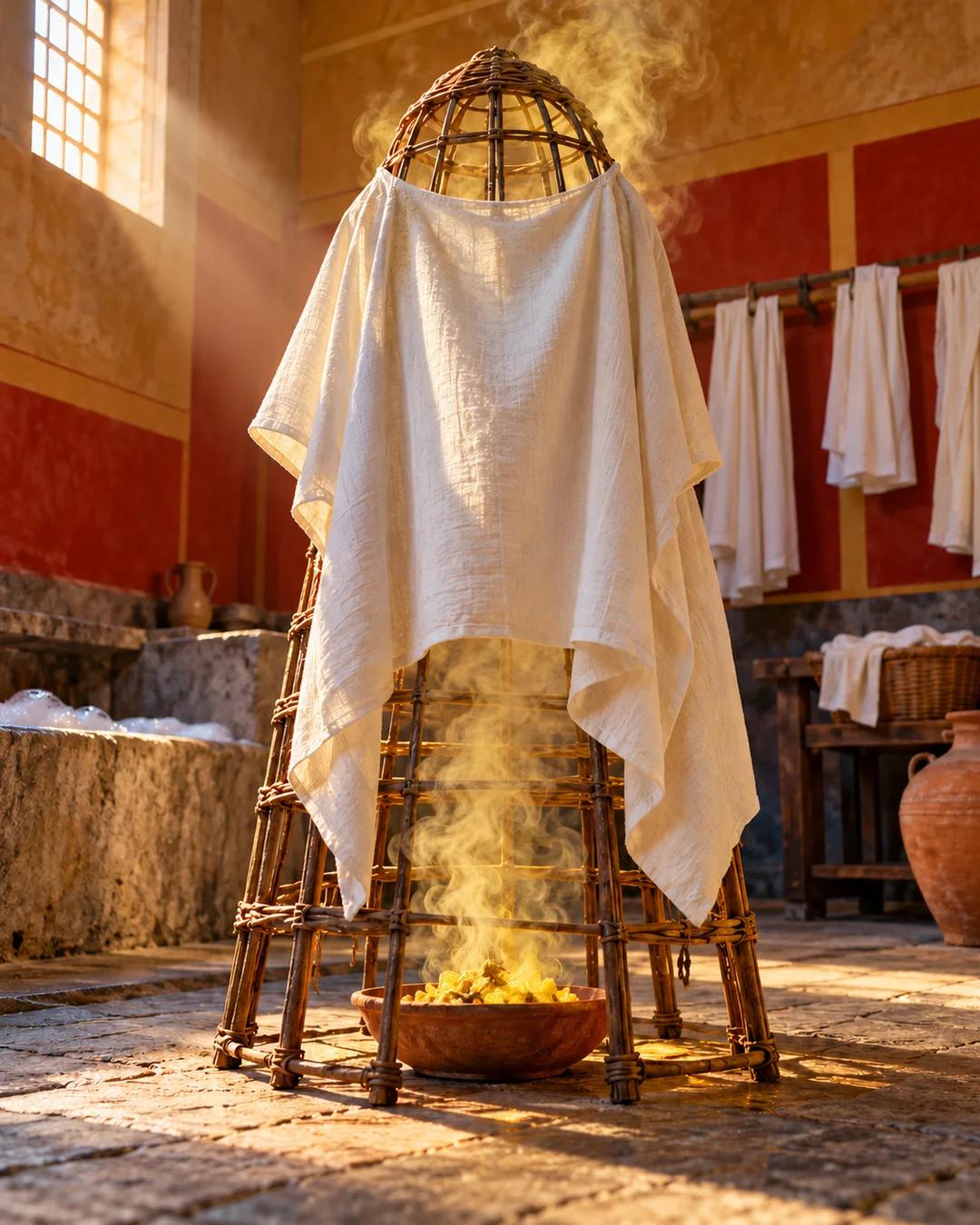
The last step was fumigation. The cloth was placed on a wicker frame and treated with sulfur, which finished the job.
Why did urine work as a cleaner?
Stale urine breaks down into ammonia, an alkaline chemical that dissolves grease and oil. Fullers collected it in pots set out in streets and public places. The Roman biographer Suetonius reports that the emperor Vespasian taxed the urine trade.
How does burning sulfur whiten cloth?
Burning sulfur releases sulfur dioxide gas, which reacts with the colored compounds in fabric and strips their color. Wool treated this way comes out noticeably brighter. Pliny the Elder lists bleaching wool among the uses of sulfur. Textile makers kept using sulfur fumes for wool for many centuries afterward.
Why did fuller's earth whiten cloth?
Fuller's earth is a fine clay that soaks up grease, oil, and dirt. Worked into damp cloth, it holds those stains and carries them away when it is washed out. The name comes from the fullers who used it for this job. Clays of this kind are still mined today and sold as absorbents.
More from Ancient Rome Live