Korva is a scroll of the internet’s best ideas.
Same steps, every problem

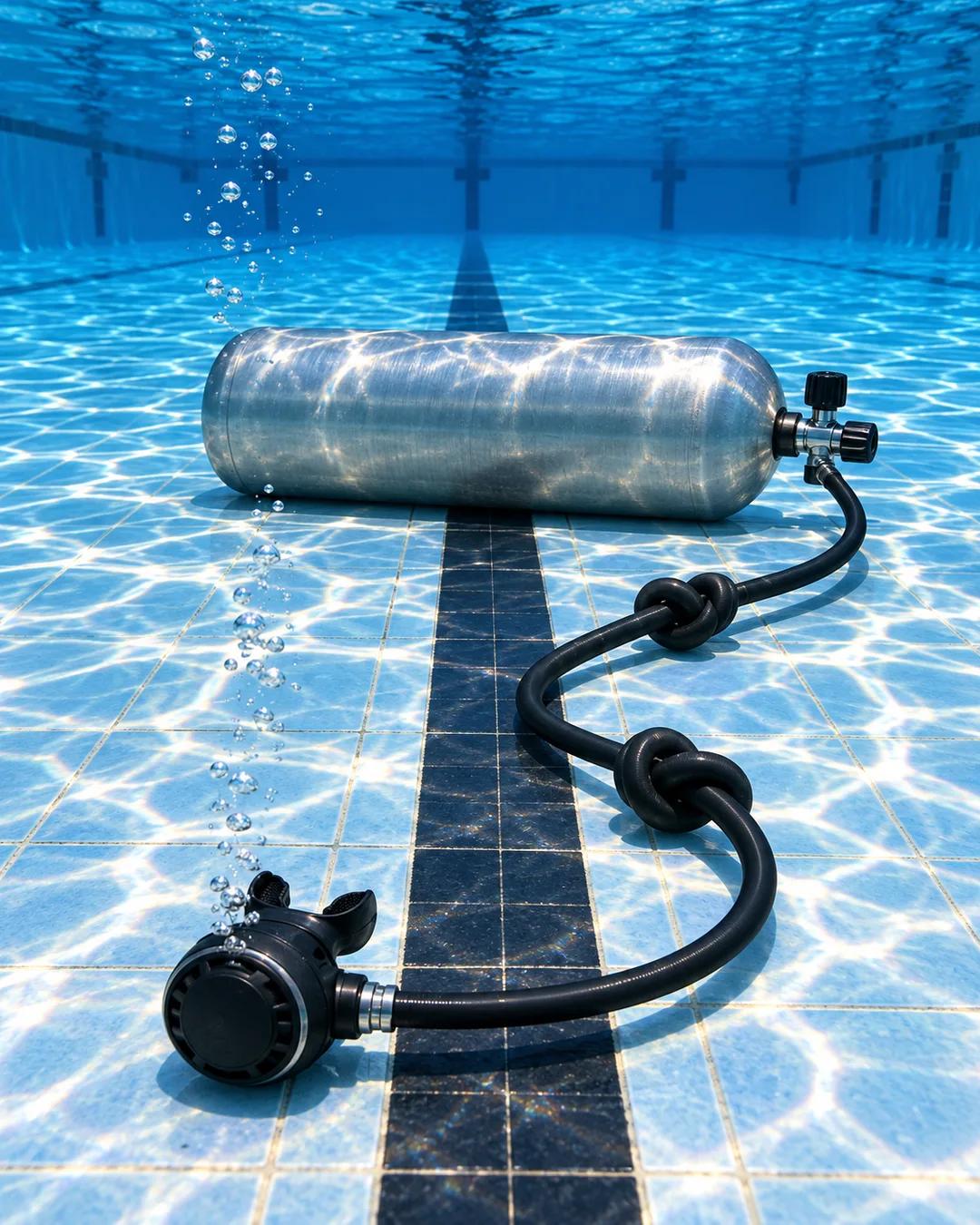
The pool competency test takes place on the bottom of the nine-foot section of a huge pool. Candidates crawl along a lane marker with scuba tanks on while two instructors per student turn off their air and tie knots in their hoses. Each time, the candidate curls into the fetal position until the attack stops, which can mean 15 or 30 seconds without air, with carbon dioxide building the whole time.
The problems get harder as the test goes on, but the fix is always the same sequence. Try step one, and if it fails, move to step two, and so on through every step. That is how the test teaches calm: at minute 18, about to pass out, the candidate still has to run step one, then step two.
Why does a trained routine hold up under panic?
Stress floods the brain with chemicals such as norepinephrine and dopamine that weaken the prefrontal cortex, the region that handles flexible reasoning and working memory. Yale neuroscientist Amy Arnsten has documented this effect in her research on stress and prefrontal function. Skills rehearsed until they run automatically rely more on procedural memory, which is stored in different circuits and degrades less under pressure. A fixed sequence also removes the need to decide what to try next.
Why does a held breath hurt before oxygen runs low?
The urge to breathe is driven mainly by rising carbon dioxide, not by falling oxygen. Sensors in the brainstem and in large arteries detect CO2 as it makes the blood more acidic, and they trigger the sense of air hunger. That alarm fires long before oxygen reaches a dangerous level in a rested, healthy person. It is also why hyperventilating before a breath-hold, which lowers CO2, can let oxygen fall dangerously low before the urge arrives.
How did checklists enter aviation?
In October 1935, the Boeing Model 299 bomber, the prototype of the B-17, crashed during an Army Air Corps evaluation flight at Wright Field in Ohio, killing two of the crew. The investigation found that a control lock had not been released before takeoff, and the aircraft was judged too complex for any one pilot to remember every step. Test pilots responded by writing a checklist for takeoff, flight, landing, and taxi. The B-17 went on to enter service in large numbers.
More from The Joe Rogan Experience