Korva is a scroll of the internet’s best ideas.
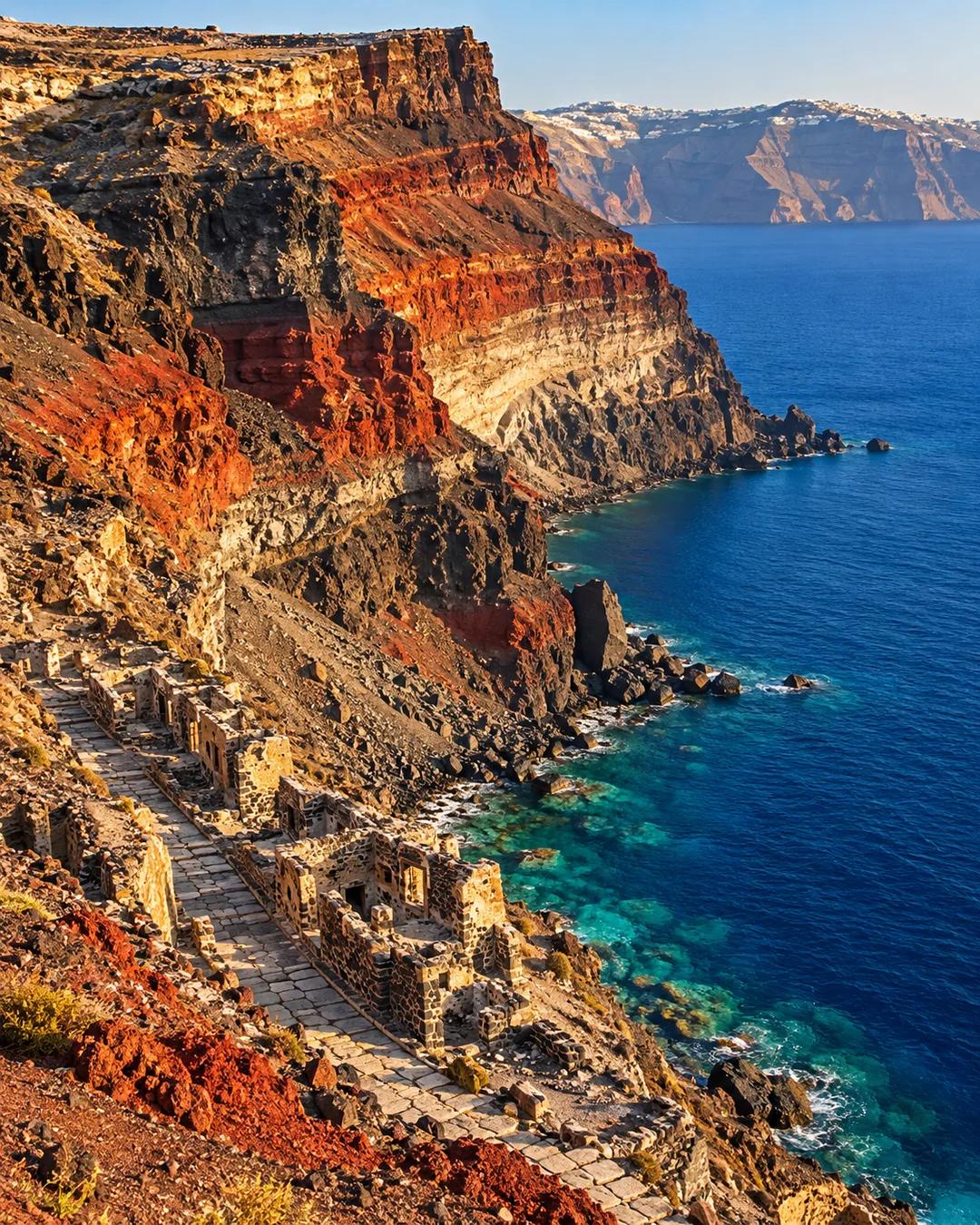
Santorini may be Atlantis's source

Akrotiri had streets and street lamps, advanced for its time. The volcano blew up most of the city, and a section of it is all that remains. The blast was so large that chunks of Santorini landed in the cliffs of Crete, 70 miles away.
Plato told the story of Atlantis as a parable about how a society can fall, and a real event may have served as the foundation. A city out in the water that then exploded and sank fits that description, and Akrotiri on Santorini does that better than anything else.
How large was the Santorini eruption?
The Minoan eruption of Santorini was one of the largest volcanic events in the last several thousand years. Volcanologists rate it near the top of the scale, between 6 and 7. Ash from it has been found across the eastern Mediterranean and in the Nile Delta. It left behind a flooded caldera, the ring of cliffs seen today.
Why is Akrotiri so well preserved?
Pumice and ash buried Akrotiri, much as Vesuvius buried Pompeii. Archaeologist Spyridon Marinatos began excavating it in 1967. Multistory buildings and wall paintings survived under the ash. No human remains have been found, which suggests the residents left before the eruption.
Why do scholars doubt Atlantis was real?
Plato described Atlantis in two dialogues, the Timaeus and the Critias, written around 360 BCE. He placed it beyond the Pillars of Heracles and said it sank 9,000 years before Solon. Many scholars read it as a story Plato invented to illustrate his ideas about an ideal state. No ancient source before Plato mentions it.
More from Shawn Ryan Show