Korva is a scroll of the internet’s best ideas.
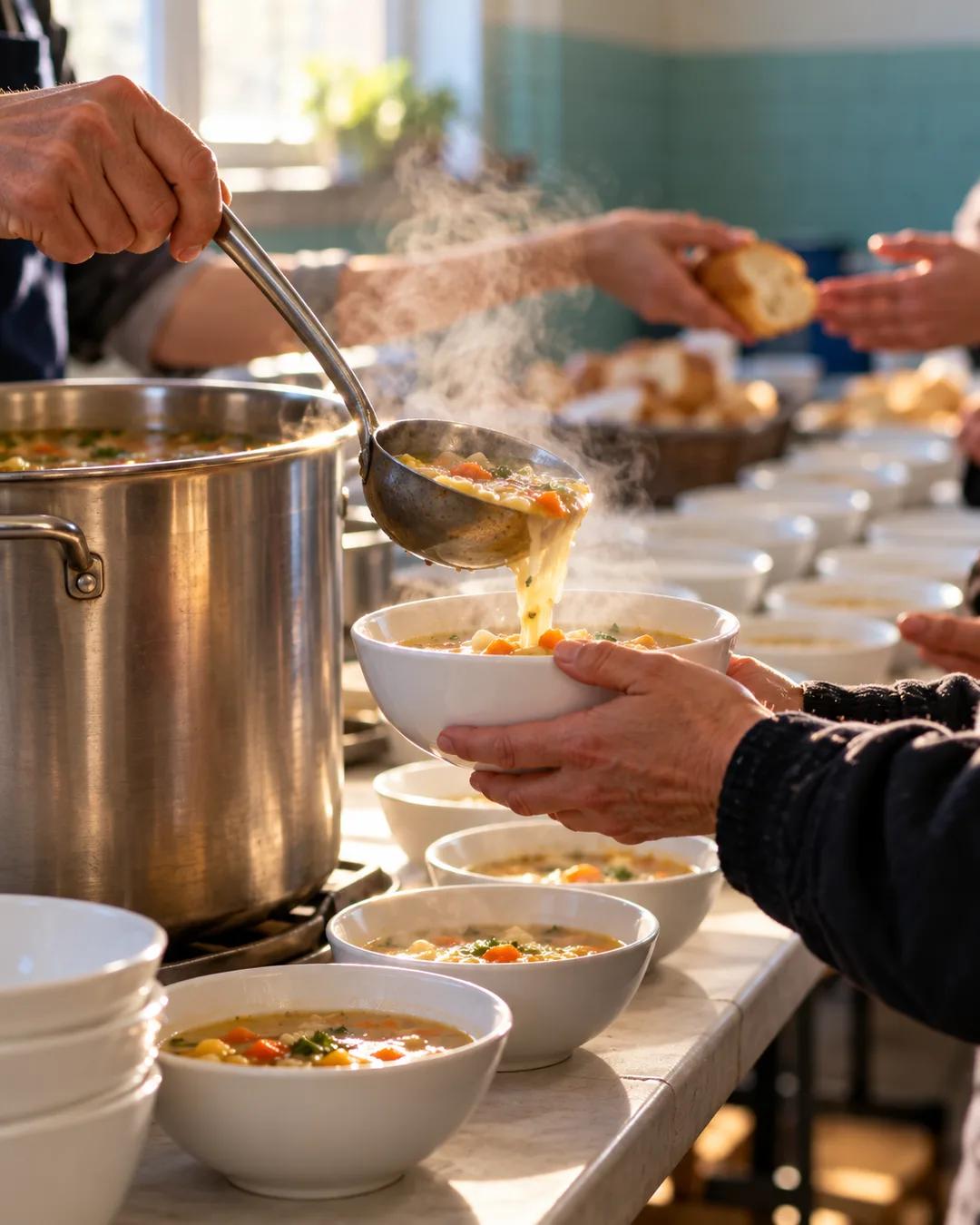
Serve a meal before you argue
Where people used to meet
Sports and weather make good first topics, and a shared activity is better. Part of the breakdown in America is the loss of third spaces: social clubs, churches, synagogues, and bowling groups, places where people across ideological differences met as human beings. It is harder to demonize someone once you have bowled together.
Serving a meal together
One congregation has people across the whole political spectrum who pray together, sing together, and serve meals to people who are homeless. After serving a meal to someone hungry, each of them knows the other is a decent human being who wants good things for people. Nobody has to talk about the hardest thing first.
That shared starting place is what makes the harder conversation possible. Without it, people decide in advance that the person across from them is simply a bad person, and the conversation never begins.
How did Americans lose their bowling leagues?
Political scientist Robert Putnam used bowling as his central example in his 2000 book Bowling Alone. He reported that between 1980 and 1993, the total number of American bowlers rose by about 10 percent while league bowling fell by about 40 percent. Putnam linked the drop to a wider decline in membership in clubs, unions, parent-teacher groups, and churches from the 1960s onward. Sociologist Ray Oldenburg had given such gathering spots a name in 1989, calling them third places after home and work.
Why does working together reduce prejudice?
Psychologist Gordon Allport proposed in 1954 that contact between groups reduces prejudice when people share a goal, cooperate, have equal standing, and have support from authorities. A 2006 meta-analysis by Thomas Pettigrew and Linda Tropp, covering 515 studies, found that contact lowered prejudice across many kinds of groups. The classic field demonstration was Muzafer Sherif's 1954 Robbers Cave camp, where rival groups of boys stopped fighting after working together on shared problems such as restoring the camp's water supply.
Why does sharing a meal build cooperation?
In a 2015 study in the journal Human Performance, Cornell researcher Kevin Kniffin and colleagues studied firefighters in a large American city. Crews that ate meals together were rated as performing better as teams. The finding belongs to a research line on commensality, the practice of eating together.
More from Freakonomics Radio Network