Korva is a scroll of the internet’s best ideas.
Six counties, two-thirds majority

How partition came
Around 1900 there were about four and a half million people on the island of Ireland, three-quarters of them Catholic. The Protestants were concentrated in the northeast, around Belfast. In 1912 almost half a million of them, led by Sir Edward Carson, signed a covenant pledging to use all means necessary against home rule, and 100,000 organized into a paramilitary volunteer force that smuggled in tens of thousands of guns. In 1920 the British allowed six counties to form Northern Ireland with its own parliament in Belfast, and the 1922 treaty let it opt out of the Free State. Its parliament immediately did.
Partition's inevitability
Northern Ireland was too small to be a statelet and depended on money from Westminster. Most historians, Irish ones included, regard partition as probably inevitable. Once the Ulster volunteers had signed their covenant and armed themselves, they were never going to be forced into a united island without a civil war.
A built-in fault line
The result was a state with a built-in fault line. One third of its people, half a million Catholics, were unhappy in a majority-Protestant Unionist state, and many nationalists assumed partition would wither away. Protestants felt besieged too: they were a majority in their own state but not on the island, and they believed a state to the south wished them ill and that a third of their own population could not be trusted. The slogan no surrender came out of that defensiveness.
How did the Ulster Covenant work?
The Ulster Covenant was signed on 28 September 1912, known as Ulster Day. Sir Edward Carson signed first at Belfast City Hall. About 237,000 men signed the Covenant itself, and about 234,000 women signed a separate declaration. The signatories pledged to use all means necessary to defeat home rule.
Why did partition use six counties, not nine?
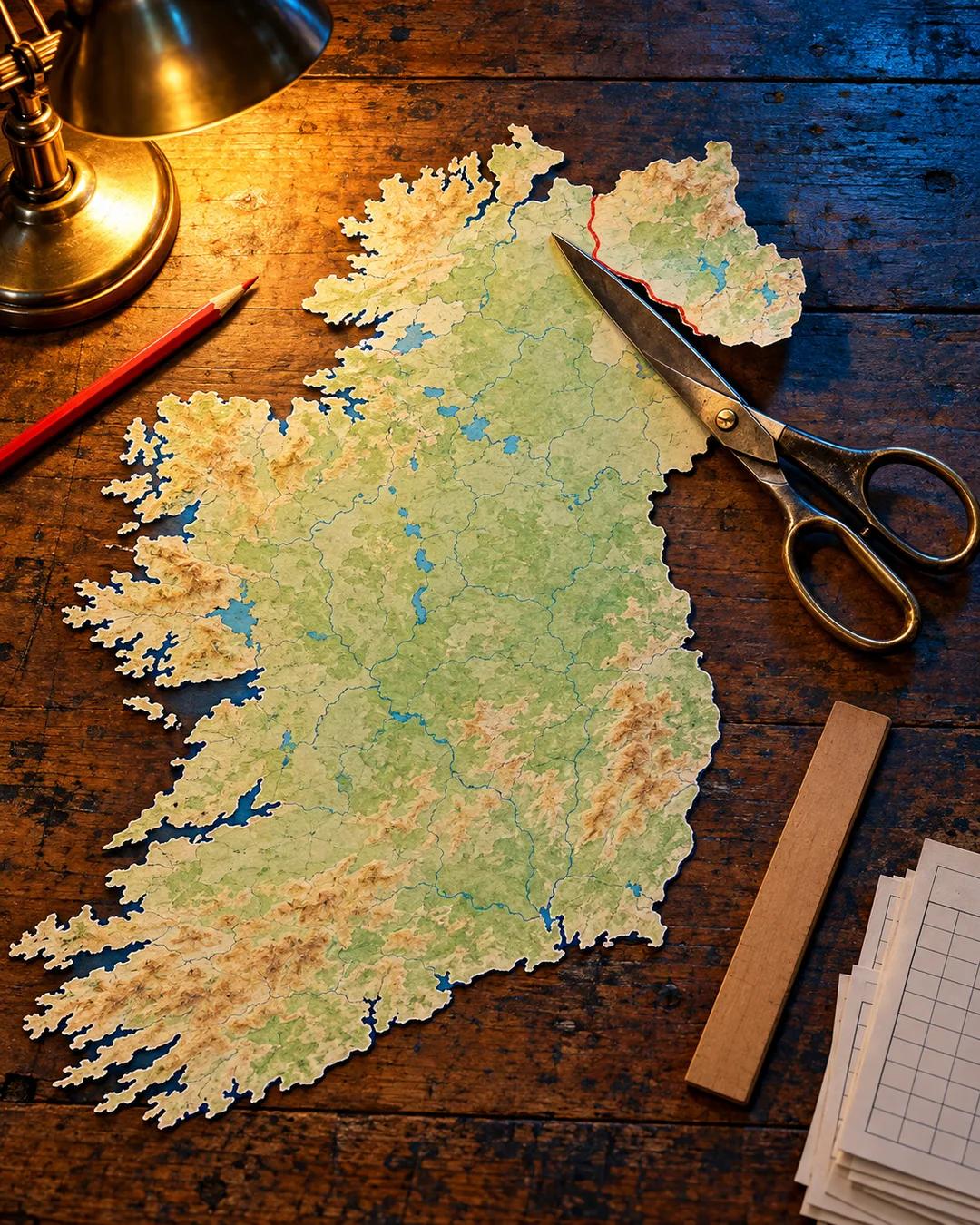
The historic province of Ulster has nine counties. Three of them, Cavan, Donegal, and Monaghan, had large Catholic majorities and were left out under the Government of Ireland Act of 1920. The six remaining counties gave unionists a secure Protestant majority of about two-thirds.
What did the Boundary Commission do?
The 1921 treaty set up a Boundary Commission to review the border, and many nationalists hoped it would hand large areas of Northern Ireland to the Free State. In November 1925 a newspaper leaked its draft report, which suggested only small changes. The governments in London, Dublin, and Belfast agreed in December 1925 to leave the border unchanged.
More from The Rest Is History