Korva is a scroll of the internet’s best ideas.
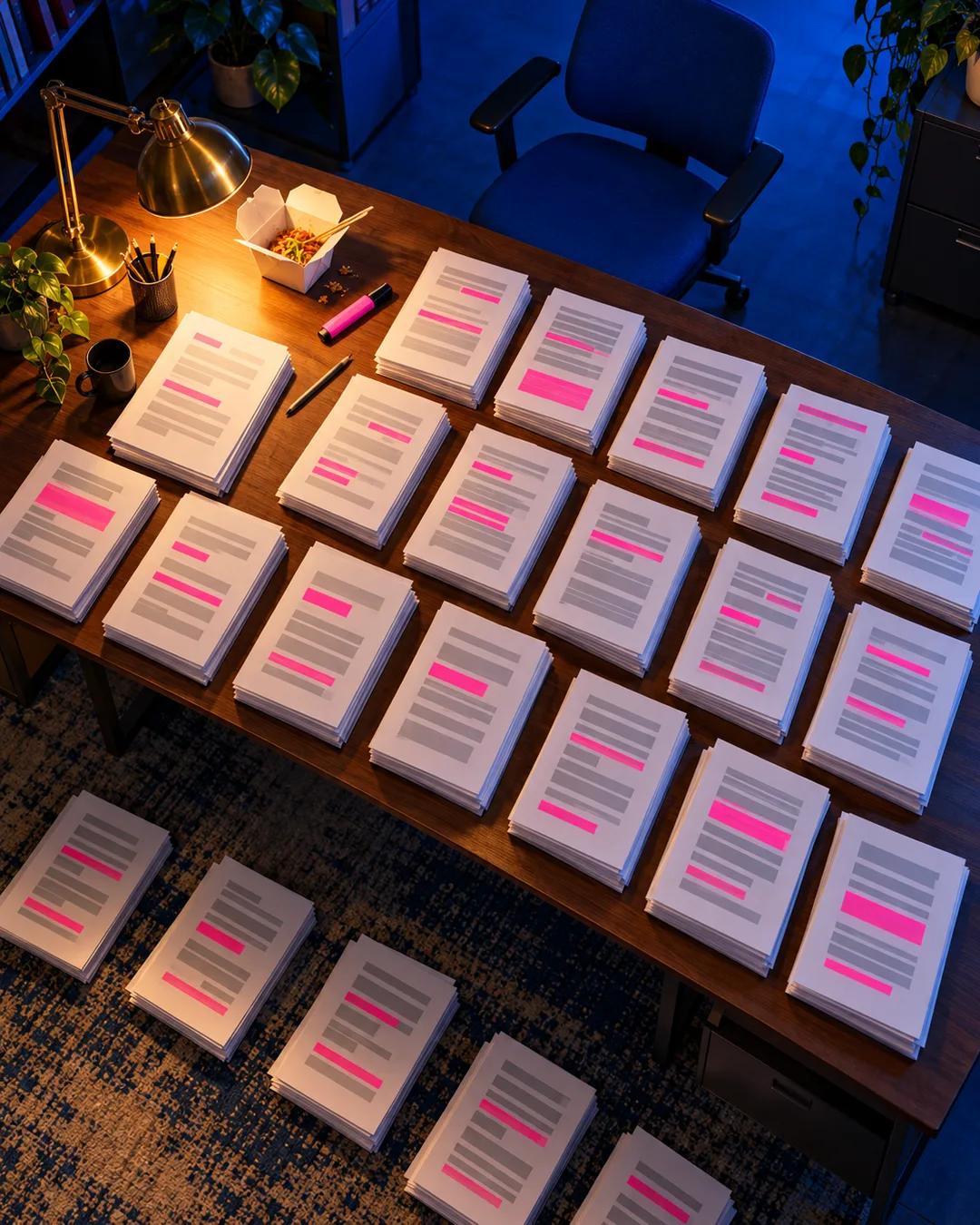
Six months, 24 securitization documents

Documents and spreadsheets
Todd Combs's fund, Castle Point, began with a single employee. For the first six months that was Combs, with 24 securitization documents spread around his office, from deals by Countrywide and Washington Mutual's Long Beach Mortgage, each hundreds of pages long. He worked through them until late at night.
Using what he had learned in an NYU securitization course, he built an Excel spreadsheet to work out which tranche of each deal would get blown through. That tranche is called the fulcrum class. He put a confidence interval on which class would be the fulcrum for each deal.
Who was buying the paper
As he dug in, he found that financial guarantors were wrapping this paper. He also found AIG buying it through the back door and doing negative basis trades. Not many people had figured that out yet.
What still excites him
The fund later passed half a billion dollars, with a first big investor at 60 million and European funds of funds that could have taken it to a billion or a billion and a half. Those outcomes feel to him like consequences of the process. What still makes him giddy is the puzzle.
Why do mortgage deal losses hit the bottom first?
A securitization pools many loans and slices the pool into tranches ranked by priority. Losses from defaulting loans hit the lowest tranche first, then work upward as that tranche is wiped out. The cushion beneath the upper tranches is why rating agencies gave many of them top ratings. The tranche where the losses finally stop determines which bonds in a deal lose value.
How did AIG end up holding mortgage risk?
AIG's financial products unit sold credit protection, in the form of credit default swaps, on large pools of securities that included mortgage debt. It collected fees for years while few contracts paid out. When mortgage losses and rating downgrades mounted in 2008, counterparties demanded collateral on those contracts. In September 2008, the Federal Reserve extended AIG an $85 billion loan.
How does a negative basis trade earn money?
An investor buys a bond and at the same time buys credit protection on it, usually through a credit default swap. The basis is the difference between the cost of that protection and the extra yield the bond pays over a safe rate. When the bond's yield exceeds the cost of protection, the basis is negative, and the gap is the profit. The protection is meant to hedge against the bond defaulting.
More from Joys of Compounding