Korva is a scroll of the internet’s best ideas.
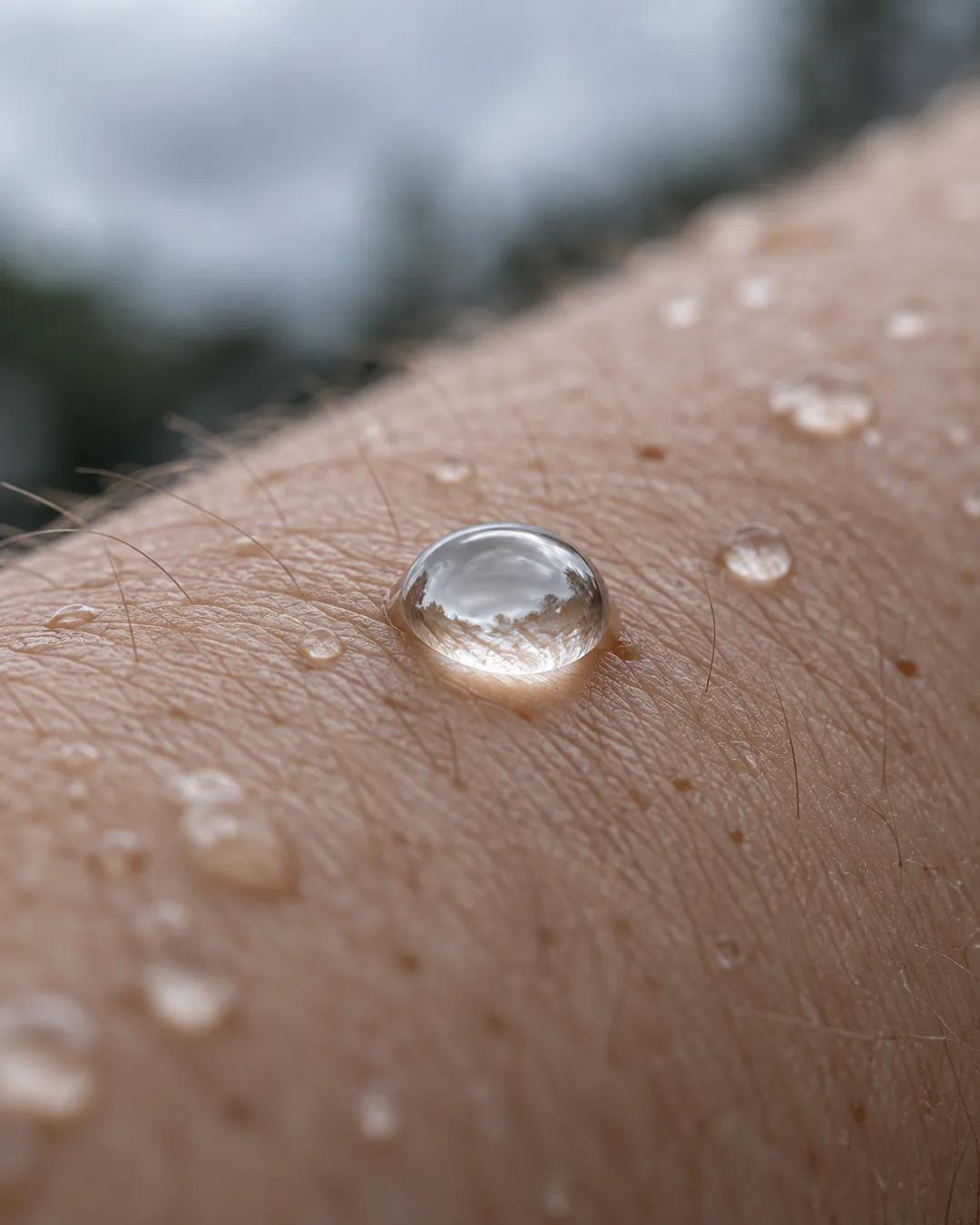
Skin has no water receptors

So how does anyone feel a drop of wetness, or know they are sweating, or know it is raining? The answer is a combination of temperature and touch. It is a complex sense that exists only in the brain's computation, and no receptor for it exists anywhere in the skin.
That is why snow, cold rain, and warm rain all feel different. The brain infers what is happening from the temperature and the size of the droplet. It combines lots of information and uses it to predict, which is the way the brain works generally.
Humans evolved from animals that lived in water, so wetness may not have needed a receptor of its own.
How does the brain turn cold and touch into wetness?
Researchers led by Davide Filingeri, then at Loughborough University, tested how people judge whether a surface is wet. They found that cooling a dry surface made it feel wet, because skin nerve fibers that signal cold and those that signal touch feed into the same judgment. The brain combines the two signals with what it has felt before. The research group named the ability hygroesthesia, a sense of moisture.
Why do fingers wrinkle after time in water?
Finger wrinkling is controlled by the nervous system rather than by water soaking into the skin. The sympathetic nerves constrict blood vessels in the fingertips, which pulls the skin into ridges. In a 2013 study, Tom Smulders and colleagues at Newcastle University found that people with wrinkled fingers picked up wet objects faster than people with smooth fingers. The wrinkles seem to work like treads on a tire.