Korva is a scroll of the internet’s best ideas.
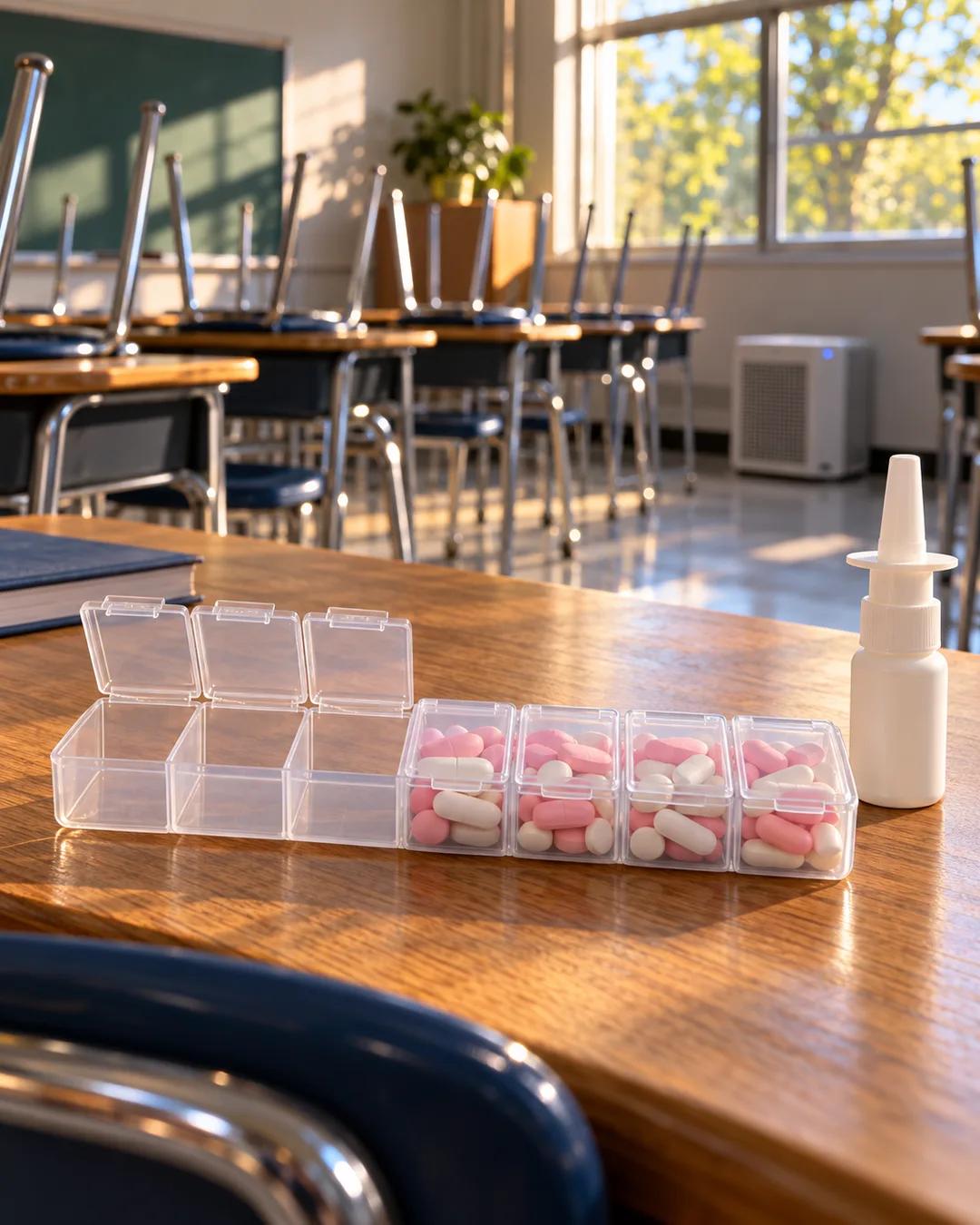
Skipped pills still spread disease

What the fund pays for
The Intercept Fund, backed by Anthropic, the OpenAI Foundation, Collison, and Gates, pays for two kinds of work: broad-spectrum preventatives such as nasal sprays and pills, and air cleaning in high-traffic buildings like schools, offices, and airports. Air cleaning includes filtration, far UVC antimicrobial light, and antimicrobial vapors, and most places have none of it today.
Why pills fall short
A working pill is not the whole answer, because disease often spreads when people do not comply, even when a cure exists. Medicine tracks this with the effective reproduction number, a fancy way of asking how many people one sick person infects.
Picture a population where 80% take their daily pills and nasal sprays. The 20% who do not might be infecting three people for every one sick person.
Two levels of defense
Treating the environment as well as the individual attacks that spread at both levels, and together the two can break the chain of transmission.
How does the reproduction number predict outbreaks?
A reproduction number above 1 means each case produces more than one new case, so an outbreak grows. Below 1, it shrinks and fades out. The World Health Organization puts the basic reproduction number for measles at 12 to 18, among the highest of any common infection. The share of people who must be immune to push the number below 1 is roughly 1 minus 1 divided by that figure, which is why measles needs coverage around 95 percent.
How do air filters trap virus-laden particles?
The US Department of Energy standard for a HEPA filter requires it to capture at least 99.97 percent of particles 0.3 micrometers across. That size is the hardest to catch, because larger particles are caught by impact and interception while smaller ones drift erratically and stick to fibers by diffusion. Viruses travel in droplets and aerosols that are usually larger than the virus itself, so they fall within the range filters handle well.
How does ventilation lower infection risk?
Fresh outdoor air dilutes whatever infectious particles a sick person breathes out, and engineers count this in air changes per hour, meaning how many times a room's air is replaced. The Wells-Riley equation, developed from work by William Wells and Edward Riley, estimates infection risk from the number of infectious people, breathing rates, and ventilation. A 1978 study by Riley and colleagues applied it to an airborne measles outbreak in a suburban elementary school.
More from Lightspeed Venture Partners