Korva is a scroll of the internet’s best ideas.
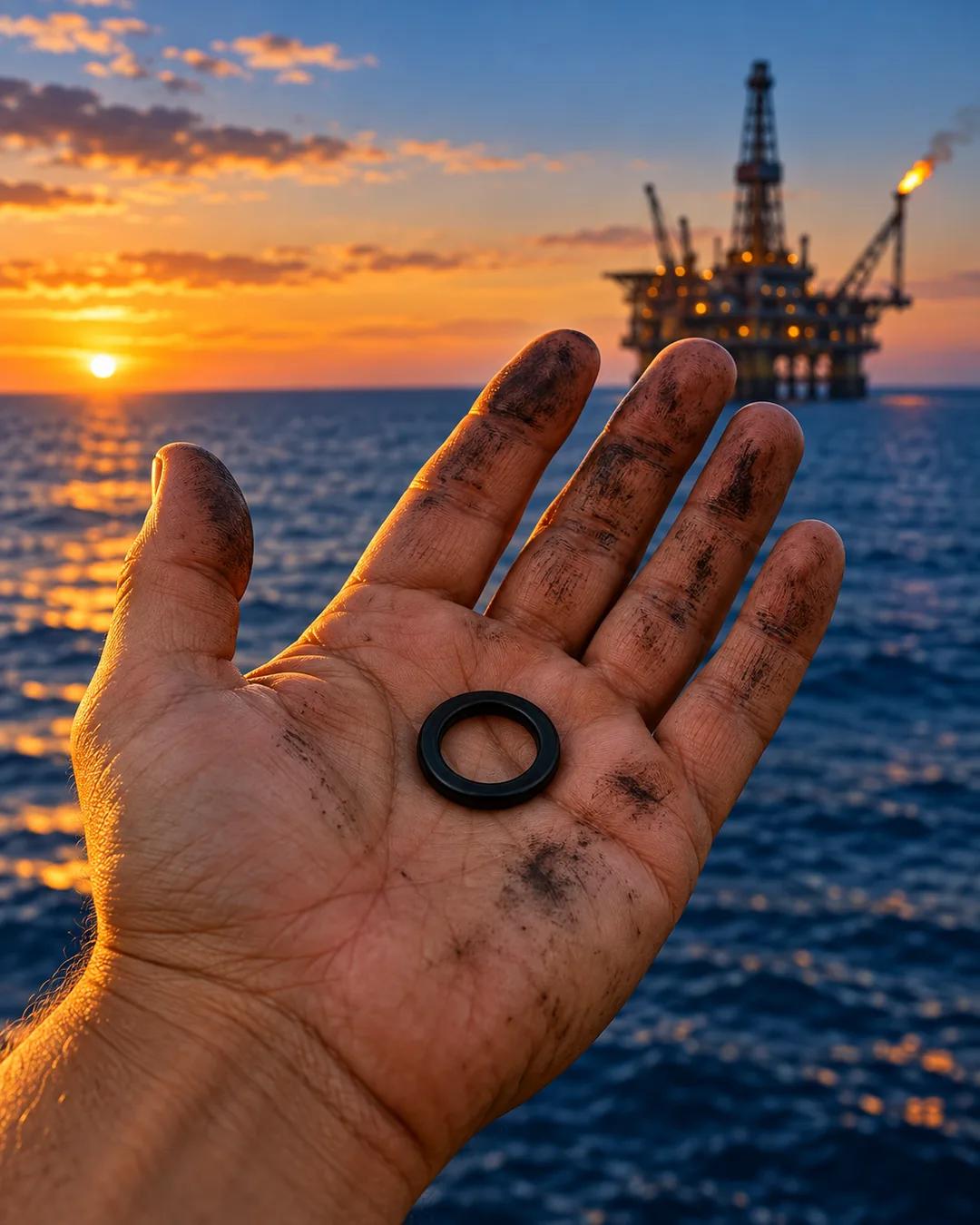
Skipping a cheap fix sells a put

Short horizons
CEOs are only in the seat for about four years, so spending money to cover a one-in-a-hundred risk makes little sense on their clock. That mismatch of time horizons sits behind Deepwater Horizon. In insurance terms, the company sold a really cheap, deep out-of-the-money put.
The Pinto
Ford did the same with the Pinto. A part costing two cents would have kept the car from exploding when it was rear-ended, and Ford did not want to spend it, so the cars exploded. The missing part on Deepwater Horizon cost something like $2.
Frequency and severity
Underneath is the trade-off between frequency and severity: a rare event with huge severity is easy to ignore until it arrives. Mark Buchanan's book Ubiquity covers power laws and that trade-off.
How is skipping a safeguard like selling insurance?
A put option gives its buyer the right to sell an asset at a set price, and the seller collects a premium and pays out if the price falls far enough. A deep out-of-the-money put pays out only after a very large move, so it rarely costs the seller anything. That gives the seller a steady stream of small gains and a rare, very large loss, the same payoff shape as an insurer's. Nassim Taleb's 2007 book The Black Swan popularized this pattern of rare, severe losses.
Why do rare disasters happen more than expected?
Many natural and human systems follow power laws, where extreme events are rare but far more common than a bell curve would predict. Earthquakes are the classic case: seismologists Beno Gutenberg and Charles Richter showed in 1944 that the number of quakes drops by roughly a factor of ten for each full step up in magnitude. Because big events are rare but not vanishingly rare, they arrive often enough to matter over decades. On the Richter scale, each whole number is also a tenfold increase in measured wave amplitude.
Why did the Gulf spill flow for months?
The Macondo well blew out in April 2010 beneath the Deepwater Horizon rig. The blowout preventer, a stack of valves meant to seal the well in an emergency, did not seal it, according to the 2011 report of the presidential oil spill commission. Crews capped the flow on July 15, 2010, after 87 days, and relief wells later sealed the well for good.
More from Joys of Compounding