Korva is a scroll of the internet’s best ideas.
Societies have always restrained themselves

Rules at every stage
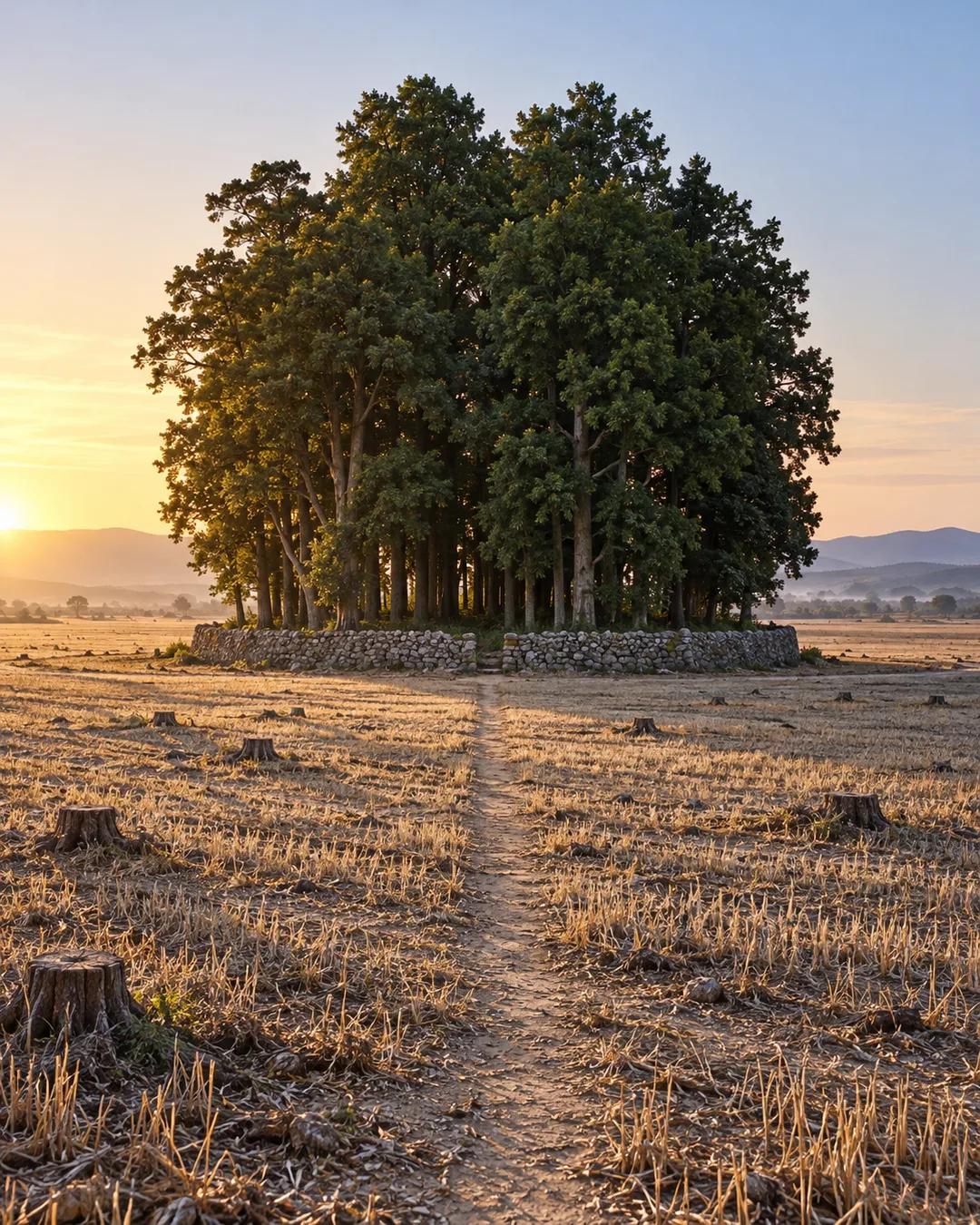
Hunter-gatherers used hunting taboos and sacred groves to protect the species they relied on, which kept their supply sustainable. Farming societies built systems of sharing livestock and managing water. State societies passed laws and regulations about protecting the environment and controlling diseases.
Who pays
In each case, the rules disadvantaged some individuals or groups while being beneficial to the society as a whole. Institutions capable of imposing the rules made that possible.
The global gap
Climate change and biodiversity loss are now global crises, and their solutions need to be imposed at a global level. There are no global institutions able to enforce them on the parts of society that would bear a cost. Nothing like the Climate Convention exists for AI, and even the Climate Convention struggled with a problem simpler than that.
How did sacred groves protect forests?
Sacred groves are patches of forest that communities set aside by religious tradition and forbid anyone to cut or hunt in. They have been recorded in India, Ghana, Ethiopia, and many other places. Because the taboo on harvesting has been kept for generations, many groves hold plant and animal species rare in the surrounding land. India alone is estimated to have tens of thousands of documented groves.
How do communities manage shared resources?
The political economist Elinor Ostrom studied irrigation systems, forests, and fisheries managed by local communities around the world. She found that many had lasted for centuries without outside control. They tended to share features such as clear boundaries, rules made by the users, and monitoring with graduated penalties. She won the Nobel Prize in Economics for this work in 2009.
How did tabu fishing closures work?
In many Pacific societies, chiefs or elders closed reefs and fishing grounds to harvesting for a set period under a tabu. The closures were often lifted for a feast. Studies of reef closures in Fiji have found that fish are larger and more plentiful in the protected areas. Fish stocks recover quickly when fishing stops.