Korva is a scroll of the internet’s best ideas.
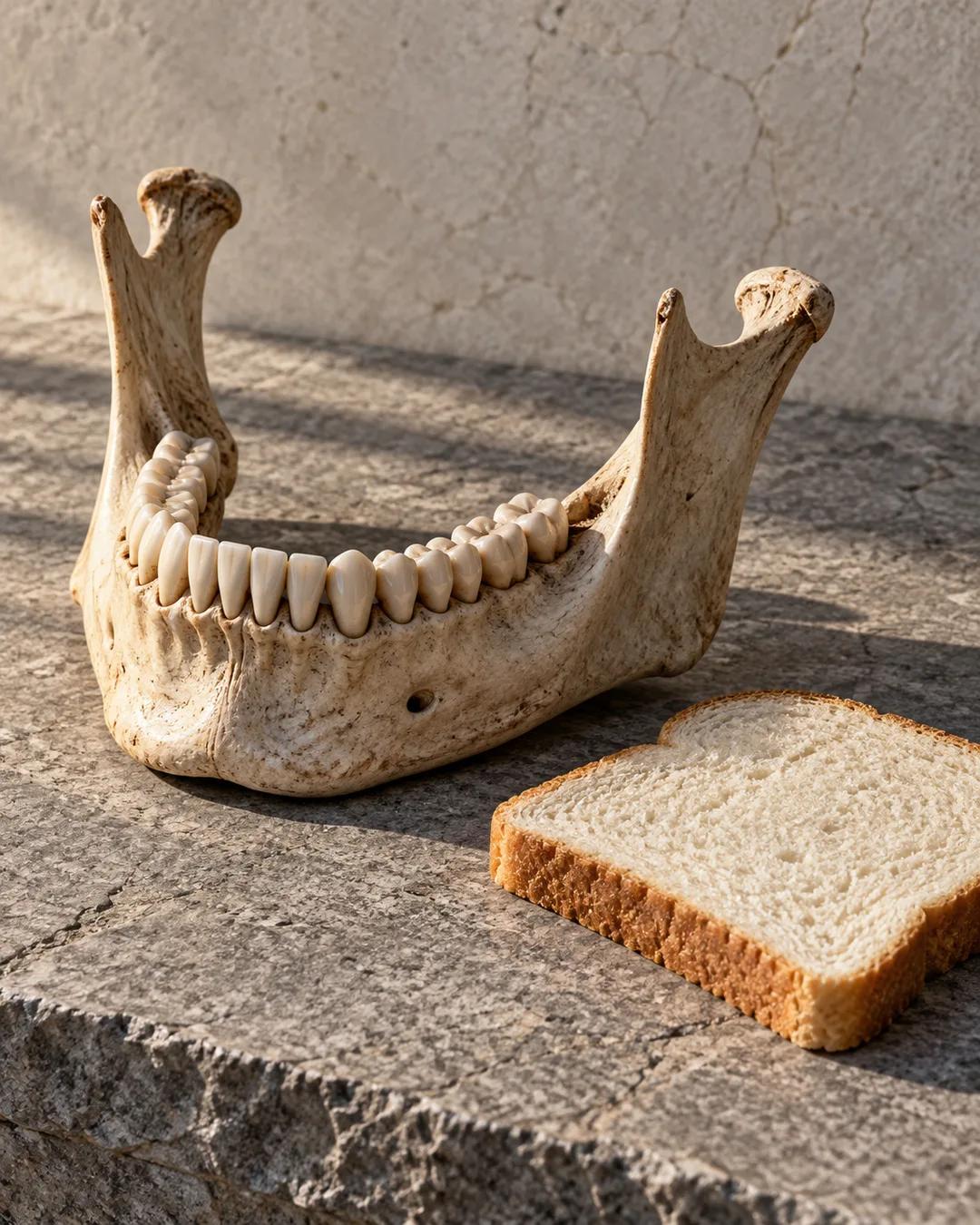
Soft food shrank our mouths

Straight teeth in old skulls
Skulls from before about 400 years ago show straight teeth, because the mouths were wide enough to hold them. A human species unearthed from 700,000 years ago has a perfectly straight jaw. Today around 90% of people have malocclusion, a mouth too small for the face, and their teeth grow in crooked as they fight for room.
The 1930s world survey
A researcher in the 1930s spent 10 years traveling the world to find the moment it changed. Once industrialized food entered a culture, 50% of the next generation had a small mouth and crooked teeth, and the generation after that, 70%. The pattern held in Asia, England, and Africa alike, and later research has confirmed it over and over.
How chewing builds the jaw
Chewing is the mechanism. Our ancestors chewed for around two to three hours a day, and that work builds the skeleton and musculature of the jaw and widens the mouth. The baked goods, canned goods, and pickled food of 1800s England were soft and asked for almost no chewing. Most of this development happens when children are very young, and vitamins and minerals play a smaller role than the consistency of the food.
How does chewing make the jaw grow wider?
Bone responds to the forces placed on it, growing stronger and larger where muscles pull hard. Chewing tough food loads the jaw and the bones of the face thousands of times a day while a child is growing. In a 1982 study in Science, Robert Corruccini and Robert Beecher fed one group of squirrel monkeys a soft canned diet and another a harder one. The monkeys on the soft diet developed narrower jaws and more crooked teeth.
Why do wisdom teeth get stuck so often?
Third molars are the last teeth to emerge, usually in the late teens or early twenties, and they need room at the back of the jaw. In a smaller jaw that room is missing, so the teeth come in at an angle or stay trapped under the gum, which is called impaction. Studies of skeletons from hunter-gatherer groups show far fewer impacted third molars than studies of modern industrial populations. Removal of impacted wisdom teeth is one of the most common oral surgery procedures in the United States.
More from The Rich Roll Podcast