Korva is a scroll of the internet’s best ideas.
Soil health can be heard
Why lab tests fall short
Traditional soil testing takes costly manual effort followed by laboratory analysis. The lab looks at chemical indicators such as pH and nutrient availability, physical indicators such as water-holding capacity, texture, and compactness, and biological indicators such as soil enzymes, microbial biomass and diversity, and soil carbon. The effort means such tests can be run only at relatively small scale, sampling snapshots of the soil.
Listening with buried sensors
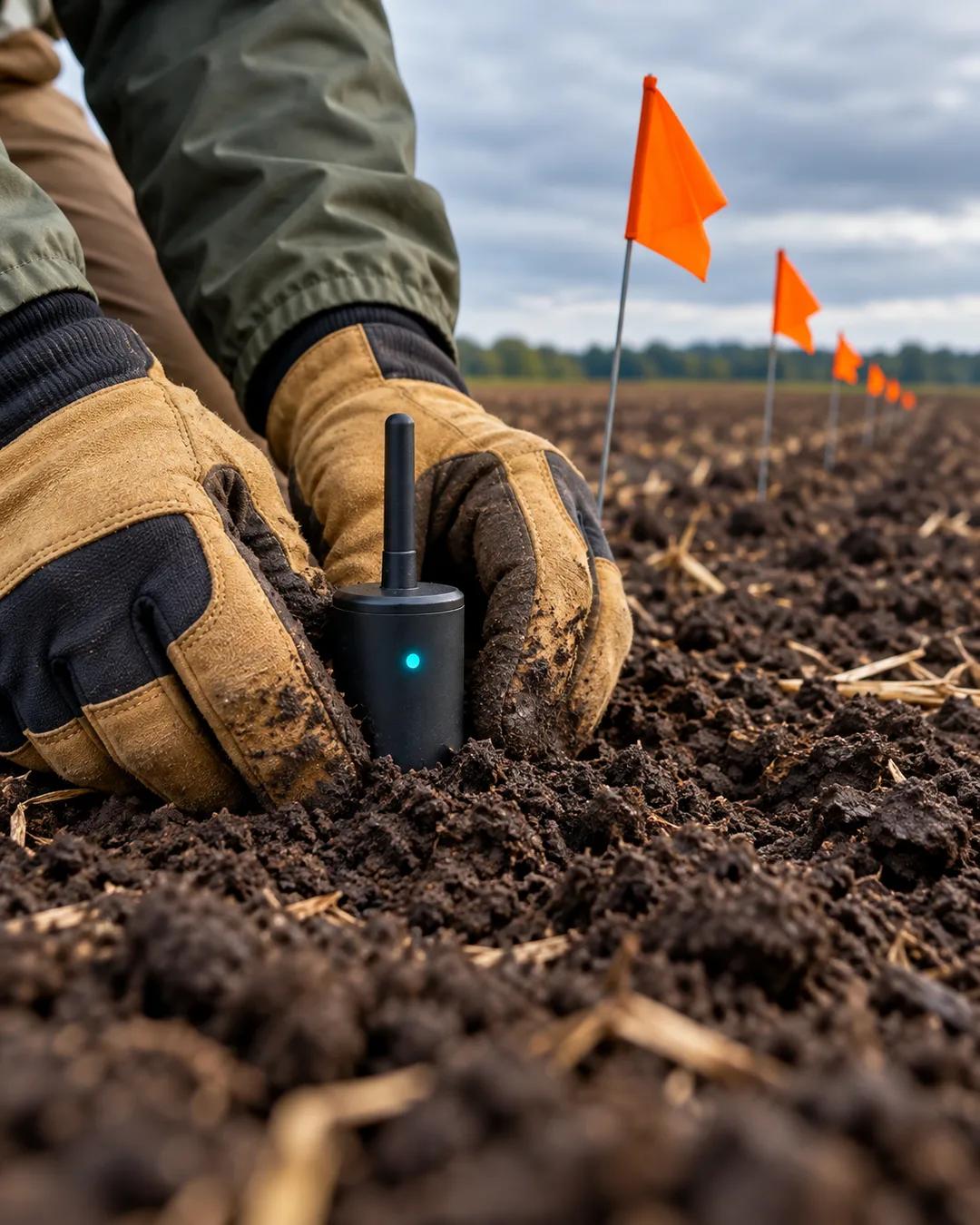
Passive acoustic sensors can be buried and left to collect data over multiple days, with several sensors in different locations at the same time. A healthy soil where natural biological processes are intact should sound different from a depleted or chemically scarred soil, because the diversity and abundance of animals living in it, its physical properties, and its structure all differ.
Early results
Early studies in garden, forest, and farmland ecosystems have proved promising. Researchers have found associations between forest recovery and soil soundscape measurements, which suggests healthy soils sound significantly different. Meeting internationally agreed goals for biodiversity restoration calls for systematic and standardised ways to monitor soil health.
Why does soil muffle sound so quickly?
Soil is a mix of solid particles, water, and air, and sound loses energy as it passes between them. High frequencies lose energy fastest. As a result, a buried sensor mostly captures sounds from a short distance around it. That is why several sensors placed in different locations give a fuller picture than one.
How do soil microbes shape soil health?
Microbes break down dead plant and animal matter and release nutrients such as nitrogen and phosphorus in forms plants can take up. Some of them produce sticky compounds that bind soil particles into small crumbs, which leave room for air and water. A single gram of healthy soil can hold billions of bacterial cells.
Why does soil carbon matter to farmland?
Soil carbon is mostly decomposed plant and animal matter, known as organic matter. It acts like a sponge, holding water and nutrients near roots. It also glues particles into crumbs that resist erosion and leave space for air. Global estimates in IPCC assessments put the carbon in the top meter of soil at more than the atmosphere holds.