Korva is a scroll of the internet’s best ideas.
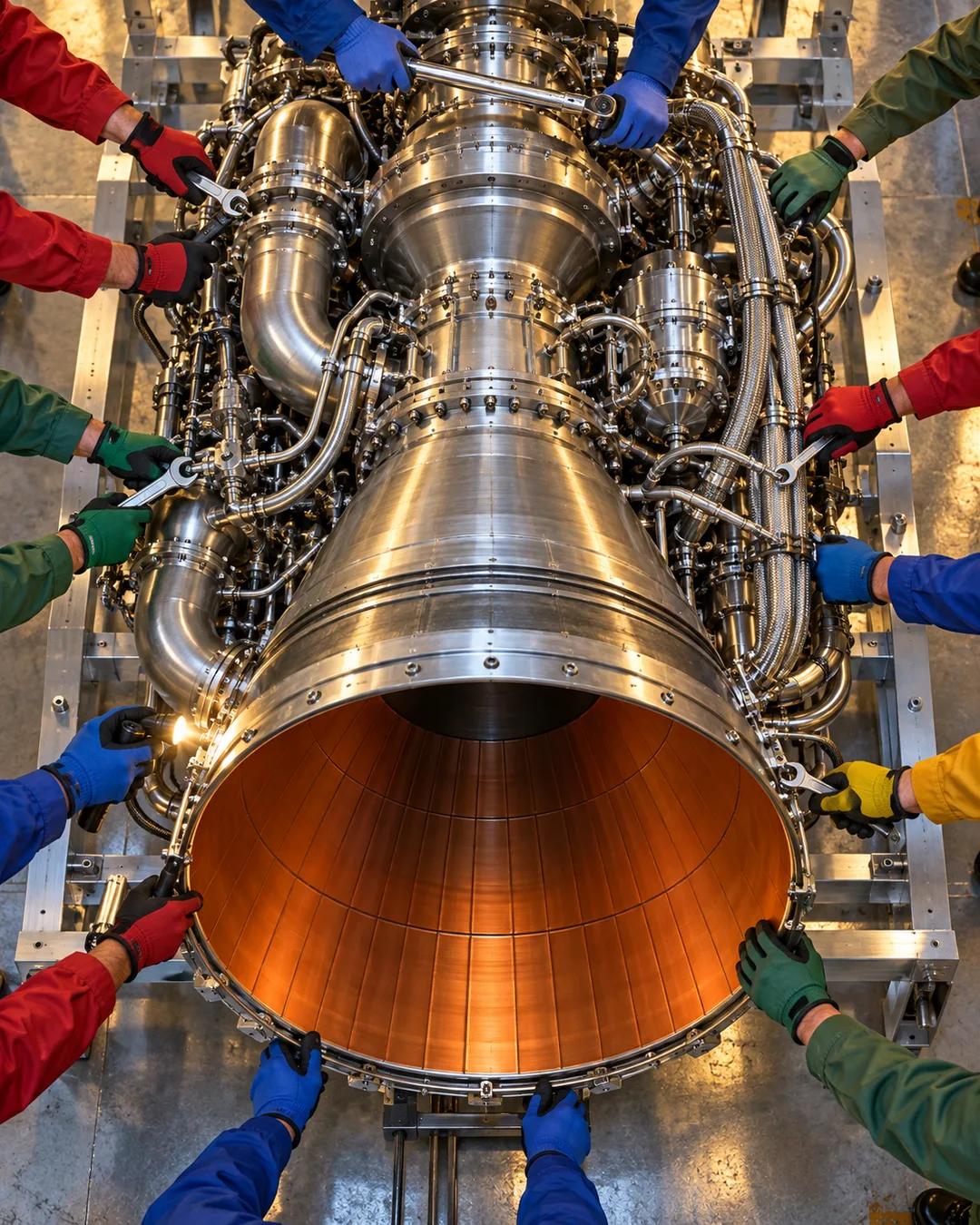
SpaceX couldn't be built in Somalia

Work is collective
Workers work in teams, and those teams rely on the resources of their organizations and on a whole network of other teams and organizations all over the world. Even the most heroic entrepreneur stands on the shoulders of a vast number of workers. Jeff Bezos could not create Amazon Web Services by himself.
When Obama told entrepreneurs they didn't build that, he was making the plain point that organizations and institutions matter, and people still got very mad. People motivate themselves with a sense of heroism, and being reminded that they are cogs in a machine greater than themselves makes life seem a little less meaningful.
Science works the same way
Science works the same way. Almost all research is incremental: a slightly novel experiment, a little wrinkle in an existing theory. Many published research findings are false, and the scientific enterprise still gropes its way toward the truth. Even Nobel prize winners are often managers of huge teams whose other members never get gold medals or give speeches in Stockholm.
How did a 2005 paper argue most findings are false?
John Ioannidis, a Stanford researcher, argued in a 2005 paper in PLOS Medicine that small studies, small effects, and many tested hypotheses make false positives common in some fields. His argument was statistical: when few of the ideas being tested are true, even a modest false-positive rate produces many wrong findings. In 2015, the Open Science Collaboration reported in Science that it had repeated 100 psychology studies. About 36 percent of the repeats produced statistically significant results, compared with 97 percent of the originals.
Why can't Nobel Prizes honor whole teams?
The Nobel Foundation's statutes limit each prize to at most three people, however many contributed. Large experiments strain that limit. The Higgs boson was observed in 2012 by two experiments at CERN that each involved thousands of physicists. The 2013 Nobel Prize in Physics went to François Englert and Peter Higgs, who had proposed the underlying mechanism in 1964.
How do teams outproduce lone scientists?
In a 2007 study in Science, Stefan Wuchty, Benjamin Jones, and Brian Uzzi analyzed about 19.9 million papers across five decades. They found that teams produced a growing share of papers in science and engineering and in the social sciences. Team-authored papers also drew more citations than solo-authored ones. The authors reported the same pattern in 2.1 million patents.
More from Noah Smith