Korva is a scroll of the internet’s best ideas.
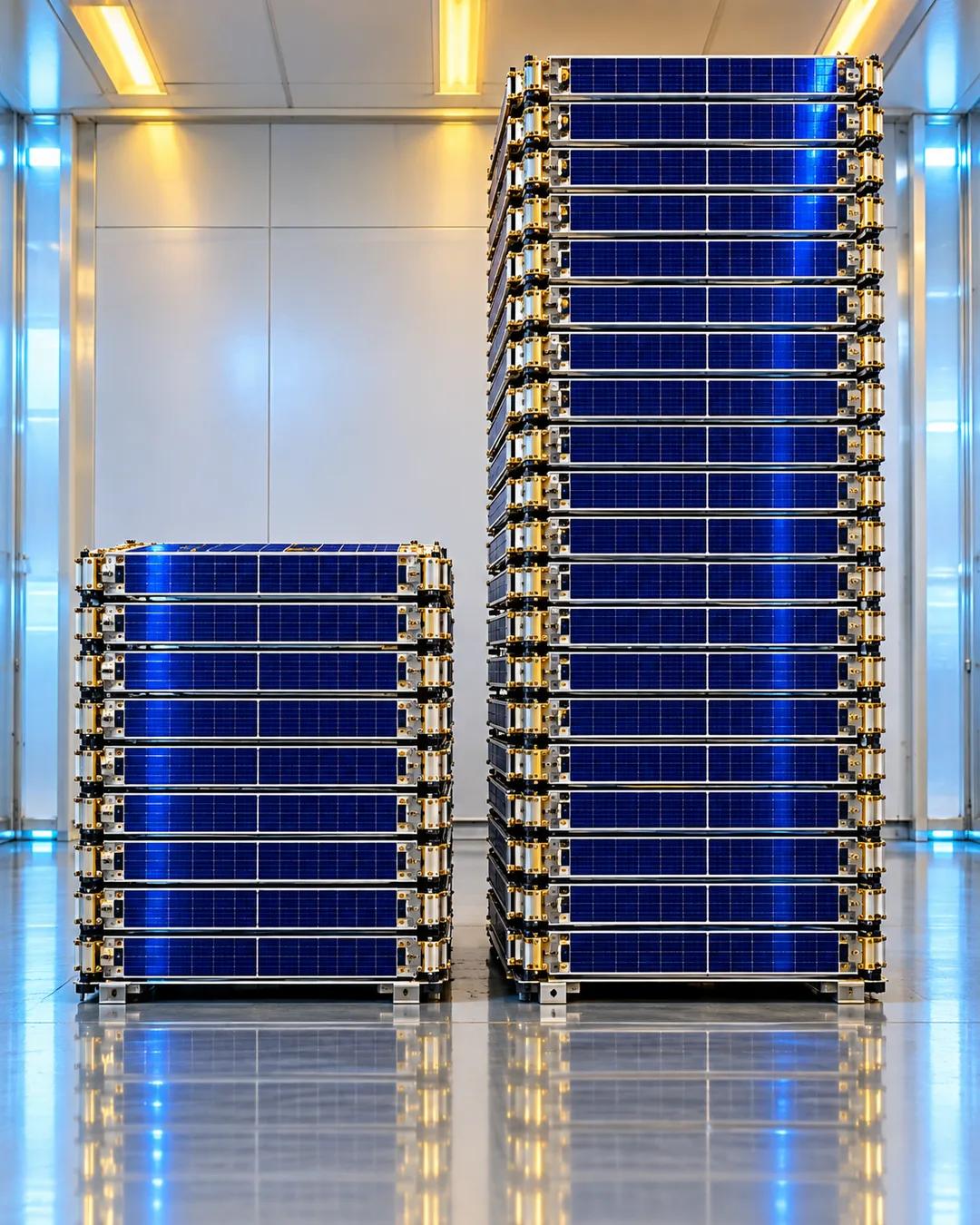
Starship launches add 20x the bandwidth

Capacity per launch
Starlink runs on V2 satellites launched on Falcon 9 rockets, about 27 per launch. Each launch adds roughly 2.6 terabits per second of total network capacity.
SpaceX has built a V3 satellite with 10 times the bandwidth of the V2. Starship can deploy 60 of them per launch, which would add about 60 terabits per second. That is over 20 times the capacity of a Falcon 9 launch.
The latest test flight
The most recent Starship test flight went well: Starship floated in the ocean afterward and the heat shield worked. The ship deployed 20 V3 satellites, which made a connection and then burned up, since the flight was only a test.
The next milestone
The next milestone is a launch of 60 V3 satellites into the correct orbit, with connections made and bandwidth added to the network. If the network's bandwidth then climbs 10 times, or eventually 100 times, direct-to-cell service becomes possible.
Why does Starship carry so many more satellites?
Starship's size sets the limit. The stack is about 9 meters wide and roughly 120 meters tall, far larger than Falcon 9, whose core is about 3.7 meters wide. A larger payload bay fits bigger satellites, and more of them, in a single launch. SpaceX also designed Starship so that both the booster and the ship can be reused.
How does direct-to-cell service work from orbit?
A satellite carries a large antenna and acts as a cell tower in space, talking to ordinary phones on standard cellular frequencies. A phone's antenna is small and its transmit power is low, so the link is weak and each satellite can serve only a limited amount of traffic. That is why this kind of service needs many satellites and a great deal of network capacity behind them. Satellites in low Earth orbit circle a few hundred kilometers up, far closer than geostationary satellites at about 35,786 kilometers, which keeps signal delays short.
Why do test satellites burn up after deploying?
On a test flight the ship follows a path that returns to Earth instead of settling into orbit, so anything it releases comes back down with it. Objects falling back from space hit the atmosphere at several kilometers per second, and the compression of air ahead of them heats them to thousands of degrees. Satellites carry no heat shield, so they break apart and vaporize. Satellites in low orbit that reach the end of their lives are likewise designed to reenter and burn up.
More from All-In with Chamath, Jason, Sacks & Friedberg