Korva is a scroll of the internet’s best ideas.

Toxic politeness
The company was at a crossroads, and its leaders were stuck in what the vice president running the three-day retreat called toxic politeness. Everyone knew they held different views on a crucial decision, but when disagreement surfaced, people looked away or made a joke to keep things cool. On the first day he walked on stage and announced four big debates, to rip the Band-Aid off. The room went silent, and everyone who had been texting looked up.
The silly debates
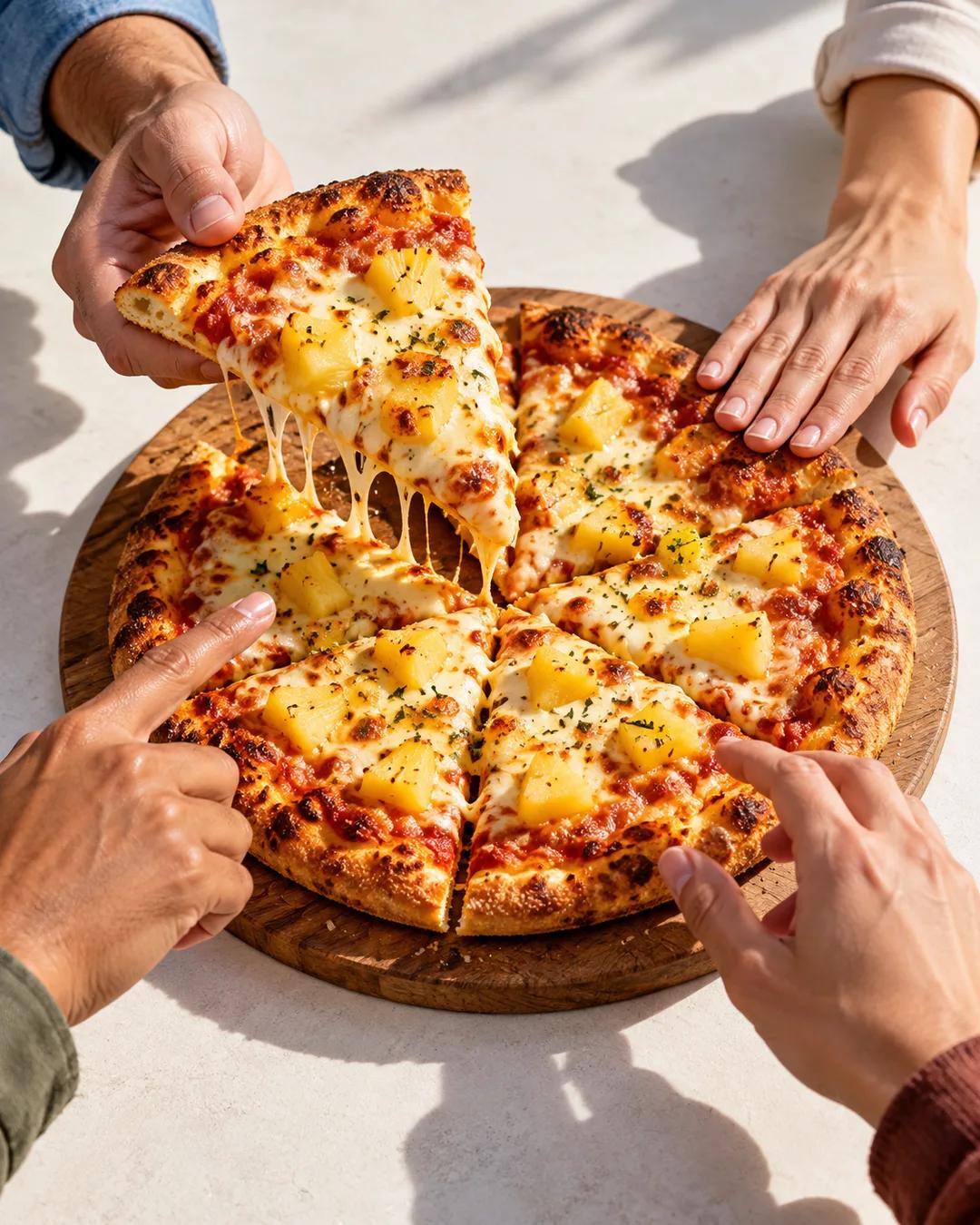
The first slide read: Pineapple on pizza, yes or no? Groups of four had to duke it out. One person scrunched up their nose, another called it disgusting, a third insisted it was amazing, and an Italian in the group announced being offended.
The next slides asked whether a hot dog is a sandwich and what the right time for lunch is. Some argued that 11 AM is barely breakfast, and others that eating before 2 PM puts them to sleep.
Why it works
People laughed and ribbed each other without worrying about landmines. They were practicing pro-social fighting, with warmth and humor, over strongly held opinions that don't matter. A lot of what people avoid in a fight is how their bodies freak out in the room, and a joking debate gives those bodies reps before the stakes get high.
Why do leadership teams avoid open disagreement?
Psychologist Irving Janis of Yale studied this in the 1960s and 1970s and gave it the name groupthink. He examined cohesive decision-making groups, including the advisers behind the 1961 Bay of Pigs invasion, and found that close-knit groups often suppress doubts to keep harmony. Members assume silence means agreement, so each person believes everyone else is sure. His 1972 book Victims of Groupthink laid out the pattern.
How does shared laughter bind a group?
Oxford evolutionary psychologist Robin Dunbar and colleagues ran experiments on social laughter and published results in 2011 and 2012. They found that laughing together raised people's pain tolerance, a sign that the body releases endorphins during laughter. Endorphins are linked to feelings of closeness. Dunbar proposed that laughter works as a form of social grooming that lets groups bond faster than one-on-one conversation can.
Where did pineapple pizza actually come from?
Sam Panopoulos, a Greek-born restaurant owner in Chatham, Ontario, is widely credited with inventing it around 1962. He put canned pineapple on a pizza at his restaurant, the Satellite. The canned fruit was a Hawaiian brand, which is why the style carries the name Hawaiian. Panopoulos said he made it as an experiment in mixing sweet and savory flavors.
More from The Curiosity Shop with Brené Brown and Adam Grant