Korva is a scroll of the internet’s best ideas.
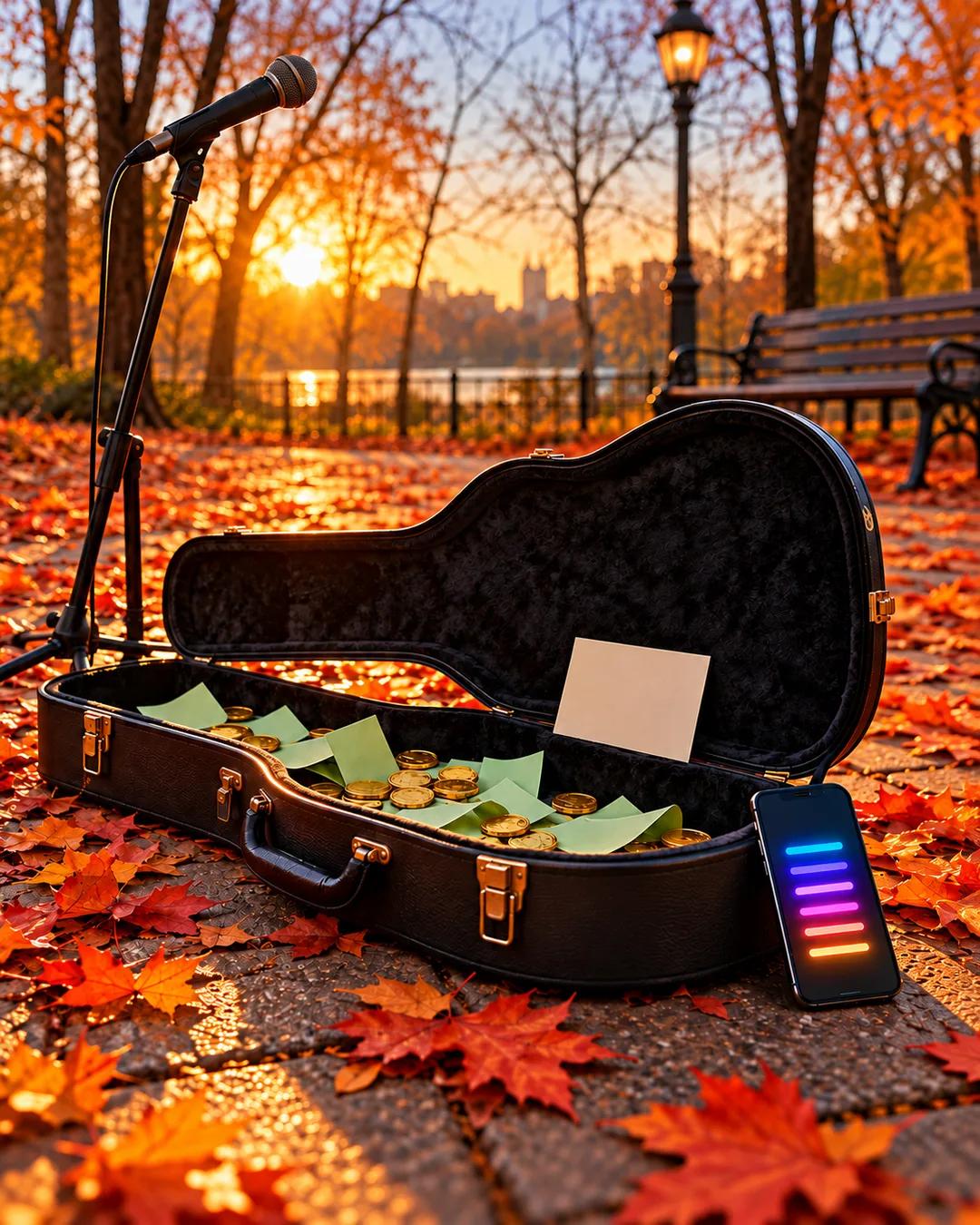
Strawberry Fields singers share a schedule

Singers agree on a schedule
It used to be chaos, with singers shouting over each other and fighting. Somewhere along the line they all came together and agreed that, for all of their sakes and so they could all make some money, they needed a schedule.
Davey still schedules it. The singers go to him, and he texts out what time each of them is going to play, with each one getting a full hour. They are much more sophisticated now, and every one has a microphone and a QR code for donations.
How it reached the novel
Harlan Coben noticed the hourly changeovers on a visit, asked one of the singers how they decide who plays, and got a one-word answer: Davey. So he went over and talked to Davey for a while. The schedule shows up in his novel Runaway, where the busker keeps his real name.
More than ten years on, Coben still says hi to Davey on the morning dog walk.
Why is Strawberry Fields in Central Park?
The memorial honors John Lennon, who lived in the Dakota apartment building across Central Park West. It was dedicated on October 9, 1985, which would have been his 45th birthday. The name comes from the 1967 Beatles song Strawberry Fields Forever, which Lennon wrote about a Salvation Army children's home in Liverpool. The circular mosaic at its center, spelling Imagine, was a gift from the city of Naples, Italy.
How do street performers settle shared spaces?
Political economist Elinor Ostrom, who shared the 2009 Nobel Prize in economics, documented communities that wrote their own rules for shared resources without outside enforcement. Her examples include Spanish irrigation systems and Maine lobster fishing grounds. Her 1990 book Governing the Commons reported that such rules lasted when the people affected helped write them and could easily see who was following them.
Where did QR codes come from?
Denso, the Toyota-affiliated parts maker, invented the QR code in 1994 to track car parts on assembly lines. Its subsidiary Denso Wave holds the patent but has chosen not to exercise its rights, so anyone can use the format. Smartphone cameras that read the codes natively spread them into payments, and China's mobile payment apps adopted them widely in the 2010s.
More from Freakonomics Radio Network