Korva is a scroll of the internet’s best ideas.
Students launder AI essays with humanizers
How humanizers work
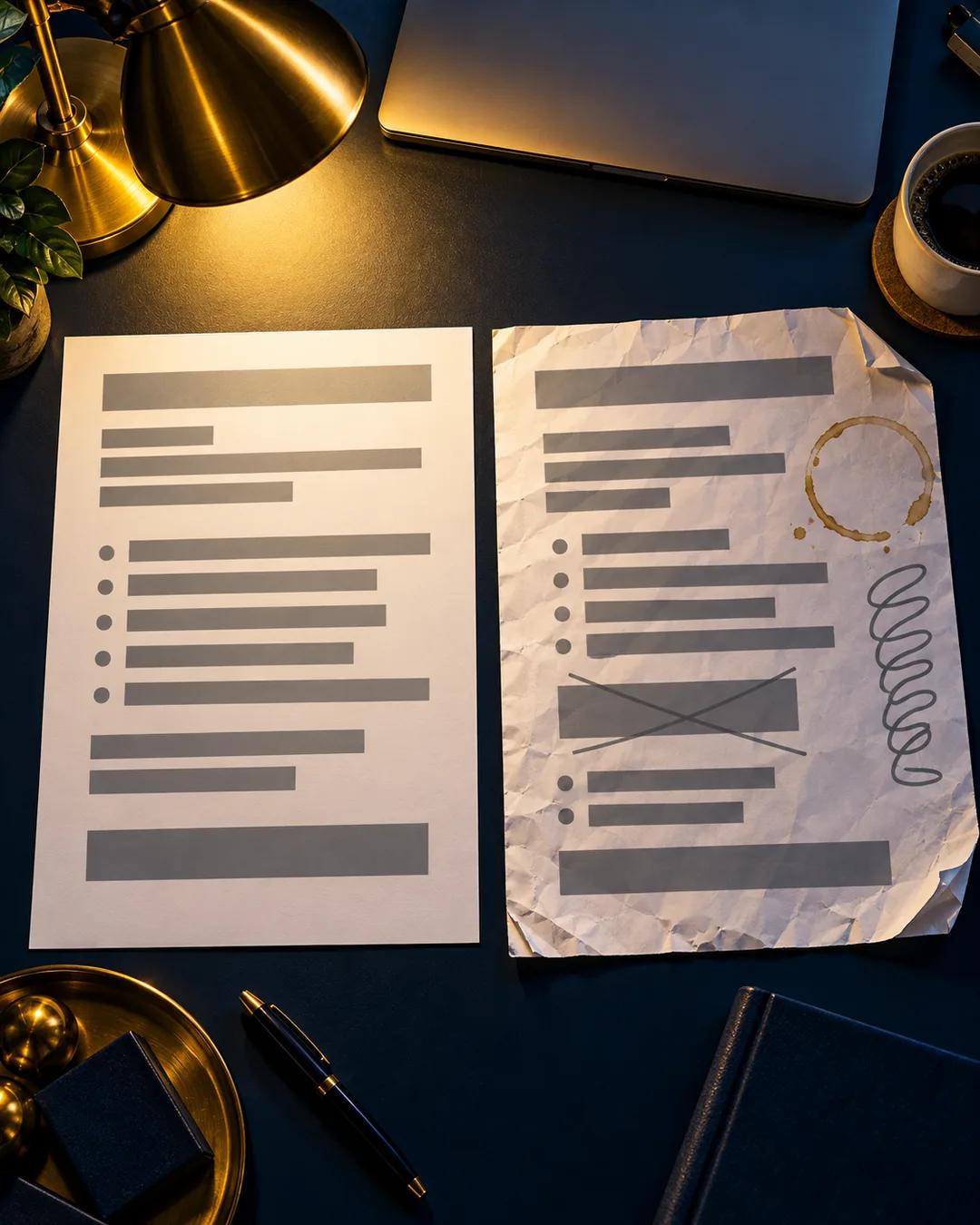
Teachers can spot some telltale signs of AI writing, but a student set on cheating generates an essay first, then asks another AI to strip out the signals. Humanizers can insert mistakes and slang words so the writing looks kidified.
Teachers push back
Teachers are trying to get ahead of it. Some stop assigning writing to do at home, and some schools have gone back to blue books, where students write by hand in the classroom. Others ask students to explain the thinking that went into an essay and how they arrived at it.
Bots talking to bots
Some teachers use AI to generate lesson plans, assignments, and quizzes. Students use AI to complete them, and teachers use AI to grade the results, so bots end up talking to bots.
Why can't AI detectors reliably catch AI essays?
Detectors estimate how predictable a text is, and plenty of human writing is predictable too. A 2023 Stanford study led by James Zou and colleagues found that popular detectors often labeled essays by non-native English speakers as AI-generated. OpenAI shut down its own AI text classifier in 2023, citing its low accuracy. Detectors also lose ground whenever the text is edited after generation.
How do humanizer tools change the text?
Many detectors look at how predictable the word choices are, which some call perplexity, and how much sentence length varies, which some call burstiness. Humanizers rewrite the text to raise both. They swap in less probable words, mix long and short sentences, and sometimes add typos. The result reads less like the smooth average of a language model.
Why does handwriting change how students think?
A 2014 study by Pam Mueller and Daniel Oppenheimer, titled The Pen Is Mightier Than the Keyboard, compared students taking notes by hand with those typing on laptops. The handwriting group did better on conceptual questions after lectures. The researchers suggested that typists copy lectures word for word, while writers must compress the ideas as they go. A later replication attempt found a smaller effect.
More from Fresh Air