Korva is a scroll of the internet’s best ideas.
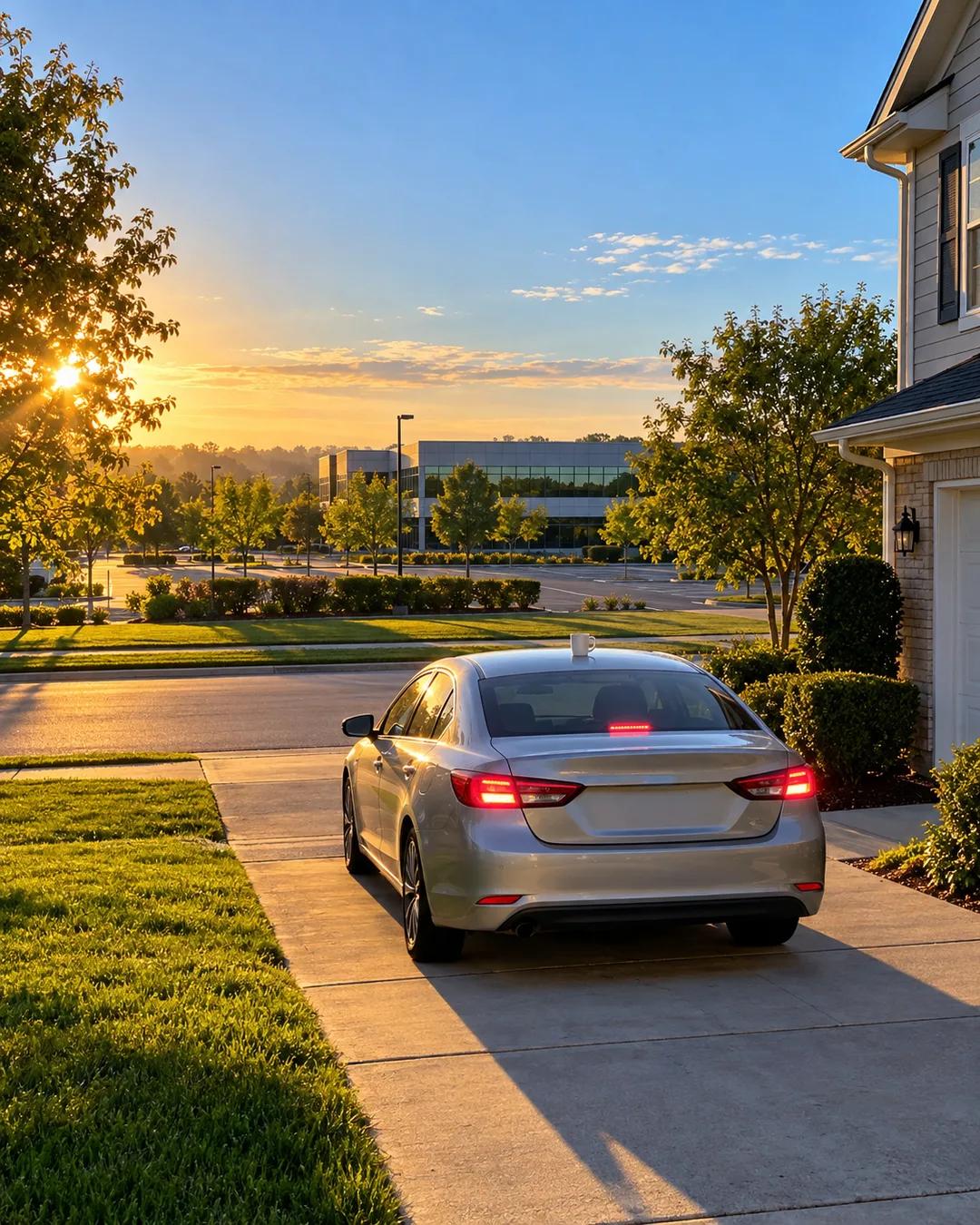
Suburbanites have short commutes

Why commutes are short
OECD data puts American commutes among the shortest in the developed world. Homes are dispersed, and so are workplaces. American urban areas are polycentric, with many job centers instead of a single central business district ringed by houses, so suburbanites tend to live near where they work.
Cars beat transit
Cars also beat public transit almost everywhere. A study of São Paulo, Sydney, Stockholm, and Amsterdam found that transit takes on average 1.4 to 2.6 times as long as driving. The share of each city's area where transit is faster than a car runs between 0.44% and 1.16% on a daily average. That holds in Stockholm and Amsterdam, which were built to be transit-friendly, and it holds when parking time is counted.
A car takes you directly from point to point, while a train or bus makes a circuit and stops along the way. Cars cost more than transit and need far more land to move the same number of people, but they are something people all over the world want and will pay a lot for. The convenience, freedom, and privacy of a car are a benefit of suburban life alongside the big house and cheap land, and owning one is a form of wealth.
Why did jobs leave downtown for the edges?
Interstate highways and truck freight let factories, offices, and stores move to cheaper land at the edge of metro areas, starting in the mid-twentieth century. Journalist Joel Garreau called the resulting clusters of offices and malls around highway junctions edge cities in his 1991 book Edge City. Tysons Corner in Virginia is one of the best-known examples. In many large US metro areas, most jobs now sit outside the central business district.
Why does transit lose to driving on time?
A bus or train follows a fixed route with stops, so riders add a walk to the stop, a wait for the vehicle, and often a transfer to the ride itself. A car leaves when the driver is ready and goes straight to the destination. Transit planners count all of those pieces as part of door-to-door trip time. The wait and the transfer are usually where the minutes pile up.
How can cars need so much more land?
Traffic engineers typically put the capacity of one freeway lane at around 2,000 vehicles per hour. A single subway line can move tens of thousands of passengers per hour in one direction. Cars also sit parked most of the day, and every vehicle needs a space at home and another at its destination. Parking lots and garages take up large shares of land in many American downtowns.
More from Noah Smith