Korva is a scroll of the internet’s best ideas.

Suppliers expect startups to slip
Suppliers expect delays
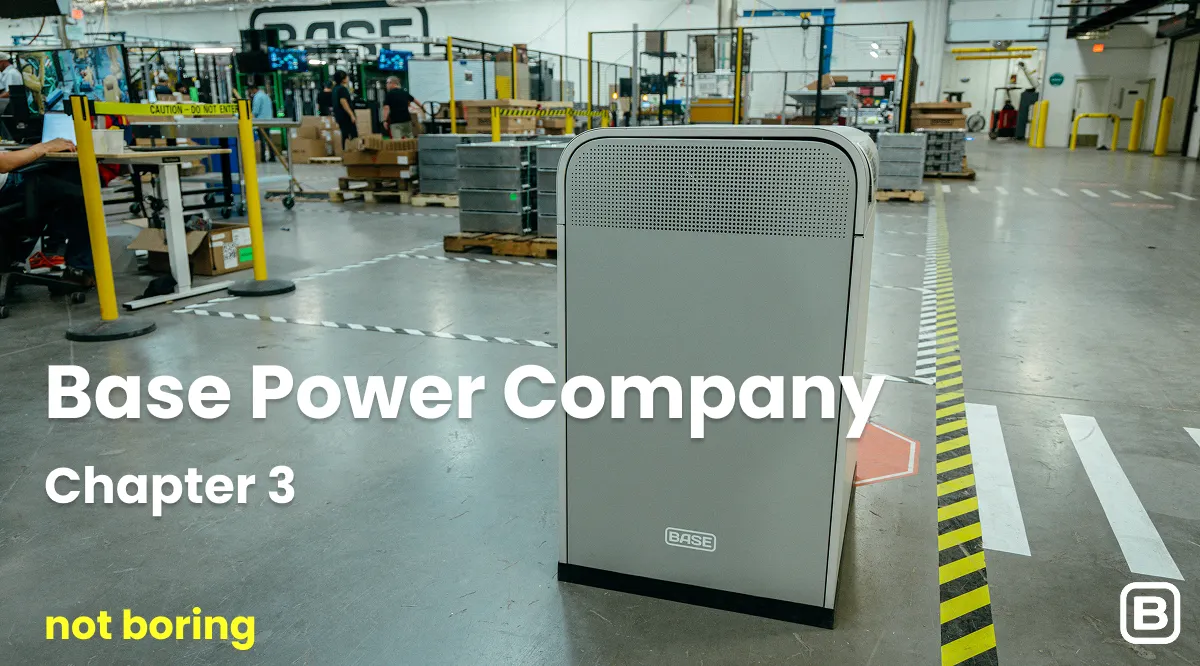
Base ramped its factory faster than four or five of the key suppliers it is sole sourced to, which is why the stuffed turtle that marks the person clearing the critical path now sits on the Supply Chain team's desk. Colby Jarrett, a former Tesla battery manufacturing manager, picked roughly 20 vendors to make 40 parts. Some bigger vendors didn't expect Base to execute. They had worked with a bunch of startups, had seen this movie before, and assumed the schedule would slip.
Hitting the schedule
Plus or minus a month or two, Base is on the schedule it published 18 months ago. Some of those vendors have had their oh shit moment and are playing catch up because they didn't start out of the blocks.
Selling the vision
Proving it takes time, and Base has now done that. The next step is selling suppliers on the vision of what happens if Base keeps delivering. Base may not be a big customer yet, but suppliers have to understand the ambitions behind it and the Base Core battery so they are motivated to grow with it. In the meantime, Base is ramping more than ten supplier lines alongside its own and sending engineers to supplier floors to develop processes, install hard tooling, and move from bridge suppliers to production suppliers.
Why are suppliers wary of startup timelines?
A supplier who builds tooling for a customer's forecast takes the loss if the volume never arrives. Hardware startups often miss their schedules because of first-time tooling, certification delays, and design changes. Suppliers therefore ask for tooling payments, minimum purchase commitments, or proof of milestones. A single injection mold can cost anywhere from tens of thousands to hundreds of thousands of dollars.
Why do sole-sourced parts create schedule risk?
With one supplier and no backup, any slip at that supplier stops the whole line. The buyer can't shift orders elsewhere because no other qualified source exists. Floods in Thailand in 2011 swamped factories that made a large share of the world's hard disk drives, and drive prices stayed elevated for months. Qualifying a second source usually takes months of testing.
Why does the critical path set a project's end date?
The critical path is the longest chain of dependent tasks, so any delay along it pushes the finish date back. Tasks off the path have slack and can slip without moving the end. The Critical Path Method was developed in the late 1950s by James Kelley and Morgan Walker, working with DuPont and Remington Rand. Teams focus on the critical path because shortening any other task does nothing for the finish date.
More from Packy McCormick