Korva is a scroll of the internet’s best ideas.
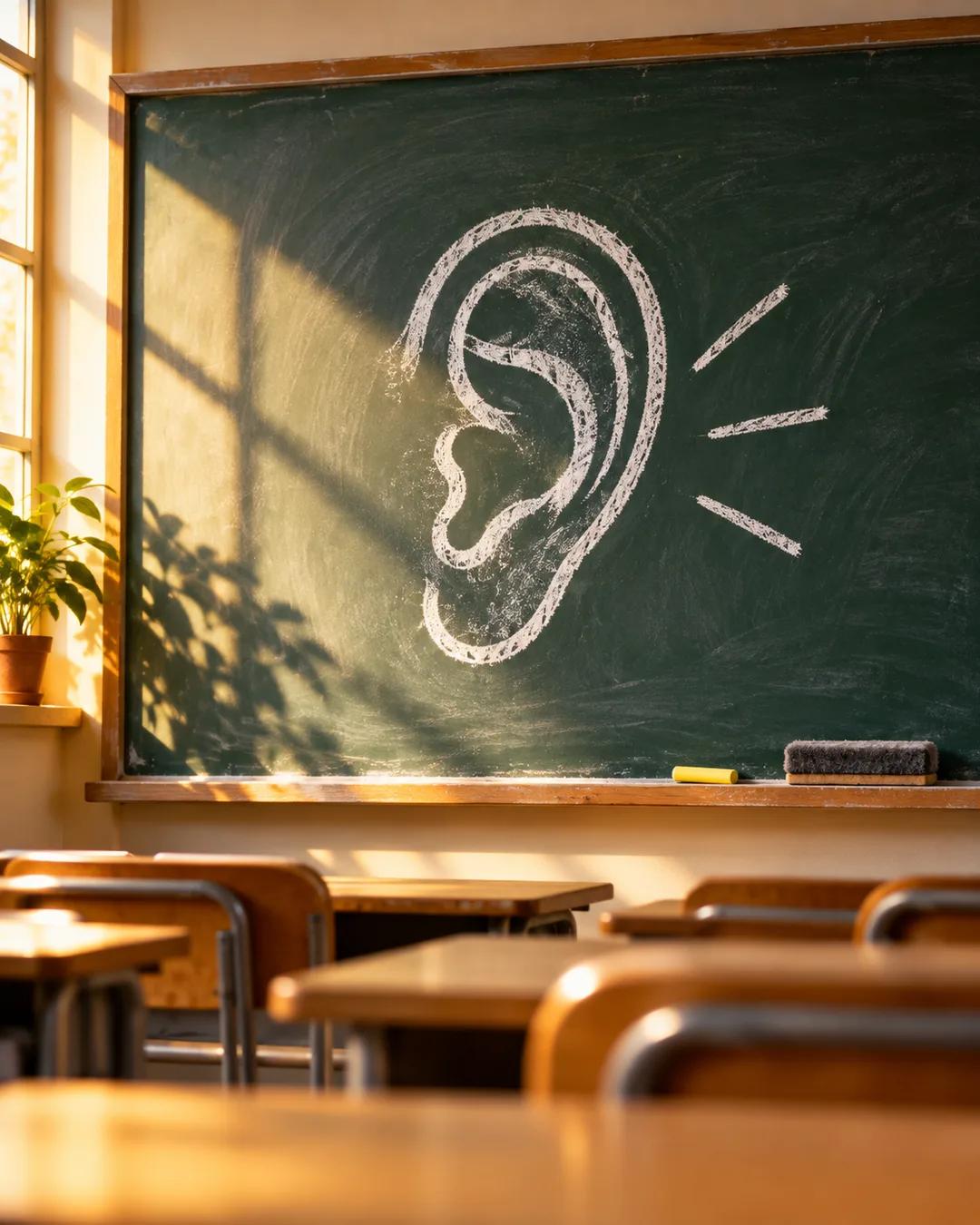
Teach listening in schools

Conscious listening is the access point to understanding, and a world where people don't listen to each other at all is a very scary place indeed. Teaching listening in schools would take it off that slippery slope.
The aim is a place where everybody is consciously listening all the time, or at least capable of doing it. Within one generation, that would transform the world into one of connection, understanding, and peace.
Every human being needs to listen consciously in order to live fully: connected in space and in time to the physical world, and connected in understanding to each other.
When did people start studying listening?
Ralph Nichols of the University of Minnesota published some of the first systematic studies of listening in the late 1940s. He later wrote Are You Listening? with Leonard Stevens in 1957. Nichols is often called the father of listening research. The International Listening Association was founded in 1979.
Does being heard change how people think?
Guy Itzchakov, Avraham Kluger, and Dina Castro reported in a 2017 study in Personality and Social Psychology Bulletin that speakers talking with a high-quality listener became more aware of inconsistencies in their own attitudes. These speakers were also less defensive about those inconsistencies. The researchers defined high-quality listening as attentive, open, and nonjudgmental.
How early do humans start listening?
In 1980, Anthony DeCasper and William Fifer showed in Science that newborns less than three days old changed how they sucked on a nipple to hear their mother's voice rather than another woman's. In a 1986 study, DeCasper and Melanie Spence found that newborns preferred a story their mothers had read aloud during the last weeks of pregnancy.