Korva is a scroll of the internet’s best ideas.
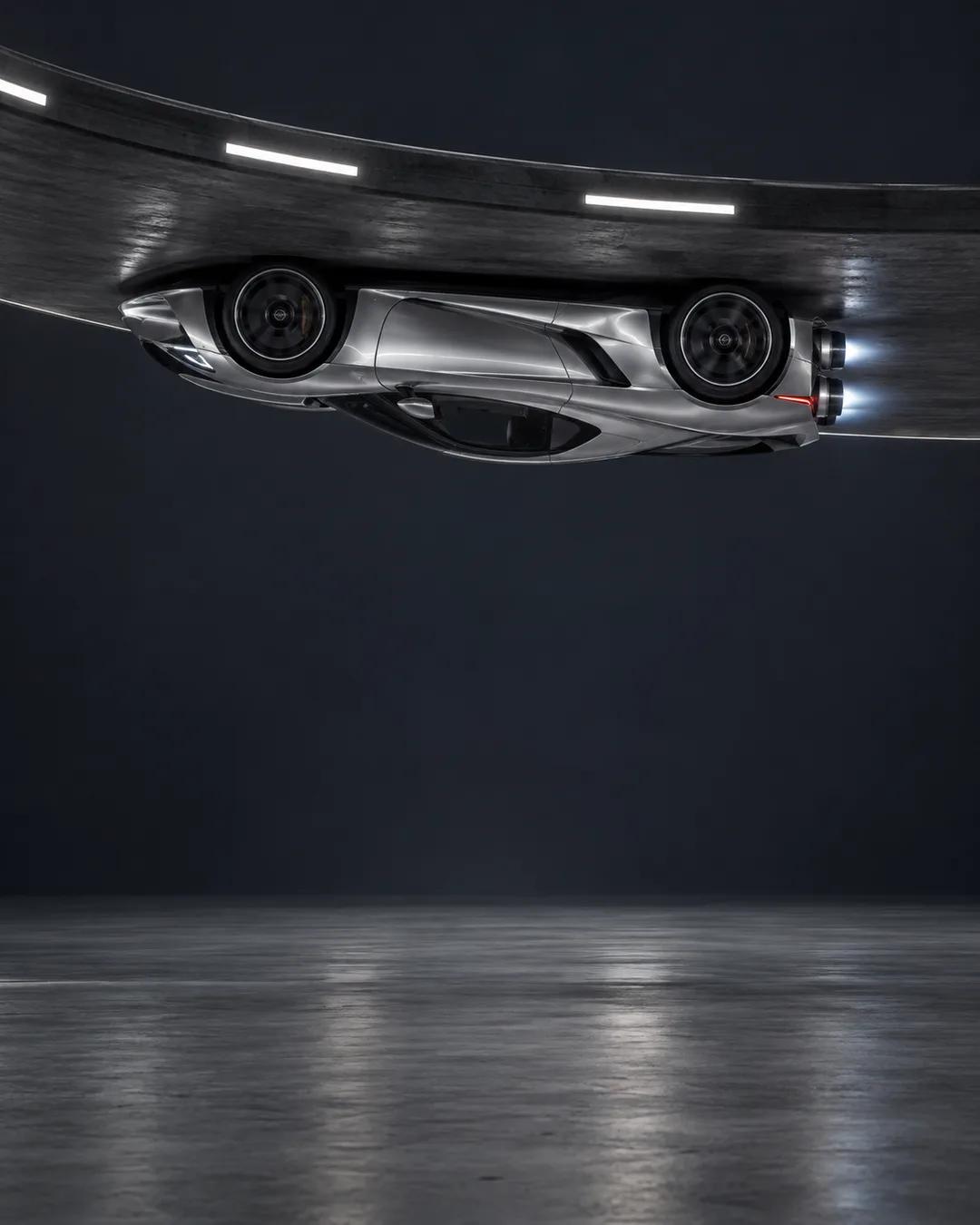
Tesla's Roadster now flies

In a demonstration, the electric sports car drove up a loop and went upside down, held to the surface by a suction system. It then turned in the air and landed using built-in thrusters.
Production is slated for 2028. Analysts describe the car as more of a symbolic offering, a way for Tesla to show off its engineering and technology.
How can a car stick to a surface upside down?
Race car designers have used suction since the 1960s and 1970s. The Chaparral 2J, raced in 1970, used fans to pull air out from under the car and press it onto the track. The Brabham BT46B of 1978 used a similar fan and won its only race before being withdrawn. A sealed skirt around the underside holds the low pressure in, and the pressure difference pushes the car against the surface.
How do thrusters let a car land safely?
A thruster pushes gas out in one direction and gets pushed the opposite way, as Newton's third law describes. Fire a thruster downward and it slows a fall, and several thrusters placed around a body can tilt it by pushing harder on one side. Spacecraft use the same method to turn and to touch down gently. A car weighing well over a thousand kilograms needs a very large burst of thrust to cancel its weight, and fuel for that burst runs out quickly.
Why do carmakers build cars that are symbolic?
Cars built mainly to showcase a company's engineering are known as halo cars. A halo car is rarely a big seller, but it draws press attention and shapes how buyers see the cheaper models in the same showroom. Ford's GT of the 2000s and Porsche's 918 Spyder both played that role for their brands. The lasting payoff is brand image rather than sales volume.
More from Reuters World News