Korva is a scroll of the internet’s best ideas.
Warhol's screen prints
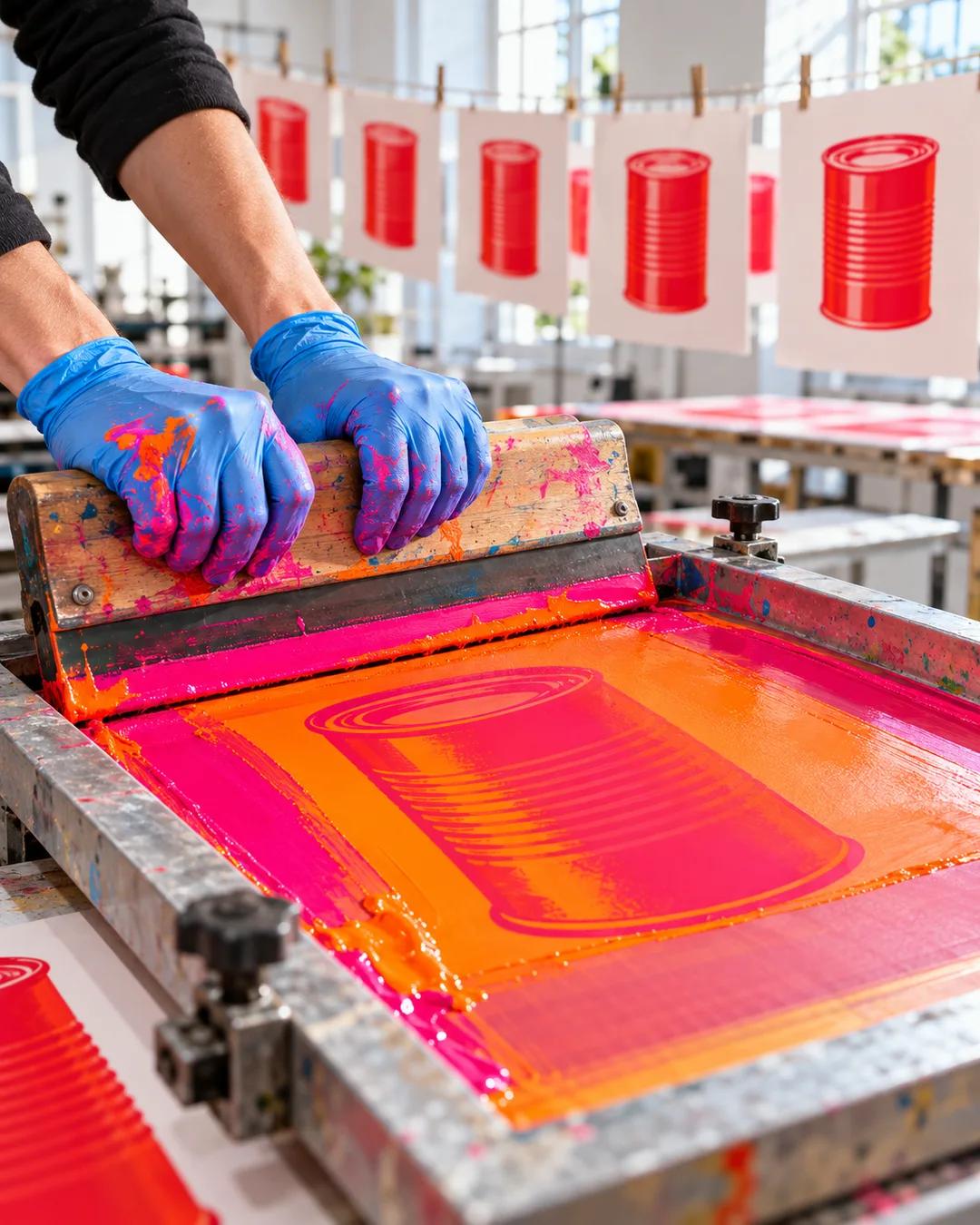
Andy Warhol started as a commercial illustrator, drawing shoes for advertising, and went on to create what became pop art, with Brillo boxes and Campbell's soup cans. He painted the first soup cans himself. Later came the screen-printed images of Elvis and Marilyn Monroe, the most famous Warhol images there are, and he never painted or touched any of them.
He chose the shot of Marilyn, decided how it would be treated, and directed the people in his studio to do the printing. The prints are no less Warhol's.
Studio tradition
Studio work like this goes back to the Renaissance, when so many painters kept studios and had assistants and disciples do much of the work. It happens in music now: a band's name goes on the record while studio musicians play on it. It's a normal part of the process, and it doesn't make the record less good.
How does silkscreen printing work?
A fine mesh stretched on a frame is coated so that ink can pass through only in the shape of the image. A squeegee pulls ink across the mesh and presses it through onto the surface below. The same screen can print many copies, each slightly different depending on the pressure and the ink. Warhol began using the technique on canvas in 1962, including his Marilyn Diptych, which was based on a publicity photo from the 1953 film Niagara.
How did Renaissance workshops divide the work?
A master painter ran a workshop where assistants prepared panels, ground pigments, and painted backgrounds, drapery, and secondary figures. The master designed the work and finished the most important parts. Leonardo da Vinci trained in the Florence workshop of Andrea del Verrocchio, and he is credited with painting an angel in Verrocchio's Baptism of Christ. Peter Paul Rubens later ran a large workshop in Antwerp that produced hundreds of paintings.
What was Warhol's Factory?
The Factory was the name Warhol gave to his studio in New York, which he first set up in 1962 and decorated with silver foil. Assistants there stretched canvases, mixed paint, and made the screen prints under his direction. Artists, musicians, and actors passed through it, and Warhol also made his films there. It moved to several addresses over the next two decades.
More from The Diary Of A CEO with Steven Bartlett