Korva is a scroll of the internet’s best ideas.
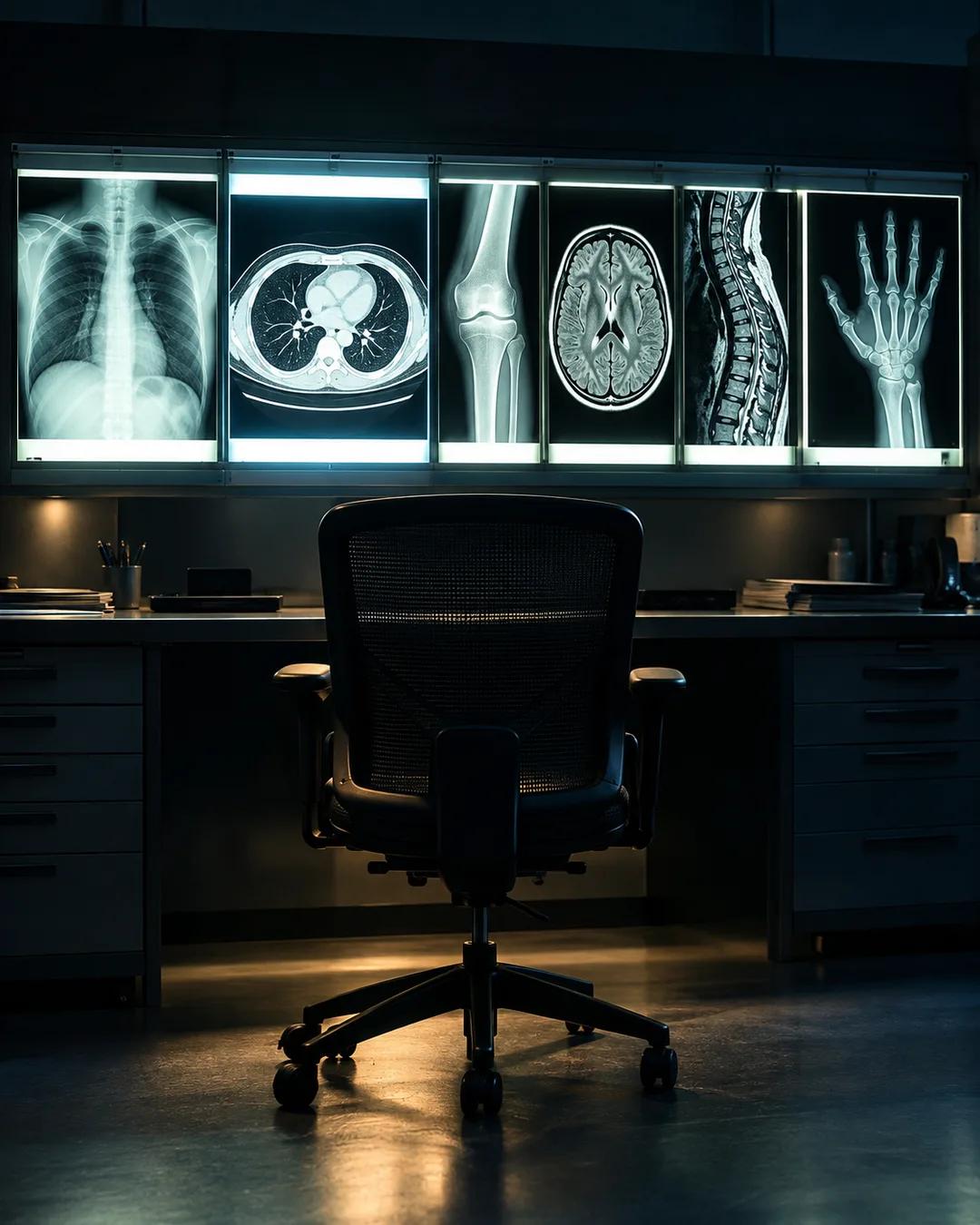
The call to stop training radiologists

The premise and the obstacles
Hinton made that call, and the premise behind it holds. Studies have shown AI reading these images well, and a company called New Lantern is working on exactly that. Two obstacles stood in the way.
The first is data. The aggregated training set for all of radiology does not exist anywhere. Companies go after chest CTs or other narrow slices, but a typical radiologist reads a whole variety of things every day, from X-rays to CTs to MRIs of every part of the body. An AI that climbs in chest CTs alone helps only marginally, since that is one of twenty or forty things read that day. The second is that healthcare is built around reimbursing doctors for readouts, and liability and malpractice attach to getting a read wrong.
Co-pilot first
So AI arrives first as a co-pilot. It handles some parts, the radiologist handles others, and they check each other, which raises throughput. Over time the AI reads more and more scans. The road is long, and in the meantime more radiologists are needed, because the cost of imaging keeps falling and people are getting more imaging than they used to, a Jevons paradox.
Why does cheaper imaging create more demand?
The economist William Stanley Jevons noticed in his 1865 book The Coal Question that more efficient steam engines led Britain to burn more coal, not less. Lower cost per use opened new uses that outweighed the savings. Imaging follows the same pattern, because a cheaper scan gets ordered for more reasons and more patients. More scans in turn produce more images for radiologists to read.
How do regulators treat radiology AI?
In the United States, the Food and Drug Administration clears AI-enabled medical software as a device before it can be marketed. The agency publishes a running list of authorized AI-enabled devices. Radiology has made up the largest share of that list for years. Most of those tools assist a human reader on a narrow task rather than replacing the reading.
Why is radiology training data scattered?
Scans live in separate hospital archives, called PACS systems, that each institution runs for itself. Privacy law, including HIPAA in the United States, restricts how patient images can be shared. Scanners from different manufacturers also produce images in different formats and settings. A single hospital usually holds only a slice of the image types that a radiologist sees.
More from Invest Like the Best with Patrick O'Shaughnessy