Korva is a scroll of the internet’s best ideas.
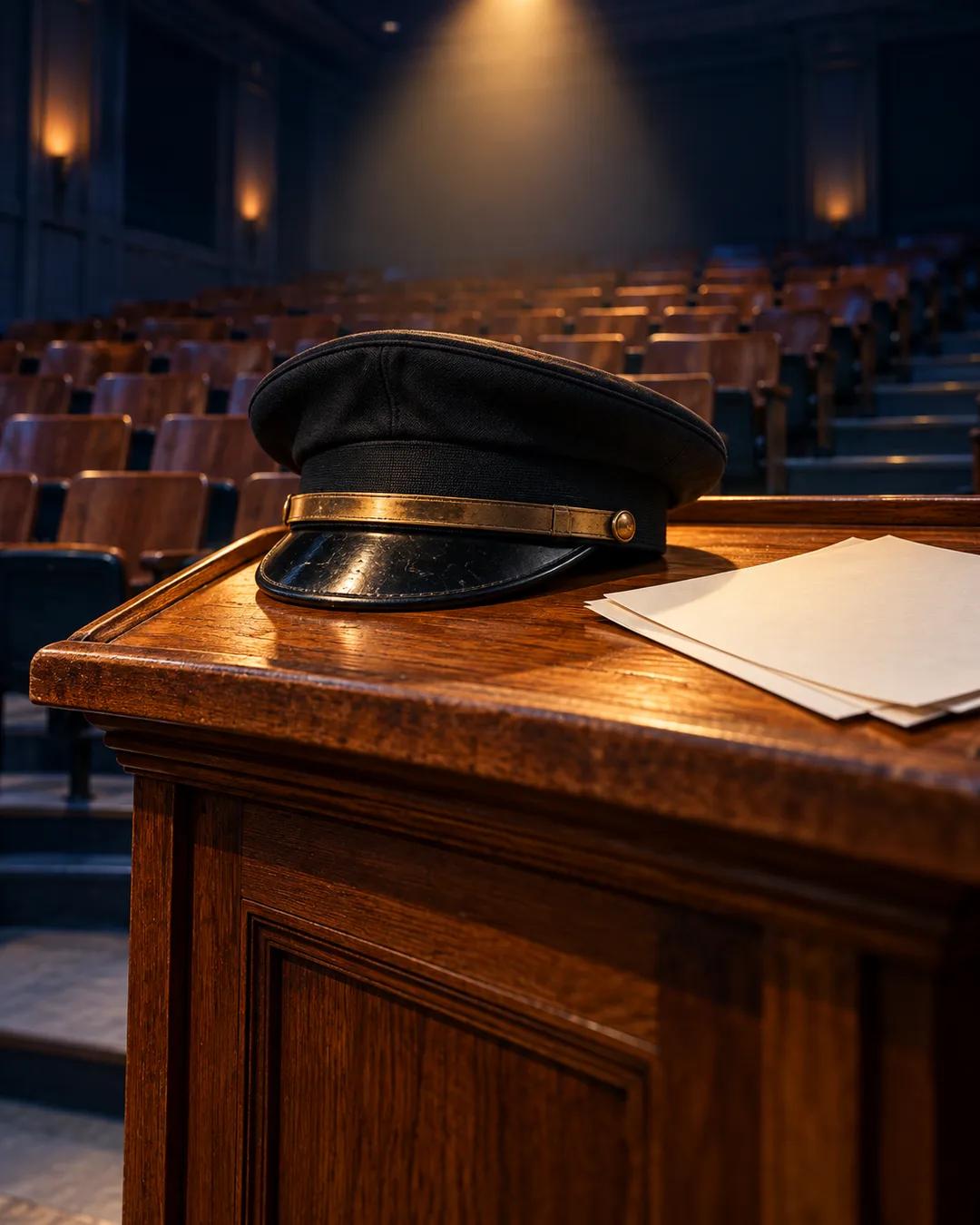
The chauffeur who gave Planck's lecture

The memorized lecture
After winning the Nobel Prize in 1918 for his discovery of energy quanta, Planck toured universities and institutions around Germany, lecturing on his findings. His chauffeur drove him from stop to stop and heard Planck practice and deliver the talk over and over, until he knew the entire thing by heart. The story is apocryphal and almost certainly dramatized, and it was told in Charlie Munger's 2007 commencement speech at USC Law School.
The chauffeur takes over
For the final lecture, the chauffeur jokingly asked whether he could deliver it. To everyone's surprise, the physicist agreed. The chauffeur put on a jacket and tie, walked up in front of the crowd, and gave a perfect lecture, word for word, just as Planck would have.
The follow-up question
Then someone in the audience asked a simple follow-up question, and the chauffeur was completely stumped. Quick on his feet, he replied that the question was so easy he would let his chauffeur answer it, and he pointed to the back of the room. Planck was standing there in a chauffeur's hat, smiling.
Why did Planck's quanta upend physics?
Planck introduced the idea in 1900 while trying to explain the light given off by hot objects. Classical physics predicted that such an object should radiate unlimited energy at short wavelengths, a failure physicists called the ultraviolet catastrophe. Planck fixed the math by assuming energy is emitted in discrete packets proportional to frequency, with a new constant that now carries his name. Einstein used the same idea in 1905 to explain the photoelectric effect, and it became the foundation of quantum mechanics.
Why does Munger keep retelling this story?
Charlie Munger used the tale to separate people who have worked through a subject from people who can only recite it. He often paired it with Warren Buffett's idea of a circle of competence, which Buffett described in his 1996 letter to Berkshire Hathaway shareholders. Munger called the recited kind of understanding chauffeur knowledge. He told versions of it at Berkshire meetings and in speeches over many years.
How does a perfect recital hide missing understanding?
Memorizing a talk stores the order of the words without storing the reasons behind them. A follow-up question forces a person to reach for those reasons, which a recital never needed. Psychologists Leonid Rozenblit and Frank Keil at Yale described a related effect in 2002, finding that people believe they understand everyday devices in detail until they are asked to explain how the devices work.
More from Curiosity Chronicle