Korva is a scroll of the internet’s best ideas.
The commander blamed himself

The battle in Ramadi
It happened in the spring of 2006, in a neighborhood of Ramadi, Iraq, then the center of the insurgency. Iraqi soldiers, US Army soldiers, Marines, and a small SEAL element were out fighting the enemy when the confusion of battle set in. Through a string of mistakes, human error, poor judgment, and bad luck, friendly forces ended up firing on each other. One Iraqi soldier was dead, two more were wounded, one SEAL was wounded, and the rest of the SEALs were badly shaken.
Preparing the debrief
Back at base, a message from the commanding officer was waiting: shut down all operations. The commanding officer, the master chief, and an investigating officer were on their way, and the commander was to prepare a debrief explaining what had gone wrong. Somebody would have to be held accountable, and probably fired. He wrote down every mistake and who made it, every failure in planning, preparation, and execution. There was plenty of blame to go around, yet he couldn't settle on who was at fault, until the answer hit him about ten minutes before the debrief began.
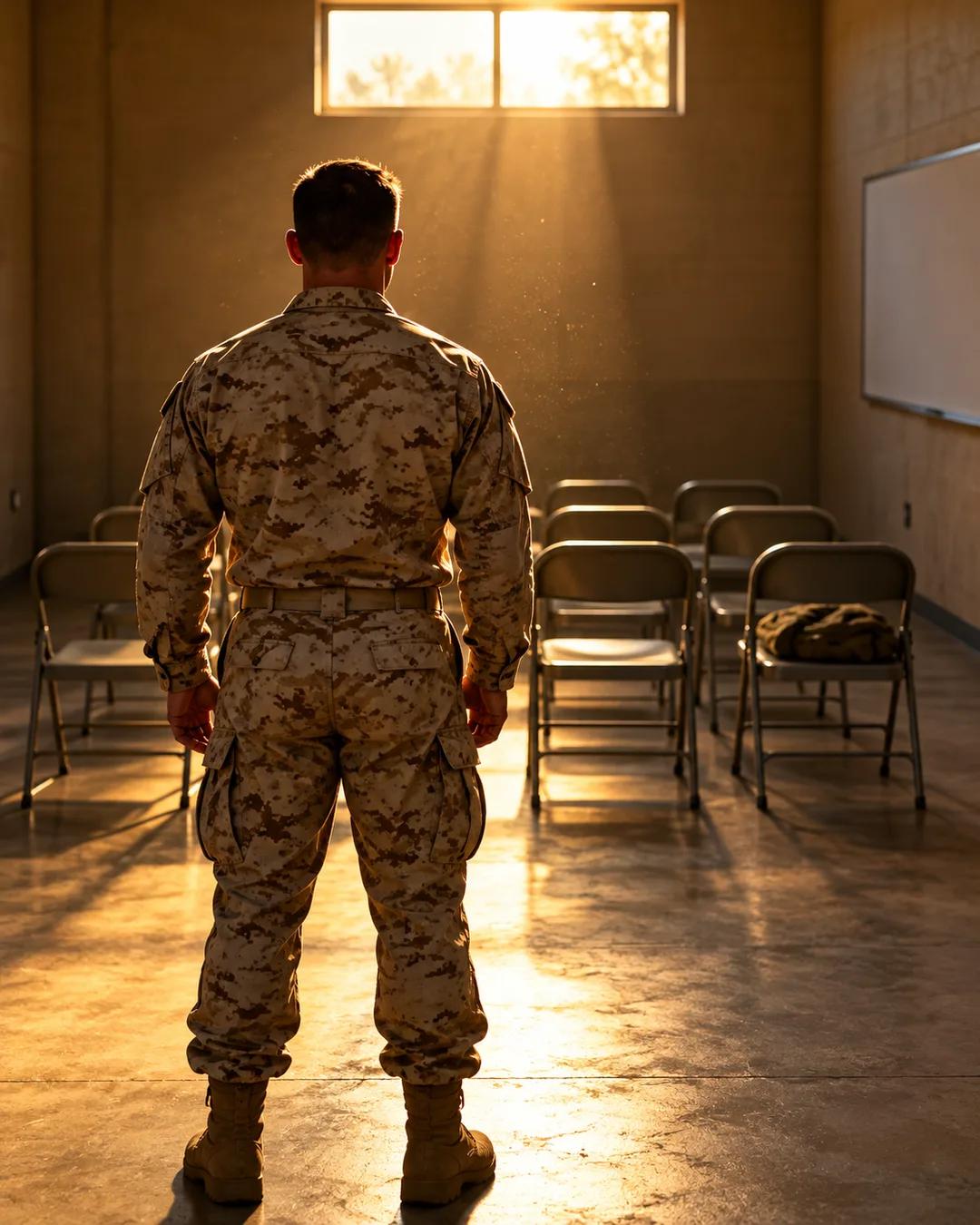
The officers sat waiting in the debriefing room, along with the SEALs, including the wounded one at the back with his head and face bandaged. The commander asked whose fault this was. One SEAL raised a hand: he hadn't kept control of the Iraqi soldiers with him, and they had left their sector. Another hadn't passed their location over the radio fast enough. A third hadn't properly identified his target and had shot the friendly Iraqi soldier. To each, the commander answered that it wasn't his fault, then told the room that the only person to blame was him, the senior man on the battlefield, responsible for everything that happens.
What changed afterward
He went on to lay out new tactics, techniques, and procedures to make sure it never happened again. Taking the blame hurt his pride, and he wasn't fired. The commanding officer, who had expected excuses and finger-pointing, trusted him even more. The SEALs saw that he would never pass the burden of command down the chain onto them, and they took on the same attitude. Everyone owned their own mistakes and the problems in front of them, and the problems got solved.
Why does the fog of war cause friendly fire?
The Prussian officer Carl von Clausewitz wrote about this in On War, published in 1832, describing war as a realm of uncertainty in which much of the information soldiers act on is uncertain or wrong. In a firefight, units move quickly, radio reports arrive late or garbled, and targets are seen for only a moment. Under that pressure, people identify a figure as the enemy from partial cues like a silhouette or a muzzle flash. The US Army began fielding Blue Force Tracking, a system that shows friendly units' positions on a shared map, and it was in use during the 2003 invasion of Iraq.
Why do military units hold formal debriefs after operations?
Debriefs turn a single unit's experience into lessons the whole force can use. The US Army built the after action review into its training in the 1970s, and it became a centerpiece of exercises at the National Training Center at Fort Irwin, California, which opened in 1981. The standard format asks what was supposed to happen, what actually happened, why the two differed, and what to do next time. Other organizations, including hospitals and companies, have since adopted versions of that same four-question structure.
Why does admitting mistakes build trust in a team?
Harvard Business School professor Amy Edmondson studied hospital nursing teams in a paper published in 1999 in Administrative Science Quarterly. She found that the teams rated best by their managers reported more errors, not fewer. She concluded that those teams felt safe enough to talk openly about mistakes, and she named that climate psychological safety. Teams that hid errors could not learn from them, so the same problems kept repeating.
Why was Ramadi the center of the insurgency?
Ramadi is the capital of Anbar Province, on the Euphrates River west of Baghdad, in a largely Sunni Arab region that lost power after the 2003 invasion. The city sat along major routes toward Syria and Jordan, which made it valuable for moving fighters and supplies. US forces fought there for years, and the battles for the city were among the longest of the Iraq War. The tide began to turn in late 2006, when Sheikh Abdul Sattar Abu Risha and other Anbar tribal leaders formed the Anbar Salvation Council and sided with US forces against al-Qaeda in Iraq.